
You just had microneedling. You are staring at your face in the mirror, and what you see is not exactly the glowing, refreshed complexion you were promised. Instead, your skin is tight, flaky, and maybe a little alarming. So you typed "how to remove dead skin after microneedling" because you want it gone - yesterday, if possible. We completely understand that impulse.
But here is what you actually need to hear before you reach for a scrub or start picking at those flakes: that peeling is not a problem to solve aggressively. It is a sign that your skin is doing exactly what punctured skin does during recovery. The safest path forward is not scrubbing, peeling, or exfoliating. It is strategic post-treatment care and conservative microneedling aftercare that protects your skin barrier while it heals on its own timeline.
Don't guess your recovery. Download FREE Clinical Microneedling Protocol Here
What "Dead Skin" After Microneedling Actually Is?
Let us start by reframing what you are actually seeing in the mirror. That flaking, peeling skin is not damaged skin in the way you might fear. It is not an infection. It is not scarring. It is the outermost layer of your skin responding to a controlled micro-injury.
Microneedling works by creating controlled, micro-scale punctures in the skin. According to Zhang et al. (2024), microneedle arrays create punctures that temporarily alter how substances move through the skin surface, demonstrating that the barrier is functionally changed post-puncture. These microchannels are intentional - they are the entire mechanism through which microneedling delivers its benefits (Zhang Y et al., Scientific Reports, 2024, DOI: 10.1038/s41598-024-83094-z).
The visible flaking you see is surface-level shedding. Your outermost skin layer is turning over in response to having been punctured thousands of times by tiny needles. Think of it this way:
Microneedle pass ➜ Micro-punctures created ➜ Barrier temporarily altered ➜ Surface dryness and flaking become visible ➜ Gradual return to baseline
The critical takeaway here is that aggressive removal - picking, scrubbing, peeling - risks irritating skin that is already punctured and temporarily more permeable. This is widely recognized as a cautious, conservative approach to protecting compromised skin.
Why Your Skin Absorbs Everything Differently Right Now?
This might be the single most important concept to understand during your recovery, and it changes everything about how you should approach your skincare routine right now.
Zhang et al. (2024) explicitly demonstrates that microneedle-created punctures enable enhanced transdermal delivery. The study's entire purpose centers on showing that substances move through punctured skin more effectively than through intact skin. The microtexture of the needles themselves affects how well delivery works, confirming that the puncture process creates meaningful, functional openings in the skin barrier (Zhang Y et al., Scientific Reports, 2024, DOI: 10.1038/s41598-024-83094-z).
Here is what that means in plain language: whatever you put on your face right now does not behave the way it does on a normal day. Your skin is more open. More absorptive. More reactive.
This is precisely why product choice during recovery is not just a matter of personal preference - it is genuinely consequential. Bland, barrier-supporting, clinically designed recovery products are the conservative, safer choice. Active ingredients, acids, fragrances, and untested formulations carry a heightened exposure risk when applied to punctured skin. Products formulated specifically for post-procedure skin are designed with this enhanced absorption window in mind, which is why many providers recommend purpose-built microneedling recovery serums, including exosome-based formulations, during this critical phase.
It Looks Worse Than It Is: What To Expect Visually
If you are reading this article with a mild sense of panic because your skin looks rough, patchy, or just plain bad right now - take a breath. You are not alone, and what you are seeing is almost certainly within the range of commonly reported post-microneedling experiences.

Here is what many people report seeing during recovery:
🔴 Redness - common in the early hours and days, particularly after deeper treatments.
😣 Tightness - a "pulled" or dry sensation, even when you have moisturized.
🫧 Dry patches or visible flaking - especially around the forehead, nose, and chin.
✋ Mild sensitivity - skin may react to products or even water temperature more than usual.

The visual state of your skin during recovery does not predict your final result. Some people who look the most alarming during days two through four end up with the most dramatic improvements once healing is complete. Avoid comparing your recovery to photos or timelines you see online - individual variation is significant, and lighting, skin tone, treatment depth, and photography all distort the comparison.
⚠️ Important safety note: If you notice increasing pain, spreading heat, pus, unusual discharge, or fever, contact your provider immediately. These are not typical recovery signs and warrant professional evaluation.
Should You Remove Dead Skin After Microneedling At All?
This is the question at the heart of why you are here, so let us address it directly: the answer is not a simple yes or no. It is a reframe.
Because microneedling punctures the skin and creates a temporarily more permeable surface (Zhang Y et al., Scientific Reports, 2024), the priority during recovery is protecting that compromised barrier - not stripping it. "Removal" should be reframed as gentle support. You are not trying to get rid of dead skin. You are trying to hydrate, protect, and allow shedding to happen naturally on its own timeline.
Picking or peeling flakes adds mechanical stress to punctured skin. This is not a cosmetic shortcut - it is a risk to your recovery. Here is how the most common approaches compare:
| Approach | What It Does | Risk on Punctured Skin | Recommendation |
|---|---|---|---|
| Picking or peeling flakes | Mechanical trauma to compromised surface | Higher | ❌ Avoid |
| Scrubs, brushes, washcloths | Abrasion on punctured skin | Higher | ❌ Avoid |
| Exfoliating acids | Chemical exfoliation with enhanced penetration | Higher (Zhang et al., 2024) | ❌ Avoid during early recovery |
| Gentle cleanse + bland moisturizer | Supports barrier, softens flakes passively | Lower | ✅ Preferred approach |
| Purpose-built recovery products | Designed for post-procedure absorption window | Lower | ✅ Preferred approach |
The short version: leave the flakes alone. Support them with hydration. Let them release naturally. Your patience now pays dividends in your final results.
Is It Normal To Have Really Dry Skin After Microneedling?
Yes - or more precisely, dryness and tightness are among the most commonly reported post-microneedling experiences. You are not having an unusual reaction simply because your skin feels drier than you expected.
After microneedling, your skin has been punctured and its barrier is temporarily altered (Zhang Y et al., Scientific Reports, 2024, DOI: 10.1038/s41598-024-83094-z). That altered surface commonly feels dry, tight, or rough while it normalizes. Many people describe it as feeling like their moisturizer is not "working" the way it usually does - and in a sense, they are right. The skin's ability to retain moisture is temporarily changed because the barrier has been punctured at a micro level.
However, there is an important distinction between expected dryness and something that needs attention. Dryness alone is typically not a concern. But if dryness is accompanied by increasing pain, heat, unusual swelling, oozing, or spreading redness, contact your provider for evaluation. That combination of symptoms warrants professional assessment.
Why Does Skin Get Dry After Microneedling?
Microneedling creates micro-scale punctures that modify the skin's barrier function and alter pathways through the skin (Zhang Y et al., Scientific Reports, 2024). When the barrier is disrupted at a micro level, the surface simply does not behave like intact skin. Moisture dynamics change. The same barrier that normally keeps water in and irritants out has been intentionally opened in thousands of tiny spots.
This is the same mechanism that makes product absorption different post-procedure - the barrier is temporarily open (Zhang et al., 2024). It is a double-edged dynamic: beneficial substances can penetrate more effectively, but the skin also loses moisture more readily and is more vulnerable to irritants.
What is happening on the surface:
➜ Micro-punctures have altered the barrier's integrity
➜ The surface layer is shedding as part of the skin's natural response
➜ Moisture retention may be temporarily reduced
What NOT to do about it:
➜ Do not scrub to "speed up" shedding
➜ Do not layer multiple active ingredients to "hydrate faster"
➜ Do not assume dryness means you need stronger products - on punctured skin, stronger can mean more irritating because of that enhanced absorption (Zhang et al., 2024)
How Long Does This Dry Skin Last?
This is one of the most common questions people ask, and we want to be honest with you: there is no single, universally applicable number we can give you that is backed by the research we are drawing from here.
Dryness duration varies by individual and cannot be reliably predicted with a specific day count. What we can tell you is that dryness may persist during the early recovery window and typically resolves as the skin's barrier function returns toward baseline. Most practitioners would describe this as a self-limiting phase of recovery.
What influences how long your dryness lasts:
➜ Treatment depth and intensity - conceptually, more punctures may mean more barrier disruption
➜ Your individual skin type and sensitivity - some skin simply takes longer to stabilize
➜ Products applied during recovery - because punctured skin absorbs differently (Zhang et al., 2024), product choice can meaningfully influence how your skin feels during recovery
➜ Environmental factors - humidity, sun exposure, wind, and indoor heating all play a role
➜ Whether this is a first session or a repeat treatment - your skin's familiarity with the process may affect its response
If your dryness feels like it is worsening rather than gradually improving, or if new symptoms develop alongside it, check in with your provider. Gradual improvement is the trajectory you are looking for, even if it is slow.
How Long Does Peeling Last After Microneedling
Peeling is surface-level shedding that some people observe after their skin has been punctured by microneedling. The puncture process alters the skin's surface (Zhang Y et al., Scientific Reports, 2024), and peeling is one visible manifestation of that surface turning over.
Two important points that often get lost in online discussions:
➜ Not everyone peels. The absence of visible peeling does not mean your treatment was ineffective. Some skin types simply do not shed visibly.
➜ Heavy peeling is not necessarily a bad sign. The presence of significant flaking does not automatically mean something went wrong. It means your skin is shedding its surface layer.
Peeling tends to be a self-limiting process that resolves as the skin's surface stabilizes. Rather than watching the calendar, watch your skin's trajectory. Is it gradually calming? Are flakes becoming smaller and less frequent? That is the pattern of normal resolution.
⚠️ When to contact your provider: Reach out if peeling is accompanied by significant or increasing swelling, worsening redness or spreading heat, unusual discharge or crusting that goes beyond expected flaking, or pain that intensifies rather than fading. These combinations warrant professional assessment.
How Do You Remove Dead Skin After Microneedling?
The goal is not "removal." The goal is reducing the visible appearance of flakes without compromising your punctured skin. Here is your step-by-step protocol.
Step 1 - Gentle Cleansing
Use lukewarm water - not hot, not cold. Use your fingertips only. No washcloths, no sponges, no cleansing brushes, no friction tools of any kind. Your cleanser should be fragrance-free, non-foaming, and pH-appropriate. A simple micellar water or gentle cream cleanser works well during this phase. Rinse thoroughly but gently.
Step 2 - Strategic Hydration
Apply a bland, barrier-supporting moisturizer while your skin is still slightly damp. This helps trap moisture against the skin's surface. Flakes soften with consistent hydration - they do not need to be scrubbed off. When flakes are well-hydrated, they become less visible and eventually release on their own during your next gentle cleanse.
Step 3 - Avoid Active Ingredients During the Early Window
Because punctured skin enables enhanced transdermal delivery (Zhang Y et al., Scientific Reports, 2024), products with strong active ingredients - retinoids, AHAs, BHAs, vitamin C at high concentrations - may absorb more aggressively than intended. This is the window for purpose-built recovery products, including exosome-based recovery serums designed for the post-procedure absorption phase. It is not the time for your full skincare routine.
Step 4 - Let Shedding Happen Naturally
Flakes that are ready to come off will release during gentle cleansing. Do not pull, peel, or pick at edges that are still attached. If a flake is not releasing easily, it is not ready. Leave it. It will come off when the skin underneath has sufficiently healed.
Quick reference:
✅ Rinse with lukewarm water
✅ Pat dry with a clean, soft towel
✅ Apply a simple, recovery-focused moisturizer or serum
✅ Let flakes release naturally during cleansing
❌ Scrub, buff, or use textured cloths
❌ Peel flakes manually
❌ Apply strong acids, retinoids, or fragrance-heavy products
❌ Use multiple new products simultaneously
Can I Exfoliate?
Not during the early recovery window - and here is the specific reason why. Zhang et al. (2024) demonstrates that punctured skin allows enhanced transdermal delivery of substances. This means that exfoliating acids - AHAs like glycolic acid, BHAs like salicylic acid - are not just working on the surface the way they would on intact skin. They are potentially penetrating more deeply and more aggressively through those microchannels.
On intact, healthy skin, a gentle chemical exfoliant is perfectly fine for most people. On punctured, recovering skin, the same product at the same concentration behaves differently because of that enhanced absorption pathway (Zhang et al., 2024). The conservative and widely practiced approach is to wait until your skin feels fully stabilized - no tightness, no flaking, no sensitivity - before reintroducing any form of exfoliation. When in doubt, ask your provider for personalized timing.
Can I Use Scrub After Microneedling To Remove Dead Skin?
No. Physical scrubs - whether they contain microbeads, sugar, salt, walnut shell, or any other abrasive particles - add mechanical friction to skin that has been intentionally punctured. This is the opposite of what your skin needs during recovery.
Think of it this way: your skin has thousands of tiny, healing puncture sites. Dragging abrasive particles across that surface creates unnecessary mechanical stress on compromised skin. It is a widely practiced conservative recommendation to avoid all physical exfoliation tools and products until your skin has fully returned to its baseline state. This includes scrubs, exfoliating gloves, cleansing brushes, rough washcloths, and any tool designed to create friction against the skin.
If you are frustrated by visible flaking, return to the hydration strategy outlined above. Consistent, gentle moisture is more effective at softening and naturally releasing flakes than any scrub could be - without the risks.
How To Remove Dead Skin After Microneedling At Home
Let us put everything together into a practical daily at-home protocol that you can follow throughout your recovery. This approach prioritizes your skin barrier while addressing the visible flaking you want to manage.
Your Morning Routine
➜ Splash face with lukewarm water or use a fragrance-free gentle cleanser with fingertips only
➜ While skin is still damp, apply a bland barrier moisturizer or a purpose-built recovery serum
➜ Apply a mineral-based, fragrance-free sunscreen - your punctured skin is more vulnerable to UV exposure, and sun protection is a universally recommended component of conservative aftercare
➜ If you need to be presentable: avoid makeup during the earliest recovery phase. When you do reintroduce it, choose mineral-based, fragrance-free formulations and apply with clean hands rather than brushes or sponges
Your Evening Routine
➜ Gently cleanse with lukewarm water and fingertips. If flakes release during this step, let them. If they do not, leave them.
➜ Apply your recovery moisturizer or serum to damp skin
➜ Use a clean pillowcase - preferably silk or satin to minimize friction against your recovering skin overnight
Lifestyle Considerations During Recovery
➜ Showering: Keep water lukewarm and avoid letting hot, high-pressure water hit your face directly
➜ Sweating: Avoid intense exercise that causes heavy sweating during the earliest recovery phase - sweat is salty and mildly acidic, which is not ideal on compromised skin
➜ Sleep: Try to sleep on your back if possible to minimize pillow friction on your face
➜ Touching: Keep your hands away from your face. Every touch introduces bacteria and friction to punctured, more-permeable skin
Choosing The Right Recovery Products
Because your skin absorbs products differently after microneedling (Zhang Y et al., Scientific Reports, 2024), what you choose to apply during recovery matters more than usual. Here is a practical framework for product selection.
What to look for in recovery products:
➜ Fragrance-free formulations
➜ Minimal ingredient lists - fewer ingredients mean fewer potential irritants on permeable skin
➜ Ingredients widely recognized for barrier support: hyaluronic acid, ceramides, squalane, panthenol
➜ Products specifically designed for post-procedure use, including exosome-based recovery serums that are formulated to work with - not against - the enhanced absorption window
What to avoid in recovery products:
➜ Fragrances and essential oils
➜ Retinoids, AHAs, BHAs, and high-concentration vitamin C
➜ Alcohol-based toners or astringents
➜ Products you have never used before that contain long, complex ingredient lists - this is not the time to experiment on more-permeable skin
When To Contact Your Provider
Most post-microneedling dryness and flaking resolves on its own with conservative care. However, there are signs that warrant professional evaluation. Contact your clinician if you experience any of the following:
🚩 Redness that is spreading rather than gradually fading
🚩 Increasing pain or sensitivity days after the procedure
🚩 Warmth or heat that intensifies rather than subsiding
🚩 Pus, unusual discharge, or crusting beyond normal flaking
🚩 Fever or feeling systemically unwell
🚩 Any reaction that feels like it is getting worse rather than slowly improving
These are conservative safety guidelines, not sourced from the microneedle delivery study. They reflect standard caution when monitoring any procedure that involves controlled skin disruption.
Frequently Asked Questions
Can I wear makeup after microneedling?
It is a widely practiced recommendation to avoid makeup during the earliest recovery phase, as punctured skin absorbs substances more readily (Zhang et al., 2024). When you reintroduce makeup, choose mineral-based, fragrance-free formulas applied with clean hands.
Can I wash my face after microneedling?
Yes, gentle cleansing is an important part of recovery. Use lukewarm water and your fingertips only, with a fragrance-free, non-foaming cleanser. Avoid any friction tools, textured cloths, or hot water.
Is it okay to peel off flaking skin after microneedling?
No. Manually peeling or picking at flakes adds mechanical stress to skin that has been punctured and is temporarily more permeable. Allow flakes to release naturally during gentle cleansing instead.
Why is my skin not peeling after microneedling?
Not everyone experiences visible peeling after microneedling. The absence of flaking does not mean your treatment was ineffective. Individual responses vary based on skin type, treatment depth, and other personal factors.
When can I use retinol after microneedling?
Because punctured skin enables enhanced transdermal delivery of substances (Zhang et al., 2024), retinoids should be avoided during the early recovery window. A cautious approach is to wait until all signs of sensitivity, flaking, and tightness have fully resolved before reintroducing retinol.
Can I use hyaluronic acid after microneedling?
Hyaluronic acid is generally considered a barrier-friendly, hydrating ingredient and is commonly included in post-procedure recovery products. Its moisture-binding properties can support hydration on recovering skin. Choose a simple, fragrance-free formulation.
Should I use exosome serums after microneedling?
Exosome-based recovery serums are specifically formulated for the post-procedure window when skin absorption is enhanced (Zhang et al., 2024). They represent a purpose-built approach to recovery, designed to work with compromised skin rather than against it. Consult your provider for specific product recommendations.
References
Zhang Y, Chen Z, Wu W, Xu C. Focused ion beam (FIB) prepared microtextured microneedle array capable of delivering drugs through punctured skin. Scientific Reports. 2024;14(1):31489. Published December 28, 2024. doi:10.1038/s41598-024-83094-z. PMID: 39733062. PMCID: PMC11682122.

The first week
Everything in this guide, in two products
Exosome Serum for the night of. 72-Hour+ Cream from day three. $99 together, ships from the US — arrives before it gets bad.
See the Kit — $99Table of Contents

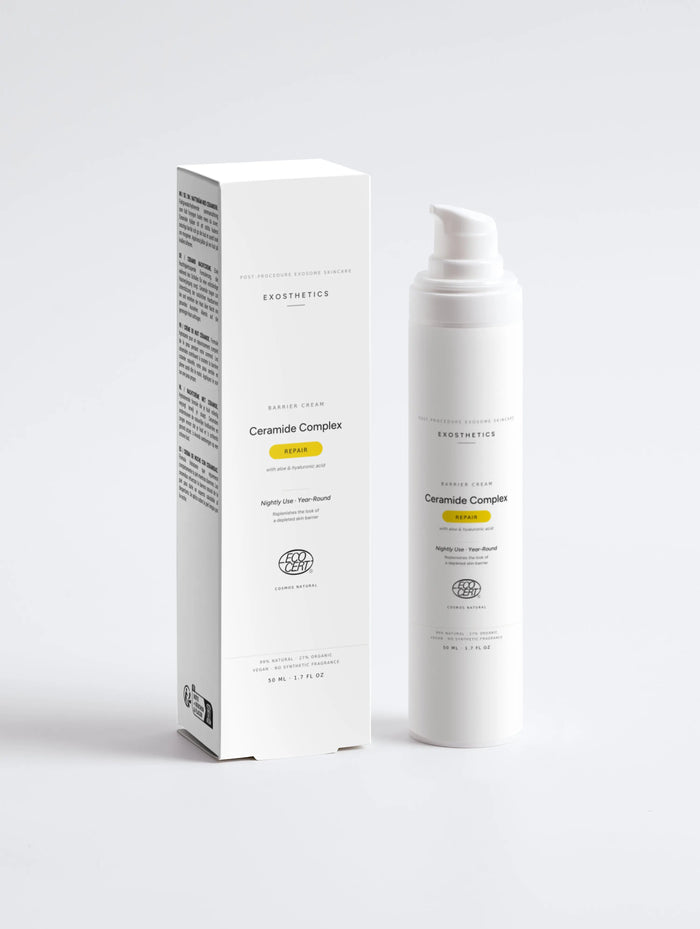
A calming, fragrance-free cream for the days right after treatment.