
Choosing between dermaplaning vs microneedling isn't about picking the trendier option - it's about understanding which treatment addresses your specific skin concerns at the right biological level. Both procedures are widely used in professional aesthetics, but they work on fundamentally different skin layers and trigger distinct biological responses. Patient confusion often stems from overlapping cosmetic marketing claims, yet the science tells a clearer story. What matters most isn't which treatment sounds more appealing, but rather which one matches your skin goals, and critically, how you approach post-treatment care and microneedling aftercare to protect your results and minimize complications.
This guide cuts through the noise with evidence drawn exclusively from peer-reviewed dermatology research, helping you make an informed decision based on mechanism, efficacy, and realistic outcomes.
Don't guess your recovery. Download FREE Clinical Microneedling Protocol Here
Is Microneedling The Same As Dermaplaning?
Short answer: No - these treatments differ fundamentally in mechanism, penetration depth, and biological response.
Dermaplaning is a superficial mechanical exfoliation technique that removes the outermost layer of dead skin cells (stratum corneum) and fine vellus hair using a sterile surgical blade. It operates entirely within the epidermis, providing immediate cosmetic smoothing without triggering any deeper tissue response.
Microneedling, by contrast, uses fine needles to create controlled microchannels that penetrate through the epidermis into the dermal layer. This deliberate injury activates wound-healing cascades - inflammation, proliferation, and remodeling - that stimulate new collagen and elastin production over weeks to months.
The key distinction: Dermaplaning = surface-level exfoliation with no collagen induction. Microneedling = dermal injury designed specifically to remodel tissue structure from within.
Understanding this difference is crucial because it determines which conditions each treatment can realistically address, and why one might work for acne scars while the other won't touch them (PMC11499218, NBK459344).

How Microneedling Works – Mechanism, Indications, Limits
What microneedling is?
Microneedling involves the use of devices equipped with fine needles (typically 0.5-2.5mm in length) that create thousands of microscopic punctures in the skin. These controlled micro-injuries are precise enough to trigger healing without causing significant tissue damage.
Why and how it works?
The biological magic happens in three phases. First comes the inflammatory phase: immediately after needling, your skin releases growth factors and cytokines that signal tissue repair. Next is the proliferative phase, where fibroblasts migrate to the injury sites and begin synthesizing new collagen and elastin. Finally, the remodeling phase continues for months as newly formed collagen matures and reorganizes, gradually improving skin texture and firmness.
This isn't just theory - studies confirm that microneedling upregulates collagen type I and III production, the structural proteins responsible for skin strength and elasticity (PubMed 21533984).
What microneedling treats?
Clinical evidence supports microneedling for:
-
Acne scars (atrophic/ice pick/rolling scars)
-
Limited improvement in dyschromia (though evidence is weaker here)
-
Enlarged pores
Multiple sessions are typically required - most studies document protocols of 3-6 treatments spaced 4-6 weeks apart to allow collagen maturation between sessions (PMC11015872, PMC11499218).
What it does NOT treat reliably
Despite its versatility, microneedling has clear limitations:
-
Deep static wrinkles (requires more aggressive interventions)
-
Severe skin laxity (needs surgical or energy-based tightening)
-
Active inflammatory acne or rosacea (can worsen inflammation)
-
Keloid-prone skin (risk of abnormal scarring)
Realistic expectations matter. Microneedling improves skin quality incrementally, not dramatically overnight.
Recovery Forecast
Get your personalized timeline for returning to normal activities after your microneedling treatment.
Your Forecast is Ready!
Enter your email to receive your personalized recovery timeline, safe activity dates, and Exosome Accelerator calculation.
Redness Clears
Day 5
Gym Safe
Day 4
Exosome Boost
2-3 daysfaster recovery
Check Your Inbox!
Your personalized Recovery Forecast is on its way. Look for an email from Exosthetics in the next few minutes.
How Dermaplaning Works – Mechanism, Indications, Limits
What dermaplaning is?
Dermaplaning involves manually gliding a sterile 10-gauge scalpel at a 45-degree angle across the skin surface to shave away the stratum corneum (dead skin layer) and fine vellus hair. The procedure is entirely superficial - no dermal penetration occurs.
Why and when it is used?
Dermaplaning delivers immediate cosmetic benefits: smoother texture, brighter appearance, and enhanced penetration of topical skincare products. It's often used as a preparatory step before chemical peels or laser treatments to optimize product absorption. Some practitioners incorporate it into routine facials for instant "glow" effects (SciTechnol Dermaplaning Review, NBK459344).
What dermaplaning treats?
Dermaplaning addresses:
-
Surface roughness and dullness
-
Temporary textural unevenness
-
Buildup of dead skin cells
-
Fine vellus hair (cosmetic concern, not medical)
Results are immediate but temporary - typically lasting 3-4 weeks before the stratum corneum regenerates.
What it does NOT treat?
Dermaplaning cannot address:
-
Acne scars (requires dermal remodeling)
-
Wrinkles at the dermal level
-
Pigment disorders rooted in melanocyte dysfunction
-
Collagen loss or structural aging
Because dermaplaning only removes surface layers without triggering biological repair mechanisms, it's fundamentally a cosmetic refresh rather than a corrective treatment.
Differences between dermaplaning and microneedling
|
Feature |
Dermaplaning |
Microneedling |
|
Depth of action |
Epidermal only (0.02-0.03mm) |
Epidermal + Dermal (0.5-2.5mm) |
|
Collagen stimulation |
❌ No |
✅ Yes |
|
Mechanism |
Mechanical exfoliation |
Controlled injury → wound healing |
|
Downtime |
Minimal (few hours redness) |
1-3 days (superficial) / 5-7 days (deeper) |
|
Evidence base |
Limited (expert consensus/case reports) |
Moderate (controlled trials) |
|
Cumulative effect |
Weak (temporary) |
Documented (progressive improvement) |
|
Sessions needed |
Ongoing maintenance (monthly) |
3-6 sessions, then maintenance |
|
Cost per session |
$75-200 |
$200-700 |
The table makes it clear: if you're seeking structural improvement (scars, wrinkles, firmness), microneedling is the evidence-backed choice. If you want immediate smoothing and glow for an event, dermaplaning delivers faster cosmetic results (PMC11499218, PubMed 21533984).
What Should You Do - Dermaplaning vs Microneedling - First?
The sequencing question has clinical logic behind it, though published protocols vary.
Dermaplaning before microneedling can be performed in controlled settings where the goal is to remove dead skin buildup before creating microchannels - theoretically enhancing product penetration during microneedling. However, this must be done with extreme caution to avoid over-compromising the skin barrier.
Key risks of same-day combination:
-
Excessive barrier disruption
-
Increased infection risk
-
Prolonged inflammation
-
Potential for irritant dermatitis
Most conservative protocols recommend dermaplaning either 1-2 weeks before microneedling or as a separate maintenance treatment between microneedling sessions - never on the same day without professional oversight.
🚩 Red flag: At-home dermaplaning followed immediately by at-home microneedling is strongly discouraged due to uncontrolled depth, sterility concerns, and compounded barrier damage (SciTechnol Dermaplaning Review, NBK459344).
Dermaplaning vs Microneedling Before and After
Understanding realistic timelines and post-treatment responses helps set appropriate expectations and identify warning signs.
Before treatment preparation
Microneedling prep:
-
Avoid active breakouts or irritation
-
Sun protection for at least 2 weeks beforehand
Dermaplaning prep:
-
Avoid active acne or open wounds
-
No recent waxing or chemical peels
After treatment - what's normal
Microneedling immediate response:
-
Pinpoint bleeding (deeper treatments)
-
Moderate to significant redness (resembling sunburn)
-
Mild swelling, especially around eyes
-
Tight, dry sensation
Timeline: Redness typically resolves within 24-72 hours for superficial treatments, up to 5-7 days for deeper protocols. Flaking may occur days 3-5 as the skin regenerates (PMC11499218, PMC11015872).
Dermaplaning immediate response:
-
Transient redness (1-2 hours)
-
Slight sensitivity to products
-
Immediate smoothness
Timeline: Most visible effects appear immediately, with skin returning to baseline within a few hours.
Red flags requiring medical attention
-
Prolonged redness beyond expected timeframes
-
Pustules or signs of infection
-
Severe pain or burning
-
Hyperpigmentation (especially in darker skin tones)
Proper post-treatment care dramatically influences both safety and outcomes.
Microneedling Aftercare – Protecting Your Investment
Because microneedling creates thousands of micro-wounds, your skin is temporarily vulnerable. Aftercare isn't optional - it's essential for preventing complications and optimizing collagen synthesis.
Critical first 48 hours
Sun protection: Treated skin is photosensitive. Use SPF 50+ mineral sunscreen and avoid direct sun exposure for at least 72 hours. UV damage during this window can trigger post-inflammatory hyperpigmentation.
Avoid active ingredients: No retinoids, AHAs, BHAs, vitamin C, or benzoyl peroxide for 5-7 days. These can inflame compromised skin.
Gentle cleansing: Use lukewarm water and mild, fragrance-free cleansers. No scrubbing, exfoliating, or washcloths.
Hydration focus: Hyaluronic acid serums and bland moisturizers support barrier repair. Many clinics apply growth factor serums immediately post-treatment while channels are open.
Supporting collagen synthesis during the healing window
Here's something most people don't realize: the 48-72 hours immediately following microneedling represent your peak absorption window. Those thousands of microchannels you just paid $200-700 to create? They're temporary portals that close within days. What you apply during this window doesn't just sit on your skin—it travels directly into the dermis where collagen remodeling happens.
This is why the serum you choose post-treatment matters as much as the treatment itself. We're not talking about your regular hyaluronic acid here. You need bioactive ingredients that specifically support the three phases of wound healing: inflammation control, fibroblast activation, and collagen maturation.
Professional-grade microneedling serums are formulated differently than daily-use products. They typically contain growth factors, peptides, exosomes or stem cell extracts at concentrations designed for compromised barriers—potent enough to work but gentle enough not to inflame freshly needled skin. These formulations bypass the stratum corneum (which you've just perforated) and deliver active ingredients directly to dermal fibroblasts—the cells responsible for synthesizing new collagen.
You've invested hundreds of dollars and accepted days of downtime for this treatment. The difference between "some improvement" and "wow, my skin actually changed" often comes down to what you do in these critical first 72 hours. A specialized serum that maximizes your collagen response isn't an upsell—it's protecting the investment you already made.
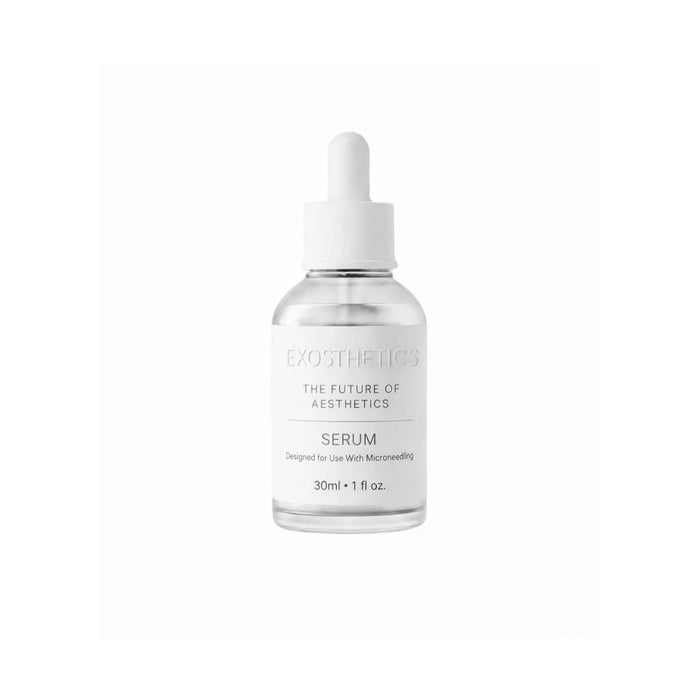
Products like the Exosthetics Microneedling Serum are specifically designed for post-procedure application, combining exosomes, growth factors with barrier-supporting ingredients like hyaluronic acid and exosomes. The formulation sits at the intersection of efficacy and safety—active enough to enhance collagen synthesis during the proliferative phase, but pH-balanced and free of irritants that could trigger inflammation when your barrier is compromised.
Infection prevention
-
Keep hands off your face
-
Use only clean pillowcases
-
Avoid makeup for 24-48 hours
-
No swimming pools, hot tubs, or saunas for 48 hours
Long-term aftercare (weeks 2-8)
Continue diligent sun protection as collagen remodeling progresses. Gradually reintroduce actives after skin has fully healed. Some protocols recommend supportive supplements (vitamin C, collagen peptides), though evidence is anecdotal (PMC11499218, PMC11015872).
Dermaplaning Or Microneedling For Acne Scars?
This question has a definitive answer rooted in tissue biology.

Dermaplaning for acne scars: No published evidence supports dermaplaning for scar remodeling. It cannot address dermal tissue loss or collagen disruption because it doesn't penetrate deeply enough to trigger repair mechanisms.
Microneedling for acne scars: Moderate-quality evidence confirms improvement in atrophic acne scars - the depressed scars resulting from collagen loss. Studies document 30-50% improvement in scar depth and texture after 3-6 sessions spaced 4-6 weeks apart. Ice pick and rolling scars respond better than boxcar scars, though all types show some benefit (PubMed 21533984, PMC11015872).
Mechanism: Needle penetration breaks down scar tissue and stimulates new collagen formation, gradually raising the scar floor and softening edges.
Realistic expectations: Microneedling improves scars but rarely eliminates them completely. Combination approaches (microneedling + subcision or TCA CROSS) may yield better results for severe scarring.
If acne scars are your primary concern, microneedling is the evidence-backed choice - dermaplaning will only temporarily smooth the surface around scars without changing their depth.
Dermaplaning vs Microneedling For Wrinkles
Wrinkle treatment requires understanding wrinkle types: dynamic (expression-related) vs. static (present at rest due to collagen loss).

Microneedling for wrinkles: Evidence confirms improvement in fine to moderate static wrinkles through collagen induction. Studies show measurable increases in dermal thickness and elasticity after serial treatments. The remodeling phase gradually plumps the dermis, softening wrinkle depth over 3-6 months (PubMed 21533984, PMC11499218).
Dermaplaning for wrinkles: No evidence supports wrinkle improvement. While dermaplaning may create a temporary optical smoothing effect by removing surface texture, it doesn't address the underlying collagen loss driving wrinkle formation.
Bottom line: If wrinkle reduction is your goal, only microneedling demonstrates collagen-mediated improvement. Dermaplaning might make skin look brighter temporarily, but wrinkles will remain unchanged at the structural level.
Types of Microneedling and Dermaplaning
Microneedling devices
Manual rollers: Handheld devices with a rolling drum of needles. Less precise depth control, higher contamination risk with repeated use. Not recommended for home use on facial skin.
Automated pens: Medical-grade devices with adjustable needle depth and controlled penetration speed. These are the gold standard in professional settings, offering precision and consistency.
Radiofrequency microneedling: Combines needles with RF energy delivery to enhance collagen stimulation. More aggressive, higher cost, longer downtime - typically reserved for advanced aging concerns.
Each device type has different depth capabilities and safety profiles. Medical-grade treatments should always be performed by trained professionals (NBK459344).
Dermaplaning techniques
Standard clinical dermaplaning: Uses a #10 scalpel blade held at 45 degrees, performed by estheticians or dermatologists in controlled settings.
Advanced dermaplaning protocols: Some clinics incorporate dermaplaning into multi-step treatments, combining it with chemical peels or LED therapy for enhanced results.
Evidence for "advanced" protocols remains largely anecdotal - most published data focuses on standard technique (SciTechnol Dermaplaning Review).
Frequency, Cumulative Effects, and When More Is Worse
Collagen remodeling follows biological timelines that can't be rushed. Understanding this prevents over-treatment and maximizes results.

Microneedling frequency
Evidence-based spacing: Studies typically use 4-6 week intervals between treatments. This allows time for the complete wound-healing cycle - inflammation, proliferation, and remodeling - to occur before creating new injuries.
Why waiting matters: Collagen synthesis peaks around weeks 2-4 post-treatment and continues remodeling for 3-6 months. Needling too frequently interrupts this process and can cause cumulative inflammation without additional benefit.
Maintenance protocols: After an initial series (3-6 sessions), maintenance treatments every 6-12 months may sustain improvements (PMC11499218, PMC11015872).
Dermaplaning frequency
Typically performed every 3-4 weeks, aligning with the skin's natural exfoliation cycle. More frequent dermaplaning risks barrier disruption - manifest as persistent redness, sensitivity, and increased transepidermal water loss.
Epidermal barrier fatigue
Both treatments stress the skin barrier. Signs of over-treatment include:
-
Chronic redness or sensitivity
-
Increased breakouts
-
Persistent dryness despite moisturizing
-
Burning sensation with regular products
Key principle: More frequent does NOT equal better results. Respecting biological recovery periods optimizes outcomes while minimizing complications.
Pros, cons, and red flags
Dermaplaning
Pros:
-
✅ Instant smoothing and radiance
-
✅ No downtime
-
✅ Enhances product absorption
-
✅ Suitable for sensitive skin (when done properly)
Cons:
-
❌ Transient results (3-4 weeks)
-
❌ No structural improvement
-
❌ Requires ongoing maintenance
-
❌ Risk of nicks if improperly performed
Microneedling
Pros:
-
✅ Collagen stimulation with cumulative benefits
-
✅ Documented improvement in scars and wrinkles
-
✅ Long-lasting results after treatment series
-
✅ Versatile for multiple concerns
Cons:
-
❌ Downtime (redness, flaking)
-
❌ Discomfort during treatment
-
❌ Requires multiple sessions
-
❌ Higher cost per session
🚩 Red flags - when to avoid these treatments
Absolute contraindications:
-
Active acne or rosacea flares
-
Active skin infections (bacterial, viral, fungal)
-
Keloid or hypertrophic scar history
-
Immunosuppression or autoimmune conditions
-
Anticoagulant use (bleeding risk with microneedling)
-
Recent isotretinoin use (wait 6-12 months post-treatment)
-
Uncontrolled diabetes (impaired wound healing)
-
Pregnancy (safety not established)
Exercise extreme caution:
-
Very thin or compromised skin barrier
-
History of post-inflammatory hyperpigmentation
-
Unrealistic expectations
-
At-home microneedling devices (especially >0.5mm depth)
Professional assessment is essential to identify contraindications and customize treatment parameters (NBK459344, PMC11499218).
What About Dermaplaning And Microneedling Together?
The combination question arises frequently, but data is limited.
Theoretical rationale: Dermaplaning before microneedling could enhance topical penetration by removing the stratum corneum barrier, potentially improving delivery of growth factors or serums applied post-needling.
Clinical reality: Few published protocols document combined same-day treatments. Most practitioners who combine them do so conservatively - light dermaplaning followed by conservative-depth microneedling - and only in patients with robust, healthy skin barriers.
Risks of combination:
-
Compounded barrier disruption
-
Extended recovery time
-
Increased sensitivity
-
Higher infection risk
Professional oversight requirement: If combining treatments, strict sterile technique, appropriate depth selection, and enhanced post-treatment monitoring are non-negotiable.
Bottom line: Limited evidence supports combination therapy. When performed, it should only occur under controlled clinical conditions with appropriate patient selection - never attempted at home (SciTechnol Dermaplaning Review, NBK459344).
Cost-Effectiveness And Treatment Planning
Neither treatment is inexpensive, and understanding the financial commitment helps with realistic planning.
Dermaplaning costs:
-
$75-200 per session
-
Monthly maintenance = $900-2,400 annually
-
Results are temporary, so discontinuing means returning to baseline
Microneedling costs:
-
$200-700 per session (varies by depth and provider credentials)
-
Initial series of 3-6 sessions = $600-4,200
-
Maintenance 1-2x yearly = $400-1,400 annually
-
Results have lasting structural benefits even after stopping
Value assessment: Microneedling costs more upfront but delivers cumulative, semi-permanent improvements. Dermaplaning costs less per session but requires indefinite continuation for maintained results. Your choice should align with both budget and desired outcome type - temporary cosmetic refresh vs. structural skin remodeling.
Conclusion
Dermaplaning and microneedling are not interchangeable treatments - they operate on different skin layers, trigger distinct biological responses, and address separate cosmetic concerns. Dermaplaning offers immediate surface smoothing with no downtime but limited lasting benefit. Microneedling requires patience and recovery time but delivers documented structural improvements in scars, wrinkles, and skin quality through collagen remodeling.
Making the choice comes down to three factors: your specific skin concern, your tolerance for downtime, and your commitment to post-treatment care. For surface dullness and texture, dermaplaning works quickly. For acne scars, wrinkles, or long-term skin quality improvement, microneedling has the evidence.
Recovery, spacing, and aftercare ultimately determine whether either treatment succeeds or causes complications. Following evidence-based protocols - proper frequency, diligent sun protection, barrier support, and professional guidance - transforms these procedures from hopeful experiments into reliable tools for skin improvement.
Choose the treatment that matches your biology and goals, not the one that dominates social media. Your skin will thank you.
FAQ
Which is better: dermaplaning or microneedling?
Microneedling has stronger evidence for structural skin changes like collagen stimulation and scar improvement, while dermaplaning offers temporary surface smoothing without deeper tissue effects. "Better" depends entirely on your goal - texture vs. long-term remodeling - and tolerance for downtime.
Can dermaplaning and microneedling be done together?
They can be combined only in controlled clinical protocols with proper spacing and professional oversight. Same-day combination carries risks of excessive barrier disruption and infection, and limited published data supports this approach.
Is dermaplaning or microneedling more effective?
Effectiveness depends on the intended outcome. Microneedling is more effective for collagen-dependent concerns (scars, wrinkles, skin firmness), while dermaplaning is more effective for immediate cosmetic smoothing and product penetration enhancement.
What are the disadvantages of dermaplaning your face?
Results are short-lived (3-4 weeks), requiring ongoing maintenance. It provides no structural skin improvement, and overuse may disrupt the skin barrier, leading to chronic sensitivity and irritation.
Does peach fuzz grow back stubbly after dermaplaning?
No evidence supports changes in hair thickness or growth pattern after dermaplaning. Vellus hair (peach fuzz) is biologically distinct from terminal hair and regrows with the same fine texture - stubble perception is typically psychological or due to blunt-cut hair ends appearing temporarily darker.
🔗 References
National Center for Biotechnology Information. (2025). Microneedling: Advances and widening horizons. PMC11499218. Retrieved from https://pmc.ncbi.nlm.nih.gov/articles/PMC11499218/
National Center for Biotechnology Information. StatPearls: Microneedling. NBK459344. Retrieved from https://www.ncbi.nlm.nih.gov/books/NBK459344/
Doddaballapur, S. (2009). Microneedling with dermaroller. Journal of Cutaneous and Aesthetic Surgery, 2(2), 110-111. PubMed ID: 21533984. Retrieved from https://pubmed.ncbi.nlm.nih.gov/21533984/
National Center for Biotechnology Information. (2024). Microneedling in dermatology: A comprehensive review. PMC11015872. Retrieved from https://pmc.ncbi.nlm.nih.gov/articles/PMC11015872/
SciTechnol. The use of advance dermaplaning in clinical skin care and treatment. Retrieved from https://www.scitechnol.com/peer-review/the-use-of-advance-dermaplaning-in-clinical-skin-care-and-treatment-bdzg.php?article_id=6961
National Center for Biotechnology Information. (2024). Microneedling for skin rejuvenation. PubMed 39591948. Retrieved from https://pubmed.ncbi.nlm.nih.gov/39591948/

The first week
Everything in this guide, in two products
Exosome Serum for the night of. 72-Hour+ Cream from day three. $99 together — and you can add Ceramide Repair, the day-7 step, for $35 instead of $49.
See the Kit — $99