
If you have ever typed "does insurance cover microneedling" into a search bar at midnight, you are not alone. It is one of the most common questions people ask before booking their first session - or after receiving a surprisingly large bill for one. The truth is nuanced, sometimes frustrating, and almost always plan-specific. This guide walks you through everything you need to know about coverage decisions, how insurers think about medical necessity versus cosmetic procedures, what realistic results look like, and why post-treatment care matters more than most people realize. We also dig deep into microneedling aftercare - including the emerging conversation around exosome-based recovery products - because what happens in the 72 hours after your session can shape your outcome just as much as the procedure itself.
Don't guess your recovery. Download FREE Clinical Microneedling Protocol Here
Quick Answer - Does Insurance Cover Microneedling?
For the vast majority of patients, microneedling is classified as a cosmetic procedure and is not covered by insurance. Coverage becomes possible - not guaranteed - only when a provider documents a qualifying medical diagnosis, demonstrates functional impairment, shows that conservative treatments have failed, and obtains prior authorization from the insurer.
Here is a quick-reference table to help you see where your situation might fall:
| Clinical Scenario | Default Insurer Classification | Coverage Possibility | Key Documentation Needed |
|---|---|---|---|
| Cosmetic rejuvenation (pores, glow, fine lines) | Cosmetic | None | N/A |
| Atrophic acne scars (appearance concern only) | Cosmetic | Very low | N/A |
| Atrophic acne scars with documented psychosocial or functional impairment | Case-by-case | Low to medium | Letter of medical necessity, photos, failed-treatment history, psychological evaluation if applicable |
| Post-surgical or post-radiation scars limiting movement | Potentially reconstructive | Medium | Functional assessment, surgical notes, referral documentation |
| Alopecia (androgenetic or alopecia areata) | Usually cosmetic or investigational | Low | Diagnosis confirmation, prior therapy failure, plan-specific review |
| Active acne (not scarring) | Not standard indication | Very low | N/A |
➡️ Bottom line: If you are getting microneedling for skin rejuvenation, fine lines, or general texture improvement, plan to pay out of pocket. If you have a documented medical condition with functional impact, keep reading - there may be a path forward.
Microneedling 101 - What It Is, How It Works, and What It Actually Treats
The Device and the Mechanism
Microneedling uses a device - typically a motorized pen with fine needles - to create tiny, controlled punctures in the skin. These micro-injuries are intentional. They trigger the body's natural wound-repair process: platelet activation, inflammatory cytokine release, fibroblast migration, and ultimately new collagen deposition. Over three to six months, that fresh collagen remodels from type III to type I, which is the stronger, more organized form that gives skin its structural integrity.
You may see microneedling referred to as collagen induction therapy, or CIT. That clinical term matters when it comes to insurance coding, so keep it in mind.
Needle depths range from about 0.25 mm for superficial treatments focused on topical product delivery, all the way up to 2.5 mm or deeper for aggressive scar remodeling. The depth your provider selects should match your specific indication, skin type, and tolerance - not a one-size-fits-all protocol.
What Microneedling Can Treat
Microneedling has clinical evidence supporting its use for several conditions, though the strength of that evidence varies:
➡️ Atrophic acne scars - Rolling and boxcar subtypes tend to respond best. Icepick scars, which are narrow and deep, generally respond poorly to microneedling alone and may require adjunct procedures like TCA CROSS or punch excision.
➡️ Post-traumatic and post-surgical scars - Including hypertrophic scars, atrophic scars, and burn-related scarring. Evidence is growing but variable across scar types.
➡️ Dyspigmentation and melasma - Microneedling may enhance the penetration of topical depigmenting agents through the microchannels it creates. However, it can also trigger post-inflammatory hyperpigmentation if performed too aggressively, particularly in darker skin tones.
➡️ Skin texture and fine lines - Mild to moderate improvements are realistic. This is a cosmetic indication.
➡️ Androgenetic alopecia - Emerging evidence suggests microneedling may boost results when used alongside minoxidil.
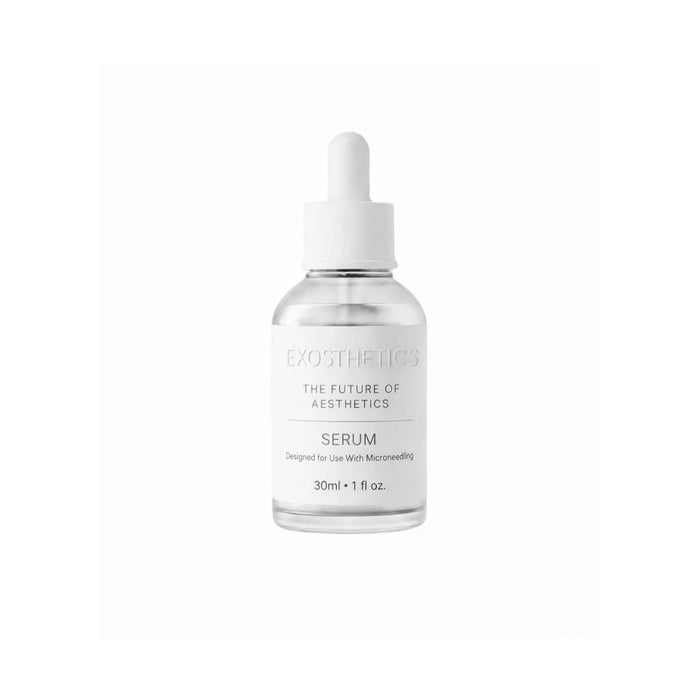
➡️ Drug delivery enhancement - The microchannels created during treatment allow topical products - including growth factor serums and exosome-based microneedling formulations - to penetrate far more effectively than they would on intact skin. This is a key reason why what you apply after microneedling matters so much, and we will return to this in the aftercare section.
What Microneedling Does NOT Reliably Treat
It is just as important to know when microneedling is the wrong tool. Deep icepick scars without subcision, severe skin laxity that requires energy-based devices or surgery, active infections, active herpes outbreaks, actively inflamed acne, and keloid-prone skin are all situations where microneedling is either ineffective or contraindicated. Melasma as a standalone treatment also carries risk of worsening in susceptible patients.

Medical Necessity vs. Cosmetic - Why Insurers Deny or Approve
How Insurers Define Medical Necessity
For an insurer to consider covering any procedure, it must meet their internal definition of "medically necessary." That typically means the procedure must diagnose or treat a recognized illness, injury, or functional impairment. It must be the appropriate level of care - not experimental, not duplicative of a simpler effective treatment. And it must be supported by peer-reviewed evidence or specialty-society guidelines that the insurer accepts.
How Insurers Define Cosmetic
Any procedure performed primarily to improve appearance - in the absence of disease, injury, or functional defect - falls into the cosmetic bucket. Most plan documents include explicit cosmetic exclusion clauses, and those clauses override clinical judgment. Your dermatologist may believe microneedling is the best treatment for your acne scars, but if your plan excludes cosmetic procedures and classifies scar improvement as cosmetic, the claim will be denied.
The Gray Zone
Microneedling lives in a frustrating gray zone. Acne scarring exists on a spectrum: mild textural irregularity on one end (cosmetic by virtually every plan) and severe disfigurement with documented psychological impairment on the other (potentially reconstructive under some plans). The same CPT code can be adjudicated differently depending on the ICD-10 diagnosis code paired with it. And some insurers sidestep the question entirely by classifying microneedling as "investigational" regardless of the indication.
Common Denial Reasons
Based on patterns seen in dermatology prior-authorization practice, the most frequent denial reasons are: 1) "Cosmetic, not medically necessary." 2) "Investigational or experimental - insufficient evidence." 3) Missing or incorrect prior authorization. 4) Incomplete documentation such as missing photos, no functional-impact narrative, or no failed-treatment history. 5) Out-of-network provider or non-covered facility type.
Can Insurance Cover Microneedling?
Coverage is not impossible, but it requires a very specific alignment of diagnosis, documentation, plan language, and sometimes persistence through multiple levels of appeal. Here are the situations where approval has been reported:
➡️ Reconstructive scar revision - Post-burn, post-surgical, or post-radiation scars that limit range of motion, cause chronic pain or itching, or meet the plan's definition of disfigurement.
➡️ Documented functional impairment - A scar contracture that restricts jaw opening, eyelid closure, or joint movement provides a stronger case than appearance alone.
➡️ Plan-specific reconstructive riders - Some employer-sponsored plans include broader reconstructive benefits that create openings for coverage.
The Documentation Package That Strengthens a Request
If you believe your situation qualifies, here is what you or your provider should assemble:
➡️ A letter of medical necessity from a board-certified dermatologist or plastic surgeon, specifying diagnosis, failed conservative treatments, functional impact, and why microneedling is the appropriate intervention.
➡️ An ICD-10 diagnosis code that supports a medical indication - for example, L90.5 for scar conditions rather than a generic acne code without a scar qualifier.
➡️ Standardized clinical photographs with consistent lighting and positioning at baseline.
➡️ Treatment history documenting failed or insufficient response to covered alternatives such as topical retinoids, silicone sheeting, or intralesional steroids.
➡️ A functional impact statement including pain scales, range-of-motion measurements, or a psychological evaluation if psychosocial impairment is part of the argument.
Questions to Ask Your Provider's Office
Before your procedure, ask these specific questions: What CPT code will you bill? What ICD-10 diagnosis code will be used? Will you submit prior authorization, or is that my responsibility? Can you provide a letter of medical necessity? Do you have experience getting microneedling approved by insurance? And critically - if denied, will your office support a peer-to-peer appeal? That last question matters because peer-to-peer appeals, where your doctor speaks directly with the insurer's medical director, are the single most effective appeal mechanism, and most patients do not know they exist.
When It Cannot Provide Cover
Insurance will almost certainly not help:
➡️ Cosmetic skin rejuvenation - pore reduction, "glow," texture smoothing, anti-aging.
➡️ Acne scar improvement without documented functional or severe psychosocial impairment.
➡️ Fine lines and wrinkle reduction.
➡️ Skin tightening.
➡️ Hyperpigmentation treatment for cosmetic concern.
➡️ Hair restoration under most plans.
➡️ Any microneedling session performed at a facility that cannot bill medical insurance, which includes most med-spas.
Related: Can an esthetician do microneedling and can an LPN do microneedling
Payment Alternatives When Insurance Will Not Cover
If you are paying out of pocket, you still have options. Many dermatology offices offer session packages or financing through third-party services. HSA and FSA funds may be eligible for microneedling if your provider documents the procedure as treatment for a medical condition and supplies a letter of medical necessity - but check with your HSA or FSA administrator first, as eligibility is plan-specific. Do not rely on med-spa staff interpretations. When comparing prices, ask for the all-in cost including numbing cream, serums, and follow-up visits, because hidden add-on costs are one of the top patient complaints.
Red Flags to Watch For 🚩
Be cautious of any med-spa advertising "insurance-covered microneedling" without discussing diagnosis, coding, or prior authorization. Watch out for providers who guarantee coverage before verifying your specific plan, facilities that cannot provide a superbill with CPT and ICD-10 codes, and "free consultations" that pressure you into same-day treatment with financing.
Does Insurance Ever Cover Microneedling?
Yes - but rarely, and only when several conditions align simultaneously. The plan must include a reconstructive or medically necessary procedure benefit that does not specifically exclude microneedling or collagen induction therapy. The procedure must not be classified as investigational in the insurer's current clinical policy bulletin. Documentation must meet internal medical-necessity criteria. And prior authorization must be obtained if the plan requires it.
Policy Variability You Need to Understand
Not all insurance is created equal, and this is where confusion multiplies. Employer-sponsored plans under ERISA are self-funded, meaning the employer sets coverage terms. Two people with the same insurer name on their cards can have completely different benefits. State-regulated individual and small-group plans must comply with state-mandated benefits, but no state currently mandates microneedling coverage. Medicare is a federal program with national coverage determinations. Medicaid is state-administered with wide variability. VA and TRICARE have separate procedure coverage lists and are worth checking if you are a veteran or service member - particularly for burn scars or surgical scars.
📌 Remember: Coverage is determined by your diagnosis and your specific plan document - not by the device, not by the provider's marketing, and not by what someone else's insurance paid for.

Does Aetna Cover Microneedling?
Aetna, like most major insurers, publishes Clinical Policy Bulletins that outline their stance on specific procedures. To research Aetna's position yourself, visit Aetna's public Clinical Policy Bulletin database and search for terms like "microneedling," "collagen induction therapy," "percutaneous collagen induction," or "skin needling." When you find the relevant bulletin, pay close attention to whether the procedure is classified as cosmetic, investigational, or conditionally covered. Look for which diagnosis codes, if any, are listed as potentially eligible. Check whether prior authorization is required. And note the evidence review date, because policies are updated periodically and an old bulletin may not reflect the current stance.
If you want to pursue coverage through Aetna, call the member services number on the back of your card and ask specifically: "Is CPT code [your provider's specific code] covered under my plan for ICD-10 code [your diagnosis]?" Request a written determination rather than relying on a phone representative's verbal answer. If you are denied, request the specific denial reason and the clinical policy bulletin number cited - you will need both for any appeal.
Does Health Insurance Cover Microneedling?
The phrase "health insurance" encompasses an enormous range of plans, from high-deductible individual marketplace plans to comprehensive employer-sponsored PPOs to government programs. The answer to whether health insurance covers microneedling depends entirely on three variables: your specific plan's benefit structure, the diagnosis your provider documents, and whether your insurer considers microneedling an accepted treatment for that diagnosis or classifies it as investigational.
As a general rule, commercial health insurance plans - whether through Blue Cross Blue Shield, UnitedHealthcare, Cigna, Humana, or any other carrier - follow the same logic outlined above. Cosmetic use is excluded. Medical use requires robust documentation and usually prior authorization. The burden of proof falls on you and your provider to demonstrate that the procedure is not cosmetic in your case.
If your plan is through the ACA marketplace, be aware that essential health benefits do not include cosmetic procedures, and microneedling is not classified as a preventive service. Your best path is always to call your insurer directly with the specific CPT and ICD-10 codes your provider intends to use.
Does Medicaid Cover Microneedling?
Medicaid coverage varies dramatically from state to state because each state administers its own program within federal guidelines. In most states, Medicaid does not cover microneedling. The program is designed to cover medically necessary services, and most state Medicaid programs either explicitly exclude cosmetic procedures or classify microneedling as investigational.
That said, if you have severe scarring - particularly from burns, trauma, or surgery - that causes documented functional impairment, it is worth having your provider contact your state Medicaid office to inquire about coverage for reconstructive scar treatment. The procedure would need to be framed as reconstructive rather than cosmetic, with full documentation of functional limitation. Approval rates are very low, but the inquiry costs nothing.
Does Medicare Cover Microneedling?
Medicare follows national coverage determinations and local coverage determinations issued by Medicare Administrative Contractors. As of this writing, microneedling does not have a national coverage determination that supports coverage for any indication. Medicare explicitly excludes cosmetic procedures under Section 1862(a)(1) of the Social Security Act.
For a procedure to be covered under Medicare, it must be "reasonable and necessary for the diagnosis or treatment of illness or injury." While severe scar contractures causing functional limitation could theoretically fall into this category, the reality is that Medicare approval for microneedling is exceptionally rare. If you are a Medicare beneficiary considering microneedling, expect to pay out of pocket and explore the payment alternatives described earlier in this guide.
How Do I Know If My Health Insurance Cover Microneedling?
This is actually one of the most practical questions in this entire guide, so here is a step-by-step process:
➡️ Step 1: Get your plan's Summary of Benefits and Coverage document. Look for sections on cosmetic exclusions, reconstructive surgery benefits, and any mention of dermatological procedures.
➡️ Step 2: Ask your dermatologist which CPT code and ICD-10 diagnosis code they would use for your specific case.
➡️ Step 3: Call your insurer's member services line with those codes in hand. Ask whether that specific combination is covered under your specific plan.
➡️ Step 4: Request a written pre-determination or predication of benefits. A verbal answer on the phone is not a guarantee of payment.
➡️ Step 5: If the answer is no, ask whether a prior authorization with a letter of medical necessity would change the determination.
➡️ Step 6: If denied, ask about the appeals process, including whether a peer-to-peer review between your doctor and the insurer's medical director is available.
This process takes effort, but it is the only reliable way to find out where you stand before committing to treatment.
Does Insurance Cover Microneedling at Dermatologist?
The setting where you receive microneedling matters for insurance purposes - sometimes a great deal. A board-certified dermatologist's office or a hospital-based outpatient clinic is far more likely to be able to bill medical insurance than a med-spa or aesthetic clinic. This is because medical offices have the coding infrastructure, the provider credentials, and the documentation workflows that insurers require.
However, receiving microneedling at a dermatologist's office does not automatically mean it will be covered. The same rules about diagnosis, medical necessity, and plan language apply regardless of the setting. What the dermatologist's office does provide is the ability to properly code the procedure, submit prior authorizations, write letters of medical necessity, and support appeals - none of which a typical med-spa can do.
If insurance coverage is important to you, always choose a medical dermatology office over a cosmetic-only facility.
Does Insurance Cover Microneedling for Acne?
This is a common point of confusion. Microneedling is not a standard treatment for active acne - it is a treatment for acne scars. In fact, performing microneedling on actively inflamed acne is contraindicated because it can spread bacteria, worsen inflammation, and increase the risk of infection and scarring.
If you have active acne, your insurer will cover evidence-based acne treatments such as topical retinoids, antibiotics, hormonal therapies, or isotretinoin - not microneedling. Once your acne is controlled and you are left with scarring, microneedling enters the conversation, but at that point the coverage question shifts to the scar-treatment analysis described throughout this guide.
Does Insurance Cover Microneedling for Acne Scars?
Acne scars are the most common reason people seek microneedling, and unfortunately, this is also the most common reason people are disappointed by insurance denials. Most insurers classify acne scar treatment as cosmetic because scarring from acne, while distressing, is generally not considered a functional impairment.
The exception - and it is a narrow one - is when acne scarring is so severe that it causes documented psychosocial impairment or functional limitation. If a mental health professional documents that your scarring contributes to clinical depression, social avoidance, or occupational dysfunction, and your dermatologist provides a letter of medical necessity with standardized photos and a history of failed conservative treatments, some plans will consider the claim on a case-by-case basis.
The reality is that approval rates for acne scar microneedling remain very low. If you pursue this route, be prepared for at least one denial and one appeal. Having a provider willing to do a peer-to-peer review is essential.
Does Insurance Cover Microneedling for Face?
The location of the treatment - face versus body - does not independently determine coverage. Insurance decisions are based on the diagnosis and the medical necessity documentation, not the anatomical site. Microneedling on the face for cosmetic rejuvenation is not covered. Microneedling on the face for a post-surgical scar contracture limiting eyelid function could potentially be covered.
That said, facial procedures may receive slightly more consideration in reconstructive contexts because facial disfigurement is more likely to meet plan definitions of "significant" cosmetic or functional impairment. If your claim involves facial scarring, make sure your documentation emphasizes any functional components - difficulty with facial expressions, pain, restriction of movement - rather than focusing solely on appearance.
Does Insurance Cover RF Microneedling?
Radiofrequency (RF) microneedling combines traditional microneedling with radiofrequency energy delivered through the needle tips. Devices like Morpheus8, Vivace, Secret RF, and Potenza fall into this category. RF microneedling is more aggressive than standard microneedling, reaches deeper tissue layers, and produces more significant collagen remodeling and skin tightening.
From an insurance perspective, RF microneedling faces the same - and often greater - barriers to coverage. It is more expensive, which increases insurer resistance. It is newer, which means more insurers classify it as investigational. And it is overwhelmingly used for cosmetic indications like skin tightening and jawline contouring, which reinforces its cosmetic classification in policy databases.
If you are considering RF microneedling specifically, assume it will be an out-of-pocket expense. The same documentation pathway described above could theoretically apply if your indication is reconstructive, but the practical likelihood of coverage is even lower than for standard microneedling.
Frequently Asked Questions
Does insurance cover microneedling for cosmetic purposes?
No. Insurance does not cover microneedling performed for cosmetic purposes such as skin rejuvenation, pore reduction, fine lines, or general texture improvement. These are considered elective and fall under cosmetic exclusion clauses in virtually all plans.
Can I use my HSA or FSA to pay for microneedling?
Possibly. If your provider documents the procedure as treatment for a medical condition and provides a letter of medical necessity, HSA or FSA funds may be eligible. Check with your specific plan administrator before assuming eligibility, as rules vary by plan.
How much does microneedling cost out of pocket?
Standard microneedling sessions typically range from $200 to $700 per session depending on the provider, geographic location, and whether add-ons like PRP or exosome serums are included. RF microneedling tends to be higher, ranging from $600 to $1,500 or more per session. Most treatment plans require three to six sessions.
What is the difference between microneedling and RF microneedling for insurance purposes?
Both face the same coverage barriers, but RF microneedling is more likely to be classified as investigational due to its newer technology and higher cost. Neither is routinely covered for cosmetic indications, and both require the same medical necessity documentation pathway for any chance of approval.
How long is the downtime after microneedling?
Most patients experience visible redness and mild swelling for one to three days. Light peeling or dryness may continue for up to five days. Social downtime is typically two to three days, though many people feel comfortable returning to normal activities with mineral makeup by day two.
Will microneedling help my deep acne scars?
Microneedling works best on rolling and boxcar-type acne scars. Deep icepick scars generally require adjunct procedures like TCA CROSS, subcision, or punch excision for meaningful improvement. A board-certified dermatologist can evaluate your scar types and recommend the most appropriate combination approach.
Is microneedling safe for dark skin tones?
Microneedling is generally considered safer for darker skin tones than many laser treatments because it does not rely on light energy that targets melanin. However, post-inflammatory hyperpigmentation is still a risk, particularly with aggressive depths or RF energy. An experienced provider will adjust needle depth and treatment parameters based on your skin type.
Final Thoughts - Making the Best Decision for Your Skin and Your Wallet
The insurance question around microneedling is, for most people, a short conversation with a disappointing answer. But understanding why insurers make the decisions they do - and knowing the exact documentation pathway for the rare cases where coverage is possible - puts you in a stronger position whether you are filing a claim or paying out of pocket.
If you are proceeding with microneedling regardless of coverage, invest your energy where it counts most: choosing a qualified provider, understanding your specific skin concerns and scar types, setting realistic expectations for results, and committing to proper aftercare. The procedure itself takes 30 to 60 minutes. The recovery and remodeling process takes months. What you do in that window - the products you use, the sun protection you maintain, the follow-up sessions you complete - will ultimately determine whether microneedling was worth every penny.

The first week
Everything in this guide, in two products
Exosome Serum for the night of. 72-Hour+ Cream from day three. $99 together — and you can add Ceramide Repair, the day-7 step, for $35 instead of $49.
See the Kit — $99