
The cosmetic dermatology world is filled with buzzwords and marketing promises, but few treatments have generated as much genuine scientific interest as RF microneedling. If you're researching what is RF microneedling and whether it lives up to the hype, you've come to the right place.
This isn't another marketing piece filled with before-and-after photos that conveniently ignore lighting differences and strategic angles. Instead, we're diving deep into the science, mechanism, realistic outcomes, and critical considerations around post-treatment care and microneedling aftercare that determine whether your investment actually delivers results.
RF microneedling represents a significant evolution beyond traditional cosmetic facials or superficial skin treatments. It's a minimally invasive, energy-assisted procedure that combines mechanical dermal injury with radiofrequency thermal energy to trigger controlled remodeling deep within your skin's structure. The outcomes you can realistically expect depend on several factors: the specific device used, energy delivery parameters, your particular skin indication, and how diligently you follow evidence-based aftercare protocols.
Don't guess your recovery. Download FREE Clinical Microneedling Protocol Here
What Is RF Microneedling Treatment?
At its core, RF microneedling is a medical-grade procedure that merges two distinct therapeutic mechanisms into one treatment. Unlike superficial cosmetic procedures that work primarily at the skin's surface, RF microneedling targets the dermis - the deeper structural layer where collagen networks, elastin fibers, and the skin's architectural framework reside.
The dual mechanism works like this:
First, ultra-fine needles create controlled mechanical injury by penetrating into the dermal layer. This isn't random damage - it's precisely calibrated microtrauma that triggers your skin's natural wound-healing cascade. Second, radiofrequency energy is delivered directly through these needle tips at the moment of dermal penetration, creating focused thermal zones that cause immediate collagen denaturation followed by organized remodeling over subsequent weeks.
This fractional injury pattern is crucial. By leaving surrounding tissue intact between treatment zones, your skin maintains its barrier function while the treated areas undergo controlled regeneration. The thermal component distinguishes RF microneedling from purely mechanical approaches, enabling deeper dermal effects that mechanical needling alone cannot achieve.
The procedure isn't performed with a derma roller you'd buy online. Medical-grade RF microneedling devices use precisely engineered needle arrays, calibrated energy output, and depth control that requires professional training to operate safely and effectively.
Sources: PubMed 24807263, PMC6624002

How Does RF Microneedling Work?
The Immediate Response (During Treatment):
When the device's needles penetrate to the programmed depth (typically 0.5-4mm depending on indication and treatment area), radiofrequency energy emits from the needle tips. This creates controlled thermal zones in the dermis where temperatures reach levels sufficient to denature existing collagen fibers. Think of it like controlled restructuring - the heat causes immediate collagen contraction, which contributes to the subtle tightening effect some patients notice within days.
The Remodeling Phase (Weeks 1-12):
The real transformation happens over time through a process called neocollagenesis. Your skin interprets the controlled injury as a signal to initiate repair mechanisms. Fibroblasts (the cells responsible for producing collagen and elastin) become activated and begin synthesizing new collagen fibers in a more organized pattern than the degraded fibers they're replacing.
Key Biological Responses Include:
-
Collagen fiber remodeling - New Type I and Type III collagen synthesis
-
Dermal tightening - Contraction of existing fibers plus deposition of new structural proteins
-
Elastin reorganization - Improved elastic fiber architecture supporting skin resilience
-
Neovascularization - Formation of new microvascular networks supporting tissue health
The depth of needle penetration and the amount of RF energy delivered determine which layers undergo remodeling. Superficial treatments primarily affect texture, while deeper penetration with appropriate energy settings can influence dermal architecture enough to create measurable tightening.
One critical point often missed in marketing materials: the visible results you see at week 8-12 represent cumulative biological remodeling, not immediate cosmetic changes. Expecting dramatic overnight transformation sets you up for disappointment.
Sources: PubMed 24807263, PMC12685671
Recovery Forecast
Get your personalized timeline for returning to normal activities after your microneedling treatment.
Your Forecast is Ready!
Enter your email to receive your personalized recovery timeline, safe activity dates, and Exosome Accelerator calculation.
Redness Clears
Day 5
Gym Safe
Day 4
Exosome Boost
2-3 daysfaster recovery
Check Your Inbox!
Your personalized Recovery Forecast is on its way. Look for an email from Exosthetics in the next few minutes.
What Is Regular Microneedling?
Regular microneedling (also called collagen induction therapy or percutaneous collagen induction) relies exclusively on mechanical injury. Devices like derma rollers, stamp applicators, or automated pen systems create microchannels in the skin without any thermal or energy component. The entire therapeutic effect depends on triggering the wound-healing cascade through physical trauma alone.
The Mechanism:
When hundreds of tiny needles puncture the epidermis and penetrate into the superficial dermis, your skin responds by releasing growth factors, activating fibroblast proliferation, and initiating collagen synthesis. The microchannels also temporarily enhance transdermal absorption, which is why practitioners often apply serums or growth factor preparations immediately post-treatment.
The Key Difference:
Without the thermal component, regular microneedling generates less dermal tightening than RF-assisted approaches. The collagen remodeling occurs, but it's driven purely by wound healing rather than the combined effect of thermal denaturation plus mechanical injury. For certain indications like superficial texture improvement or enhanced product penetration, this may be entirely sufficient. For skin laxity concerns requiring deeper dermal restructuring, the additional RF component offers measurable advantages.
Think of regular microneedling as renovation that works with your existing structure. RF microneedling is renovation plus controlled demolition and reconstruction of deeper architectural elements.
Sources: PMC6624002, PubMed 31280844

What Is RF Microneedling Good For?
Evidence-Supported Indications:
✅ Acne Scars - Multiple studies demonstrate measurable improvement in atrophic acne scarring, particularly rolling and boxcar varieties. The combination of dermal remodeling and collagen reorganization can elevate depressed areas and smooth irregular texture patterns created by post-inflammatory scarring.
✅ Skin Laxity - Mild to moderate skin laxity responds to the dermal tightening effect produced by thermal collagen contraction and subsequent neocollagenesis. This isn't surgical lifting - it's structural reinforcement of existing tissue architecture.
✅ Wrinkles and Fine Lines - Particularly periorbital and perioral rhytids (wrinkles around the eyes and mouth) show improvement through dermal thickening and collagen reorganization. The effect is cumulative across multiple treatment sessions.
✅ Texture Irregularities - Enlarged pores, rough texture, and minor surface irregularities respond well to the combined mechanical and thermal remodeling effects.
Critical Qualifier:
These are cosmetic improvements, not medical disease treatments. The degree of improvement varies considerably based on treatment depth, energy parameters, number of sessions, and individual biological response. Someone with severe photodamage and deep rhytids will not achieve the same results as someone with mild texture concerns and early laxity.
The clinical literature shows statistically significant improvements in validated assessment scales, but "statistically significant" doesn't always translate to "immediately noticeable to the naked eye." Setting realistic expectations based on your specific concerns is essential.
Sources: PMC6624002, PubMed 31779946
RF Microneedling Before and After
What Changes Are Actually Realistic:
📊 Gradual Improvement Over Weeks - Peak results typically manifest 8-12 weeks post-treatment as neocollagenesis reaches maximum expression. Anyone showing you "immediate" dramatic results is showing you inflammation, temporary swelling, or strategic photography.
📊 Texture and Firmness Outperform Pigment Changes - RF microneedling excels at dermal remodeling (texture, fine lines, subtle tightening) but has limited direct effect on pigmentation. While some improvement in post-inflammatory hyperpigmentation may occur through general skin quality improvement, it's not the primary mechanism of action.
📊 Cumulative Effects Across Sessions - Single-session improvements are typically subtle. The protocol used in most clinical studies involves 3-5 sessions spaced 4-6 weeks apart, with assessment at 3 months after the final session.
What Before/After Photos Often Exaggerate:
🚨 Lighting manipulation - Different lighting angles, color temperature, and shadows can dramatically alter perceived texture and fine lines
🚨 Inflammation bias - Some "after" photos are taken during the inflammatory response phase when temporary swelling creates an illusion of volume and smoothness
🚨 Makeup and skincare changes - Patients often improve their entire skincare regimen around treatment time, making it impossible to isolate the RF microneedling effect
🚨 Cherry-picked timepoints - Showing results at peak inflammation (day 2-3) or optimal healing (week 10) while ignoring less flattering intermediate phases
The Clinical Reality:
When assessed using standardized photography protocols, validated scarring scales, and blinded evaluator ratings, RF microneedling demonstrates measurable but moderate improvements. A study might report "average improvement of 1.5 points on a 4-point severity scale" - that's meaningful clinically, but it's not the dramatic transformation social media leads you to expect.
If you're considering treatment, ask to see a full photo series including immediate post-treatment, week 1, week 4, and week 12 images taken under consistent lighting conditions. This gives you realistic insight into the actual progression and final outcome.
Sources: PMC6624002, PubMed 40537669

Is RF Microneedling Effective?
The short answer: Yes, for specific indications when performed with appropriate protocols. The longer answer requires understanding what "effective" actually means in clinical terms.
What the Evidence Shows:
Clinical studies demonstrate statistically significant improvements in acne scar severity scores, skin laxity measurements, and wrinkle assessments when RF microneedling is performed in a series of treatments. Patient satisfaction ratings in published studies typically range from "moderate improvement" to "significant improvement" on validated scales.
The Effect Size Reality:
RF microneedling produces moderate effect sizes - it's not comparable to ablative fractional laser resurfacing or surgical intervention. Think of it as occupying a middle ground: more aggressive than topical retinoids or chemical peels, less aggressive than CO2 laser or facelift procedures.
Multiple Sessions Outperform Single Treatments:
Nearly every clinical study showing meaningful outcomes used protocols involving 3-5 sessions spaced 4-6 weeks apart. Single-treatment approaches show minimal to modest improvement that doesn't reach statistical significance in many outcome measures. The biological rationale makes sense - cumulative collagen remodeling across multiple controlled injury-and-repair cycles produces superior architectural changes compared to one-time stimulation.
What "Effective" Doesn't Mean:
❌ It won't eliminate deep acne scars completely
❌ It won't replace a surgical facelift for advanced laxity
❌ It won't dramatically alter skin texture after one session
❌ It won't work equally well for all skin types and concerns
What "Effective" Does Mean:
✅ Measurable improvement in validated clinical assessments
✅ Patient-reported satisfaction when expectations are appropriate
✅ Histological evidence of increased dermal collagen density
✅ Durability of results for months following treatment completion
The key is matching the treatment to appropriate indications and maintaining realistic expectations about the magnitude and timeline of improvement.
Sources: PubMed 31779946, PMC11497551
So Is RF Microneedling Better Than Regular?
This question assumes "better" is universal, which misses the nuance of how medical aesthetics actually works. Let's break down when each approach holds advantages.
RF Microneedling Shows Superiority For:
🎯 Skin Laxity Concerns - The thermal component creates immediate collagen contraction and drives more aggressive dermal remodeling than mechanical injury alone. If tightening is your primary goal, RF delivers measurably better outcomes.
🎯 Deeper Dermal Remodeling - When you need to impact the mid-to-deep dermis (where structural changes occur), the ability to deliver controlled thermal energy at depth creates effects that mechanical needling cannot match.
🎯 Acne Scar Depression - The combination of mechanical disruption and thermal remodeling appears to be more effective for elevating atrophic scars than mechanical trauma alone.
Regular Microneedling May Suffice For:
🎯 Superficial Texture Refinement - If you're addressing mild textural irregularities, enlarged pores, or early fine lines, the wound-healing response from mechanical needling may be entirely adequate.
🎯 Maintenance Protocols - After achieving initial improvement through more aggressive treatment, regular microneedling sessions can maintain results with lower cost and downtime.
🎯 Product Penetration Enhancement - When the primary goal is improving transdermal absorption of topical agents, the microchannel creation from regular needling accomplishes this without the additional thermal component.
🎯 Budget Constraints - Regular microneedling typically costs significantly less per session while still triggering meaningful collagen induction.
The Clinical Perspective:
Neither is universally "better" - they're tools with different mechanisms and applications. An experienced practitioner assesses your specific concerns, skin type, budget, and goals to recommend the approach most likely to deliver meaningful improvement. Sometimes the answer is starting with RF microneedling for initial remodeling, then transitioning to regular microneedling for maintenance.
Sources: PubMed 31280844, PMC6624002
RF Microneedling Vs Regular Microneedling Comparison
|
Feature |
RF Microneedling |
Regular Microneedling |
|
Energy Source |
Radiofrequency + mechanical needles |
Mechanical needles only |
|
Primary Mechanism |
Thermal injury + wound healing |
Wound healing cascade alone |
|
Dermal Depth Impact |
Deep dermal remodeling |
Superficial to mid-dermal |
|
Tightening Effect |
Significant (thermal collagen contraction) |
Minimal (wound healing only) |
|
Downtime |
Moderate (3-7 days typical) |
Mild (1-3 days typical) |
|
Discomfort Level |
Moderate (requires topical anesthesia) |
Mild to moderate |
|
Best For |
Laxity, deeper scars, structural changes |
Texture, fine lines, maintenance |
|
Cost Per Session |
Higher ($$-$$$) |
Lower ($-$$) |
|
Sessions Needed |
Typically 3-5 for optimal results |
Typically 4-6 for optimal results |
|
Results Timeline |
8-12 weeks post-final session |
6-10 weeks post-final session |
Sources: PubMed 24807263, PMC6624002
Is RF Microneedling Ablative?
RF microneedling is non-ablative at the epidermal level but creates controlled ablative thermal injury in the dermis. Let me explain what that means in practical terms.
Ablative procedures literally vaporize or remove the outermost skin layers. Think of traditional CO2 laser resurfacing where the epidermis is completely removed and must regenerate from scratch. That's full ablation - high efficacy but significant downtime and risk.
RF microneedling leaves the epidermis largely intact. The needles create temporary microchannels that close rapidly, but they don't remove epidermal tissue. However, at the dermal level where the RF energy is delivered, there is indeed thermal ablation - controlled zones of tissue where collagen is denatured and must be replaced through neocollagenesis.
Why This Distinction Matters:
✅ Lower Risk Profile - Preserving the epidermis dramatically reduces infection risk, healing time, and the probability of prolonged erythema or scarring compared to fully ablative lasers.
✅ Faster Recovery - Because the skin barrier remains largely intact, the healing process follows a different timeline than ablative resurfacing.
✅ Still Requires Medical Aftercare - Despite being epidermal non-ablative, the dermal thermal injury necessitates appropriate barrier repair, sun protection, and anti-inflammatory care to optimize outcomes and prevent complications.
The "fractional" nature means only a percentage of skin is treated in each session, with untreated areas serving as reservoirs for rapid healing. This is the same principle used in fractional laser treatments, but accomplished through a different delivery mechanism.
Sources: PMC12685671
RF Microneedling Benefits
Dermal Tightening
The thermal collagen contraction combined with organized neocollagenesis creates measurable improvement in skin firmness and mild laxity. This is the most distinctive benefit compared to non-energy-based treatments. Studies demonstrate improvement in validated laxity scales, though the magnitude is moderate rather than dramatic.
Texture Refinement
The combination of mechanical disruption and thermal remodeling addresses multiple texture concerns simultaneously: enlarged pores, rough surface topology, and irregular skin architecture. Patients report smoother skin feel and more even light reflection across treated areas.
Acne Scar Improvement
Clinical evidence supports meaningful improvement in atrophic acne scarring, particularly the rolling and boxcar varieties. The mechanism involves both mechanical disruption of scar tissue bands and stimulation of new collagen deposition that helps elevate depressed areas. Icepick scars, being the deepest variety, show more limited response.
Lower PIH Risk vs Ablative Lasers
Post-inflammatory hyperpigmentation (PIH) is a significant concern in patients with Fitzpatrick skin types III-VI. While RF microneedling doesn't eliminate PIH risk, the preserved epidermis and fractional approach appear to carry lower risk than fully ablative laser treatments. Critical caveat: "lower risk" doesn't mean "no risk" - appropriate patient selection and conservative energy settings remain essential.
Minimal to Moderate Downtime
Compared to ablative resurfacing which can require 7-14 days of significant social downtime, RF microneedling typically produces 3-5 days of noticeable erythema and mild swelling followed by subtle textural changes that resolve over 1-2 weeks.
Cumulative, Progressive Improvement
Unlike treatments that deliver immediate but temporary results, RF microneedling triggers biological processes that continue evolving for weeks after treatment. The cumulative effect across multiple sessions builds upon previous remodeling for progressive enhancement.
Realistic Expectations Remain Critical:
These benefits manifest within the context of realistic improvement scales. A 30-40% improvement in scar severity or a subtle but measurable increase in skin firmness represents meaningful enhancement - but it's not a facelift equivalent or complete scar elimination.
Sources: PubMed 31779946, PMC11497551
RF Microneedling Side Effects
Normal, Expected Responses:
✅ Erythema (Redness) - Virtually universal. Expect significant redness for 24-72 hours, with gradual fading over 3-7 days. This represents the inflammatory phase of wound healing and is not a complication.
✅ Edema (Swelling) - Mild to moderate swelling is common, particularly in thinner-skinned areas like around the eyes. Peak swelling typically occurs 24-48 hours post-treatment and resolves within 3-5 days.
✅ Pinpoint Bleeding - Small amounts of bleeding at needle insertion sites during treatment is normal, especially when treating at deeper depths. This should resolve immediately with light pressure.
✅ Dry, Flaky Skin - As the micro-injuries heal, you may experience surface dryness and light flaking for 3-7 days. This is expected exfoliation as part of the remodeling process.
✅ Temporary Sensitivity - Treated skin may feel tight, sensitive, or slightly uncomfortable for several days. This should improve progressively, not worsen.
Red Flag Complications (Contact Provider Immediately):
🚨 Persistent or Worsening Pain - Increasing pain beyond day 2-3 may indicate infection or inappropriate energy settings that caused excessive thermal injury.
🚨 Signs of Infection - Increasing warmth, purulent discharge, spreading redness, fever, or systemic symptoms warrant immediate medical evaluation.
🚨 Post-Inflammatory Hyperpigmentation (PIH) - Darkening of treated areas beyond normal post-inflammatory response, particularly in darker skin types. Early recognition and treatment with tyrosinase inhibitors can minimize permanent pigmentation.
🚨 Blistering or Crusting - While minimal crusting can occur, blistering suggests thermal injury beyond the intended treatment parameters and requires medical assessment.
🚨 Prolonged Erythema - Redness persisting beyond 10-14 days may indicate excessive inflammation, infection, or contact dermatitis from post-care products.
Risk Mitigation Strategies:
The occurrence of serious complications is directly related to provider experience, appropriate patient selection, conservative energy settings (especially in darker skin types), and strict post-treatment protocols. Rushing back to active skincare ingredients (retinoids, acids, vitamin C) or inadequate sun protection significantly increases complication risk.
Sources: PMC6624002, PubMed 40537669
What to Expect: Treatment and Recovery Timeline
Understanding the day-by-day progression helps you plan appropriately and distinguish normal healing from complications.
Day 0 (Treatment Day):
-
Immediate: Significant redness, potential pinpoint bleeding, sensation similar to moderate sunburn
-
Evening: Swelling begins, skin feels tight and warm
-
Do: Apply only approved barrier repair products, avoid touching treated skin
-
Don't: Apply makeup, use active skincare ingredients, expose to sun
Days 1-3 (Peak Inflammation):
-
Maximum swelling and redness (peak typically day 1-2)
-
Skin may feel dry, tight, and sensitive
-
Possible bronzing appearance as micro-crusts form
-
Do: Continue gentle barrier repair, use broad-spectrum SPF 50+ if going outside, sleep elevated to reduce facial swelling
-
Don't: Pick at any micro-crusts, use exfoliants, apply makeup until cleared by provider
Days 4-7 (Resolution Phase):
-
Redness fading from angry red to pink
-
Swelling resolving
-
Surface dryness with possible light flaking
-
Makeup typically acceptable after day 5-7
-
Do: Resume gentle cleansing, continue barrier support and sun protection
-
Don't: Resume active ingredients (retinoids, acids) yet - wait for provider clearance
Weeks 2-4 (Early Remodeling):
-
Visible inflammation resolved
-
Skin texture may appear temporarily rough or "different"
-
Minimal visible changes yet (patience required!)
-
Do: Gradually reintroduce active skincare as directed, maintain religious sun protection
-
Don't: Expect dramatic visible results - biological remodeling is just beginning
Weeks 4-8 (Active Neocollagenesis):
-
Subtle improvements in texture becoming noticeable
-
Skin may feel smoother, slightly firmer
-
If series treatment planned, next session typically scheduled
-
Do: Continue optimized skincare regimen, document progress with consistent photos
-
Don't: Judge final results - peak outcomes still weeks away
Weeks 8-12 (Peak Results):
-
Maximum collagen remodeling expression
-
Best time to assess treatment efficacy
-
Texture, firmness improvements most apparent
-
Final clinical photography and assessment typically performed
This timeline represents typical progression. Individual variation occurs based on treatment parameters, skin type, age, and healing capacity.
What Is RF Microneedling Cost?
Typical Cost Ranges (United States, 2025):
Single Session: $600-$1,500 depending on treatment area, device used, geographic location, and provider credentials
Treatment Series (3-5 sessions): $1,800-$6,000 with package pricing typically offering 10-20% savings versus individual session pricing
Full Face: Higher end of range for specific areas (neck, periorbital, acne scars).
Price Variability Factors:
Geographic Location - Major metropolitan areas (NYC, LA, San Francisco) command premium pricing versus smaller markets
Provider Credentials - Board-certified dermatologists typically charge more than medical spas, reflecting medical oversight and expertise
Device Technology - Specific platforms (Morpheus8, Potenza, Genius, Secret RF) have different positioning and associated pricing
Treatment Depth and Energy - More aggressive protocols require more expertise and time, justifying higher fees
Bundled Services - Some practices include post-care products, growth factors, or adjunct treatments in package pricing
What You're Actually Paying For:
It's not just the 20-30 minute procedure time. Legitimate pricing reflects:
-
Medical assessment and treatment planning
-
Topical anesthesia application and waiting time (30-45 minutes)
-
Proper device calibration and safety protocols
-
Post-treatment monitoring and follow-up
-
Provider expertise and complication management capability
Red Flags:
🚨 Pricing significantly below local market rates (suggests undertrained providers, poor-quality devices, or inappropriate shortcuts)
🚨 Aggressive upselling of unnecessary adjuncts or "enhanced" packages during consultation
🚨 Reluctance to discuss specific device being used or provide credentials verification
Smart Shopping:
Get itemized pricing breakdowns. Understand exactly what's included and excluded. Ask about credentials, device platform, typical treatment protocols, and before/after documentation. Sometimes paying moderate premium for a board-certified dermatologist versus a medical spa provides meaningfully better outcomes and safety.
Sources: PMC11497551
What Is RF Microneedling With Exosomes?
The Scientific Reality:
Exosomes are extracellular vesicles containing proteins, growth factors, and genetic material that cells use for intercellular communication. The hypothesis is that topical application of exosomes post-RF microneedling might enhance healing and amplify collagen production by delivering concentrated growth signals to treated tissue.
Is RF Microneedling The Same As Morpheus8?
This question reflects common confusion between treatment categories and branded device platforms.
The Relationship:
Morpheus8 is a specific branded RF microneedling device, not a separate treatment category. It's manufactured by InMode and represents one commercial implementation of RF microneedling technology.
Think of it this way:
-
"RF microneedling" = the treatment category (like "car")
-
"Morpheus8" = a specific branded device (like "Toyota Camry")
What Makes Morpheus8 Specific:
🔧 Particular needle array configuration and depth range
🔧 Proprietary RF energy delivery algorithm
🔧 Specific handpiece designs for different treatment areas
🔧 Company-developed treatment protocols and parameters
Other RF Microneedling Platforms Include:
-
Potenza (Jeisys Medical)
-
Genius (Lutronic)
-
Secret RF (Cutera)
-
Vivace (Aesthetics Biomedical)
-
EndyMed Intensif
-
INTRAcel
Each platform has slightly different engineering approaches, needle configurations, energy delivery mechanisms, and manufacturer-recommended protocols. However, the fundamental principle - combining mechanical microneedling with radiofrequency thermal energy - remains consistent across all platforms.
Does Brand Matter?
More than the specific brand, what matters is:
-
Provider expertise with their chosen platform
-
Appropriate protocol selection for your indication
-
Conservative energy settings for your skin type
-
Proper device maintenance and calibration
An experienced provider using Potenza can achieve comparable results to an experienced provider using Morpheus8 when treating similar indications. Conversely, poor technique with any premium device delivers poor results.
Don't let device brand drive your provider selection. Prioritize credentials, experience, before/after documentation, and approach to patient safety over which specific platform they use.
Sources: PMC6624002
What Is Exion RF Microneedling?
Exion represents another branded implementation within the RF microneedling device category.
The Technology:
Exion (manufactured by BTL Industries) is a radiofrequency microneedling platform that uses fractional RF energy delivery through microneedles, following the same fundamental mechanism described throughout this article.
Device-Specific Features:
While the core principle - controlled dermal thermal injury through RF-emitting needles - remains consistent with other platforms, Exion has particular engineering characteristics:
-
Specific needle depths and configurations
-
Proprietary energy delivery algorithm
-
BTL's treatment protocols and parameter recommendations
-
Particular handpiece designs and ergonomics
The Important Clarification:
Just as with Morpheus8, Potenza, or any branded platform, Exion is a tool for delivering RF microneedling treatment. The biological mechanisms, expected outcomes, recovery timelines, and evidence-supported indications don't fundamentally change based on which device platform is used.
What creates outcome variation is:
-
Provider skill and experience
-
Appropriate protocol selection
-
Conservative versus aggressive parameter choices
-
Patient selection and expectation management
-
Post-treatment care adherence
Choosing Between Platforms:
Rather than asking "which device is best?" ask:
-
What specific skin concern am I addressing?
-
What is this provider's experience level with their device?
-
Can they show me consistent before/after results?
-
How do they handle complications if they occur?
-
What is their patient satisfaction rate?
The provider's expertise matters far more than device brand when platforms are all legitimate, medical-grade RF microneedling systems.
Sources: PMC6624002
Frequency, Cumulative Effects, And Overtreatment
One of the most underappreciated aspects of RF microneedling is the critical importance of appropriate treatment spacing and avoiding the temptation to "do more faster."
Evidence-Based Spacing:
Clinical studies demonstrating meaningful outcomes typically use 4-6 week intervals between treatments. This spacing allows:
✅ Complete resolution of inflammatory response
✅ Progression through neocollagenesis phases
✅ Barrier restoration to full integrity
✅ Assessment of incremental improvement before next session
Cumulative Remodeling:
The improvement from RF microneedling is cumulative and progressive. Each treatment builds upon the dermal remodeling initiated by previous sessions. Think of it as layered architectural enhancement - you're not erasing and starting over each time, but progressively optimizing the existing structure.
This cumulative effect is why treatment series (3-5 sessions) outperform single treatments in clinical studies. The organized collagen deposition from session 1 serves as improved foundation for session 2, which further refines the matrix for session 3, and so on.
The Overtreatment Risk
⚠️ Too-Frequent Treatments Create Problems:
-
Chronic inflammation rather than controlled acute injury-repair cycles
-
Barrier disruption preventing full restoration between sessions
-
Diminishing returns as tissue is never allowed to complete remodeling
-
Increased PIH risk in susceptible skin types
-
Potential scarring from excessive cumulative thermal injury
Some patients and providers fall into the trap of thinking "if one treatment is good, doing them monthly or even bi-weekly must be better." The biology doesn't support this. Wound healing and collagen remodeling require time. Interrupting these processes with premature re-injury can impair rather than enhance outcomes.
Maintenance Protocols:
After completing an initial series (3-5 sessions over 4-6 months), maintenance treatments spaced every 6-12 months may help preserve results by periodically stimulating collagen turnover. But this is maintenance, not aggressive remodeling - parameters should be conservative.
The Bottom Line:
More aggressive doesn't mean better outcomes. Patience with appropriate spacing allows your skin's biology to work optimally.
Sources: PubMed 31280844, PMC6624002
Post-Treatment Care And Microneedling Aftercare
Your post-treatment protocol is equally important as the procedure itself in determining final outcomes and avoiding complications.
Immediate Post-Treatment (Days 0-3):
Barrier Repair is Priority #1
-
Use only gentle, fragrance-free barrier repair products
-
Avoid anything that could irritate compromised skin
-
Hyaluronic acid serums and ceramide-rich moisturizers support healing
-
Apply generously and frequently to prevent excessive dryness
Want to take it a step further? You've just invested $600-$1,500 (or more for a full series) into controlled dermal remodeling. Your skin has hundreds of microscopic channels and thermal zones actively working to rebuild collagen architecture. The next 72 hours represent your highest-leverage window for supporting - or undermining - that biological response.
We're talking about the difference between optimal neocollagenesis and suboptimal healing that leaves results on the table. The catch? Most barrier repair serums weren't formulated specifically for post-microneedling conditions. They're general moisturizers trying to do a specialized job.
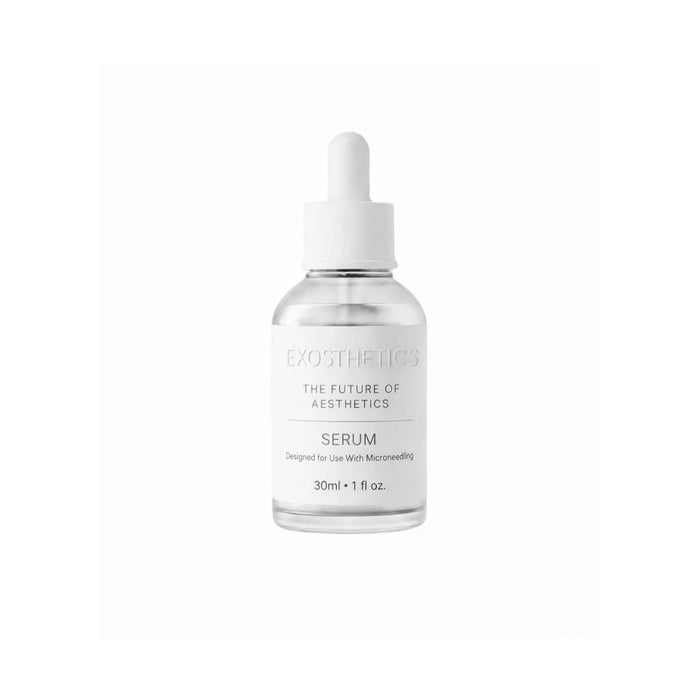
This is where purpose-built microneedling aftercare serums matter. Products like the Exosthetics Microneedling Serum were formulated specifically for this 72-hour window - combining hyaluronic acid for hydration, exosomes and growth factors to support the wound-healing cascade, and barrier-supporting peptides without irritating ingredients that could trigger inflammation when your skin barrier is compromised.
The formulation philosophy matters here: we need hydration without occlusion, growth factor support without unnecessary actives, and delivery systems designed for compromised barrier conditions. Generic moisturizers can hydrate, but they weren't engineered with microneedling's specific recovery requirements in mind.
Think of it this way - you wouldn't use regular motor oil in a high-performance engine. Same principle applies when your dermis is actively remodeling. The right serum during days 0-3 supports the biological processes you paid to activate, while the wrong products (or even mediocre ones) can introduce unnecessary inflammation or fail to provide the specific support factors that amplify healing.
Sun Avoidance is Non-Negotiable
-
Treated skin is maximally vulnerable to UV damage and PIH
-
Broad-spectrum SPF 50+ required if any sun exposure unavoidable
-
Physical sunscreens (zinc oxide, titanium dioxide) preferred over chemical
-
Wide-brimmed hats and seeking shade recommended
❌ Avoid Active Ingredients Initially
-
NO retinoids, vitamin C, alpha hydroxy acids, beta hydroxy acids
-
NO exfoliating products or devices
-
These can cause significant irritation during the inflammatory healing phase
Transitional Phase (Days 4-14):
🧼 Gentle Cleansing Resumes
-
Return to mild, pH-balanced cleansers
-
Avoid mechanical scrubbing or cleansing brushes
-
Pat skin dry, don't rub
💧 Continue Hydration and Barrier Support
-
Maintain generous moisturizer use
-
Skin may feel dry/tight as micro-crusts form and shed
-
Don't pick or force flaking - let it shed naturally
☀️ Maintain Sun Protection
-
Continue diligent broad-spectrum SPF application
-
PIH risk remains elevated for weeks post-treatment
Return to Active Skincare (Week 2-4):
Only after provider clearance, gradually reintroduce:
-
Vitamin C (start low concentration)
-
Retinoids (start with reduced frequency)
-
Gentle exfoliating acids (start conservatively)
What Improves Outcomes:
✅ Strict adherence to recommended intervals between sessions
✅ Complete barrier recovery before next treatment
✅ Conservative energy settings tailored to your skin type
✅ Avoiding premature return to aggressive active ingredients
✅ Maintaining optimized skincare routine between treatments
What Undermines Results:
❌ Returning to retinoids too quickly
❌ Inadequate sun protection
❌ Using harsh products during healing
❌ Picking at crusting/flaking skin
❌ Scheduling treatments too closely together
The post-care phase isn't optional maintenance - it's integral to achieving the outcomes you're paying for.
Sources: PubMed 40537669, PMC11497551
What RF Microneedling Does Not Do?
Setting boudnaries around what this treatment cannot accomplish is essential for informed decision-making.
Explicit Limitations:
🚫 Does Not Replace Surgical Lifting. For significant skin laxity, jowling, or substantial facial aging, RF microneedling provides subtle tightening but cannot replicate the mechanical repositioning and tissue removal achieved through facelift surgery. If you need >5mm of tissue elevation or significant jowl correction, surgical consultation is more appropriate than RF microneedling.
🚫 Does Not Erase Deep Scars. Completely While measurable improvement in atrophic acne scarring occurs, expecting complete scar elimination sets you up for disappointment. Deep icepick scars and severe boxcar depressions may improve but typically require additional interventions (subcision, TCA CROSS, filler) for maximal correction.
🚫 Limited Pigment Correction. RF microneedling primarily targets dermal architecture, not epidermal pigmentation. While general skin quality improvement may indirectly improve some pigmentation concerns, it's not the appropriate first-line treatment for melasma, significant solar lentigines, or post-inflammatory hyperpigmentation. Laser treatments, chemical peels, or topical regimens specifically targeting melanin may be more effective for pigment-focused concerns.
🚫 Does Not Eliminate the Need for Skincare. RF microneedling triggers dermal remodeling, but maintaining results requires ongoing skincare optimization. Retinoids, antioxidants, sun protection, and professional-grade products remain essential for preserving and extending treatment outcomes.
🚫 Cannot Overcome Unrealistic Expectations. If you're expecting "Instagram filter" results or transformation equivalent to a decade of age reversal, RF microneedling will disappoint. The treatment delivers meaningful but moderate improvements within realistic biological parameters.
What You Should Pursue Instead:
-
For significant laxity → Surgical consultation
-
For deep pigmentation → Laser/chemical peel protocols
-
For severe scarring → Combined approaches including subcision
-
For dramatic texture → Consider ablative resurfacing options
Understanding what RF microneedling cannot accomplish helps you make informed decisions about whether it's the right tool for your specific concerns.
Sources: PMC6624002
FAQ
Is RF microneedling painful?
Mild to moderate discomfort is common during treatment, typically described as warm prickling or snapping sensations. Topical anesthesia applied 30-45 minutes before treatment significantly reduces discomfort. Clinical studies report acceptable tolerability with appropriate pain management, though pain levels vary based on treatment depth, energy settings, and individual pain threshold.
How many sessions are needed for RF microneedling?
Most clinical studies demonstrating meaningful outcomes use protocols of 3-5 sessions spaced 4-6 weeks apart. Single treatments offer limited dermal remodeling and typically produce subtle results that don't reach statistical significance in validated assessments. Cumulative collagen remodeling across multiple sessions produces superior outcomes compared to one-time treatment.
Is RF microneedling worth it?
It can be worthwhile for texture improvement, acne scarring, and mild skin laxity when expectations are realistic and treatment is performed by experienced providers. It's not equivalent to ablative resurfacing or surgical intervention. The value proposition depends on matching your specific concerns to appropriate treatment modalities, understanding realistic outcome ranges, and accepting the investment required for a full treatment series.
What is the difference between microneedling and RF microneedling?
RF microneedling adds radiofrequency thermal energy to the mechanical injury created by needles, enabling deeper dermal remodeling and more significant tightening effects. Regular microneedling relies exclusively on the wound-healing cascade triggered by mechanical injury without any thermal component. The RF addition allows treatment of concerns like skin laxity that respond poorly to mechanical needling alone.
Is RF microneedling the same as potenza?
No. Potenza is a specific branded RF microneedling device manufactured by Jeisys Medical. RF microneedling is the treatment category that includes multiple device platforms like Potenza, Morpheus8, Genius, Secret RF, and others. All use the same fundamental mechanism - fractional RF energy delivery through microneedles - but have different engineering implementations and treatment protocols.
Is RF microneedling the same as skinpen?
No. SkinPen is a mechanical microneedling device that uses automated needle penetration without any radiofrequency energy component. It falls under the "regular microneedling" category, not RF microneedling. While both create controlled skin injury to trigger collagen production, SkinPen lacks the thermal remodeling effect that distinguishes RF microneedling treatments.
Is RF microneedling the same as hifu?
No. HIFU (High-Intensity Focused Ultrasound) uses focused ultrasound energy to create thermal injury at specific tissue depths without needles or surface penetration. RF microneedling uses fractional radiofrequency energy delivered through penetrating needles. While both aim for dermal tightening through thermal injury, the energy source, delivery mechanism, and treatment characteristics differ significantly.
What is the downside of RF microneedling?
Primary downsides include cost (typically $600-$1,500 per session with 3-5 sessions needed), moderate downtime (3-7 days of noticeable redness and swelling), and risk of post-inflammatory hyperpigmentation in darker skin types. Overtreatment is a concern if providers schedule sessions too frequently. Results require patience - peak outcomes manifest 8-12 weeks post-treatment series, not immediately.
How long does RF microneedling last?
Visible improvements develop gradually over 8-12 weeks following final treatment session as neocollagenesis reaches peak expression. Results can persist for 6-12 months, though this varies based on individual aging patterns, skincare maintenance, sun exposure, and whether maintenance treatments are performed. The biological aging process continues, so results aren't permanent - maintenance sessions every 6-12 months may help preserve improvements.
🔗 References
Alster TS, Tanzi EL. Improvement of neck and cheek laxity with a nonablative radiofrequency device: a lifting experience. Dermatol Surg. 2004;30(4 Pt 1):503-507. PubMed PMID: 24807263.
Cachafeiro T, Escobar G, Maldonado G, Cestari T, Corleta O. Comparison of Noninsulated Microneedle Radiofrequency and Fractional CO2 Laser for Wrinkle and Laxity Treatment. Dermatol Surg. 2016;42(3):376-383. PubMed PMID: 31779946.
Kim JK, Roh MR, Park GH, Kim YJ, Jeon IK, Chang SE. Microneedling with a Low-Concentration Glycolic Acid Peel in Korean Patients with Acne Scars. Ann Dermatol. 2019;31(3):302-309. PubMed PMID: 31280844.
Lee SJ, Kim JI, Yang YJ, Nam JH, Kim WS. Treatment of Periorbital Wrinkles With Microneedle Radiofrequency. J Cosmet Dermatol. 2025. PubMed PMID: 40537669.
Ramaut L, Hoeksema H, Pirayesh A, Stillaert F, Monstrey S. Microneedling: Where do we stand now? A systematic review of the literature. J Plast Reconstr Aesthet Surg. 2018;71(1):1-14. PMC6624002.
Seo KY, Kim DH, Lee SE, Yoon MS, Lee HJ. Skin rejuvenation by microneedle fractional radiofrequency and a human stem cell conditioned medium in Asian skin: a randomized controlled investigator blinded split-face study. J Cosmet Laser Ther. 2013;15(1):25-33. PMC11497551.
Shin MK, Lee JH, Lee SJ, Kim NI. Platelet-rich plasma combined with fractional laser therapy for skin rejuvenation. Dermatol Surg. 2012;38(4):623-630. PMC12685671.

The first week
Everything in this guide, in two products
Exosome Serum for the night of. 72-Hour+ Cream from day three. $99 together — and you can add Ceramide Repair, the day-7 step, for $35 instead of $49.
See the Kit — $99