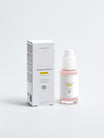
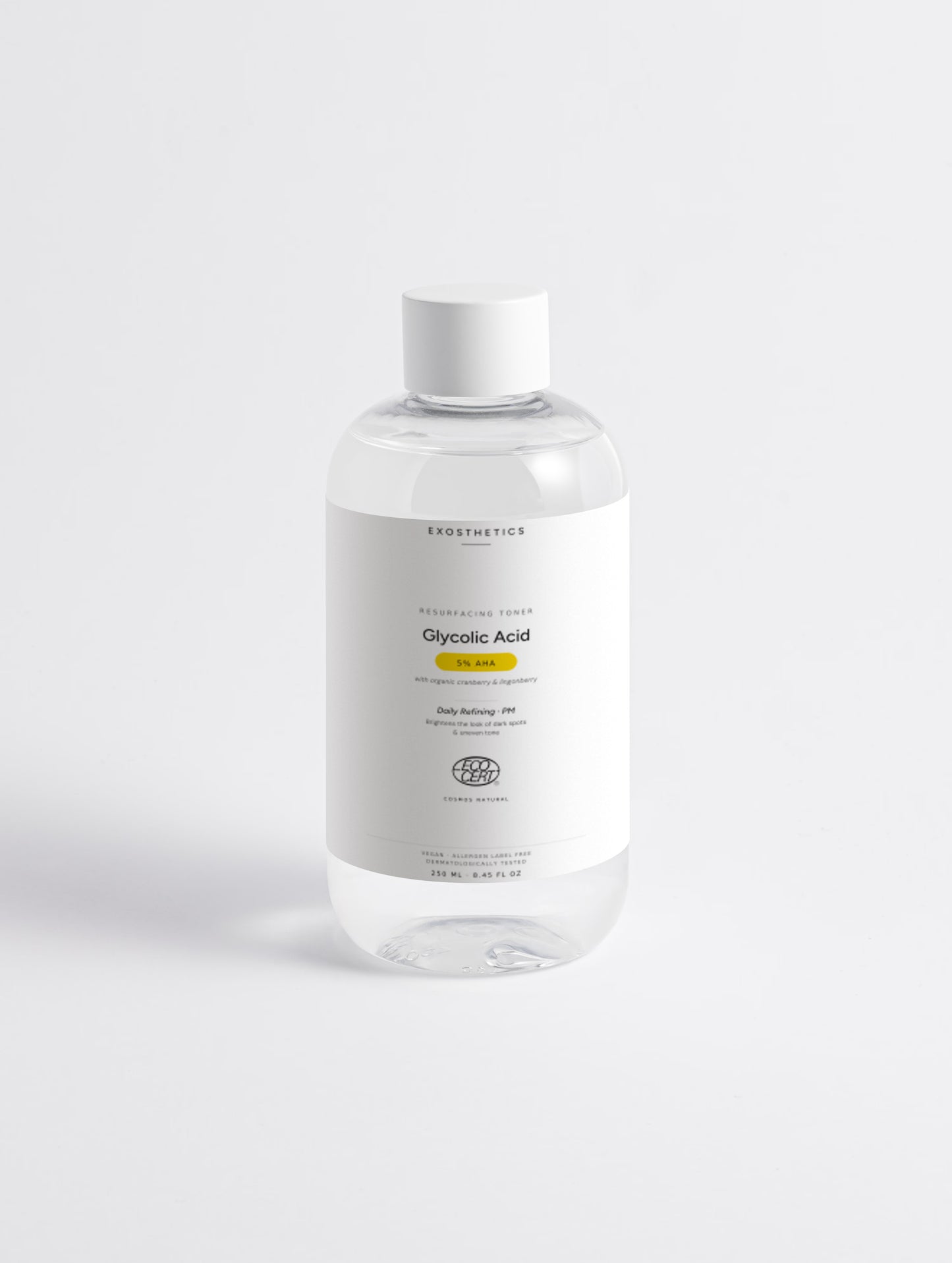
The 5% Toner | Glycolic Acid for Hyperpigmentation
250 ml / 8.45 fl oz
✔ A 5% glycolic acid toner for hyperpigmentation - gently exfoliates to brighten the look of dark spots, post-blemish marks, and uneven skin tone
✔ The 5% sweet spot at pH 3.5 - the clinical concentration range dermatologist-recommended glycolic toners rely on, without the irritation of 10%+ formats
✔ Organic cranberry and lingonberry extracts for antioxidant support. Allergen Label Free - no fragrance allergens at declarable levels
✔ Suits oily, combination, and sensitive skin; all skin tones including black and brown skin. Helps pores and blackhead-prone areas appear clearer
✔ PM use, 2-3 nights a week - your between-treatments step. Not for the first 72 hours after microneedling, laser, or peels. Always follow with SPF the next morning
Price
Regular price
$35.00
Sale price
$35.00
Regular price
Unit price
/ per
30-Day Money-Back Guarantee
Free USA Shipping
No Synthetic Fragrance
COSMOS Natural Certified
Complete the brightening routine
Exosome Serum for Post-Procedure Skin
AM + PM - calm + hydrate
$79.00
Ceramide Repair Complex
Night cream - barrier support
$49.00
Daily Defense Moisturiser
Every morning - protect
$39.00
How It Works
Glycolic acid is the smallest AHA molecule, so it exfoliates where it counts: loosening the dull, pigmented surface cells that make dark spots and uneven tone look darker than they are.
At 5% and pH 3.5, it delivers a free-acid level strong enough for visibly brighter, smoother-looking skin over weeks of glycolic toning, yet gentle enough for 2-3 nights a week - because over-exfoliating can make the look of hyperpigmentation worse, not better.
Organic cranberry and lingonberry extracts add antioxidant support against the everyday oxidative stress associated with the look of new dark spots.
How to Use
PM only, 2-3 nights per week. After cleansing, sweep over the face with a cotton pad or press in with clean hands, avoiding the eye area. No rinsing needed.
Follow with a moisturizer, and always apply SPF the next morning - fresh exfoliation makes skin more sun-sensitive, and sun exposure is what makes dark spots look darker in the first place.
Do not use in the first 72 hours after microneedling, laser, or a chemical peel. This is your between-treatments maintenance step - pause it around procedure days and restart once your provider clears actives.
Do not layer with retinol or other exfoliating acids on the same night. Patch test first if your skin is reactive.
Key Ingredients
5% Glycolic Acid (AHA) at pH 3.5 - the most-studied alpha hydroxy acid, at a free-acid value that balances visible brightening with week-after-week tolerability.
Organic Cranberry Extract - red-berry antioxidant support against the oxidative stress linked to the look of new pigmentation.
Organic Lingonberry Extract - a Nordic berry rich in antioxidants, paired with cranberry for daily environmental support.
Allergen Label Free - no fragrance allergens at declarable levels. Full ingredient list on the product label.
Couldn't load pickup availability
Free USA Shipping
Tax included
30-Day Money-Back Guarantee
The 5% Toner | Glycolic Acid for Hyperpigmentation
Overview
Specifications
Formulated for post-procedure skin
What testers reported
82%saw a brighter, more even skin tone after 4 weeks
76%said dark spots looked visibly faded after 8 weeks
88%experienced no irritation at the recommended 2-3x weekly use
Based on a self-perception survey of 121 testers using The 5% Toner 2-3 times weekly for 8 weeks. Results are self-reported and individual results vary.
What our customers are saying
4.9 average · 100+ verified reviews
“My aesthetician told me to pick this serum up after my SkinPen session. I usually get super red and flaky for like 4 days, but adding this after the 24hr mark cut my downtime in half. Zero sting when applying. Already bought a backup bottle!”
Amanda L.
Verified customer
“I get medium-depth TCA peels twice a year, and finding post-care products that don't make my raw skin sting like hell is almost impossible. I started pressing 3 drops of this on my face on day 3 post-peel when the heavy flaking started. This exosome combo is genius - it doesn't just sit on top like vaseline or Aquaphor, it actually calms the tight, hot sensation almost instantly. Also love that it plays nice under my heavy ceramide cream. No scent, no sticky finish, just pure relief.”
Rachel M.
Verified customer
“ok so I completely destroyed my face trying to layer 1% retinol with my glycolic toner like an idiot 🤦♀️ skin was literally peeling off and inflamed. used this exosome serum morning and nite for a week and the red spots and burning are completely gone. its a bit pricey for 30ml but honestly worth every cent if u messed up ur barrier like i did”
Shanice W.
Verified customer
“Had CO2 laser done on my cheeks and neck fortnight ago and my skin was feeling right tight and hot to touch. Started using this once the tech gave me the all-clear. Absolutely lovely texture, sinks right in without feeling greasy or heavy. Kept the post-treatment redness at bay and my skin looks dead chuffed and glowy now. Won't be without it after treatments now.”
Brittany M.
Verified customer
“I regularly get light resurfacing and tweakments. Many post-procedure products tend to cause small whiteheads on my skin, but this light fluid hydrates deeply without clogging pores. My skin feels significantly softer, firmer, and well-hydrated during the delicate recovery days.”
Ashley B.
Verified customer
“As someone who regularly undergoes aggressive in-clinic treatments (RF microneedling + medium peels), I am hyper-particular about post-procedure INCI lists. This formulation strikes the perfect balance: Lactobacillus ferment exosomes to support the disrupted microbiome, niacinamide to decrease TEWL (transepidermal water loss) and inhibit redness, plus Centella to suppress inflammation. Crucially, it leaves out essential oils and synthetic fragrance. Absorbs within 30 seconds, allowing smooth layering under occlusives. Highly recommended for clinical post-care.”
Tanya J.
Verified customer
“This thing is liquid gold. I overloaded my barrier between tretinoin micro-dosing and a superficial Jessner peel, and my face was peeling in sheets. Started using this serum along with a plain ceramide cream and my skin is plump, juicy, and glass-like again within 4 days. No pilling under sunscreen either! 10/10 HG status.”
Jasmine C.
Verified customer
“As far as the formula goes it is incredible. I had clear-cut redness and tight skin after my IPL session last Tuesday. Used this twice daily and the redness calmed down twice as fast as my last session. Skin feels super hydrated and calm.”
Nia R.
Verified customer
“My skin freaks out and flushes red over literally everything-hot showers, wind, and especially after my monthly dermaplaning and light chemical treatments. This is the first exosome serum I've tried that doesn't trigger tiny bumps. It feels cooling the second you press it in and keeps my skin from feeling tight throughout the day. If you have super sensitive or over-treated skin, don't hesitate.”
Brianna J.
Verified customer
1 / 1
Visible Benefits
Brightens the look of dark spots
5% Glycolic Acid
Evens the look of skin tone
AHA exfoliation
Smooths visible texture
Glycolic toning
Pores appear clearer
Oily + combination skin
Allergen Label Free
All skin tones
Skintelligence
The 5% sweet spot
Weaker glycolic formats barely register on the look of pigmentation. Stronger ones can over-exfoliate and make it look worse. At 5% glycolic acid and pH 3.5, this glycolic toner sits in the concentration sweet spot: steady, visible brightening that skin can tolerate week after week.
Exfoliate
5% glycolic acid - the smallest AHA - loosens dull, pigmented surface cells so brighter, smoother-looking skin can show through. That is the core of any glycolic toning routine.
Brighten
Used 2-3 nights a week, glycolic acid for dark spots is the classic approach: the look of pigmentation, post-blemish marks, and uneven tone appears visibly brighter over successive skin renewal cycles.
Protect
Organic cranberry and lingonberry extracts add antioxidant support against the everyday oxidative stress associated with the look of new dark spots.
Compare
Pigment took years to build. Brighter-looking skin takes weeks.
Results shown reflect consistent use over multiple skin renewal cycles. Individual results vary. The look of pigmentation brightens gradually and may not resolve completely. Always use SPF during use. Image is illustrative.
Before
After
Formulation Standards
Strong enough to work. Gentle enough to repeat.
Most glycolic skin care products chase big percentages. We formulated for consistency instead: 5% glycolic acid at pH 3.5 delivers a free-acid value in the range dermatologist-recommended glycolic toners rely on - enough for visible brightening over weeks, without the irritation cycle that can make the look of hyperpigmentation worse.
It is also the only toner in the Exosthetics line that is Allergen Label Free - no fragrance allergens at declarable levels - with organic cranberry and lingonberry extracts for antioxidant support. Suitable for sensitive skin and all skin tones, including black and brown skin.
“Pigmentation work happens between treatments, not during them. A 5% glycolic toner used two or three nights a week - with strict SPF every morning - is the most reliable way to support a brighter, more even-looking tone without irritating skin into new marks.”
Rachel Donovan
Head of Dermatology
Expert Reviewed
Questions
Glycolic acid, answered
Does glycolic acid help hyperpigmentation?
Glycolic acid is one of the best-studied exfoliating ingredients for the look of hyperpigmentation. It works at the surface: by loosening the dull, pigment-loaded cells sitting on top, the look of dark spots and uneven tone appears brighter as skin renews. If you want to exfoliate hyperpigmentation safely, the combination that matters is a moderate acid plus daily SPF - sun exposure is what makes spots look darker in the first place. Note this toner is a cosmetic: it improves the appearance of discoloration and does not treat medical conditions. For melasma or any diagnosed pigmentation concern, see a dermatologist first.
Why 5% - would the strongest glycolic acid work faster?
The strongest glycolic acid is rarely the best glycolic acid toner for home use. Below about 3%, results on the look of pigmentation are hard to notice. Above 10%, over-exfoliation and irritation become likely - and irritated skin can respond with new discoloration, the opposite of what you want. A 5 glycolic acid toner at pH 3.5 delivers a meaningful free-acid value that skin can tolerate 2-3 nights a week, every week - and with exfoliating acids, consistency beats intensity.
How long does glycolic toning take to show results?
Judge a glycolic toner in skin renewal cycles, not days. Most people notice smoother-feeling texture within the first couple of weeks, while the look of dark spots and uneven tone brightens more gradually - typically judged over 8-12 weeks of consistent 2-3x weekly use with daily SPF. Individual results vary, which is why every bottle carries a 30-day money-back guarantee.
Can glycolic acid make hyperpigmentation worse - and is it safe for black and brown skin?
Used correctly, no - used aggressively, yes. Overuse, high percentages, layering with retinol or other acids, and skipping SPF can all irritate skin, and irritation is a common trigger for the look of new dark marks, especially in deeper skin tones. That risk profile is exactly why this formula is 5%, Allergen Label Free, and capped at 2-3 nights a week. It is suitable for all skin tones, including black and brown skin - and if you were considering a strong glycolic peel on black skin, a moderate toner with strict SPF is the safer place to start.
Glycolic acid vs hyaluronic acid - which one do I need?
They do opposite jobs, so the hyaluronic acid vs glycolic acid question is really both-and. Glycolic acid exfoliates: it lifts dull surface cells to brighten the look of tone and texture. Hyaluronic acid hydrates: it draws water into skin for a plumper look. Comparing glycolic acid vs hyaluronic acid head-to-head only makes sense per goal - for pigmentation, glycolic; for dehydration, hyaluronic. In practice they pair beautifully: our Exosome Serum brings hyaluronic acid plus calming support, and layers over this toner on glycolic nights.
Glycolic vs AHA, lactic, or mandelic acid - which acid is best for hyperpigmentation?
First, the aha vs glycolic acid question answers itself: glycolic acid is an AHA - the smallest and most-studied of the family. Within the family, the glycolic acid lactic acid comparison comes down to molecule size: glycolic penetrates most efficiently, lactic acid is milder and more hydrating, and lactic acid for pigmentation is a reasonable choice for very reactive skin. If you are asking whether mandelic acid or glycolic acid is better for hyperpigmentation: mandelic is the largest, gentlest AHA and popular for deeper skin tones, while glycolic at a moderate 5% offers the stronger evidence base. So which acid is best for hyperpigmentation? For most skin: a mid-strength glycolic used consistently with SPF.
Can I use it with vitamin C, retinol, or witch hazel?
Glycolic acid with vitamin C is a classic pairing - just split them: vitamin C in the morning under SPF, glycolic toning at night. Retinol and other exfoliating acids should not share a night with this toner - alternate evenings instead. And on glycolic acid vs witch hazel: they are different tools. Witch hazel is an astringent that temporarily tightens the look of pores; it does not exfoliate, so it will not brighten the look of dark spots the way a toner with acid does.
Toner, serum, cream, or mask - which glycolic format is best?
Of all the glycolic skin care products, the format changes the experience more than the result - what matters is free-acid value and consistency. A toner gives an even, controlled, rinse-free layer over the whole face, which is why it is the classic starting format. A glycolic acid serum for hyperpigmentation or dark spots concentrates the acid but layers less easily under other actives. An acid glycolic cream, glycolic acid moisturizer, or lotions with glycolic acid buffer the acid in an emollient base - gentler, slower. A glycolic face mask or glycolic acid scrub is an occasional boost, not a routine. Whichever skin care products with glycolic acid you choose, use one glycolic step per night, never several.
Is it good for oily skin, blackheads, and clogged pores?
Yes - glycolic acid for oily skin is one of its most popular uses. By clearing the dead surface cells that mix with oil, glycolic acid for blackheads and clogged pores helps pores appear clearer and skin look less congested over time. Combination skin can apply it just to the T-zone. If your congestion is deep and persistent, a BHA (salicylic acid) reaches into pores more directly - many routines use glycolic and salicylic on alternate nights.
Can I use it after microneedling or laser - or during pregnancy?
Not right after a procedure. Exfoliating acids are on every aftercare avoid-list: skip this toner for at least the first 72 hours after microneedling, laser, or a peel - use The 72-Hour+ Cream for that window instead - and restart glycolic toning only once your provider clears actives. This is your between-treatments maintenance step. As for pregnancy: low-strength AHAs are generally considered among the more acceptable actives, but every pregnancy is different - confirm with your doctor before using any exfoliating acid.
Can I use it on my body - legs, hands, underarms?
Yes. A glycolic acid toner for legs is a popular pick for rough, bumpy-looking texture and the look of dark marks left by ingrown hairs, and glycolic acid for hands helps knuckles and sun-exposed skin look smoother and more even. Apply with a cotton pad on dry skin, keep the same 2-3x weekly rhythm, and be diligent with SPF on any treated area. The 250 ml bottle is sized for face-and-body use - at face-only frequency it lasts several months.