
Is microneedling worth it? This question echoes through dermatology clinics, Reddit forums, and beauty blogs worldwide. If you're considering this increasingly popular treatment, you're probably drowning in conflicting information - from miracle cure claims to skeptical dismissals. The truth, as with most things in dermatology, lives in the nuanced middle ground where science meets realistic expectations. Success hinges on proper post-treatment care and diligent microneedling aftercare, not just the procedure itself.
Don't guess your recovery. Download FREE Clinical Microneedling Protocol Here
What is microneedling?
Microneedling is a controlled skin injury technique that uses fine needles (typically 0.5-2.5mm in length) to create thousands of microscopic channels in the dermis. Think of it as strategic, therapeutic trauma - your skin doesn't know the difference between an intentional micro-injury and an accidental one, so it responds the same way: by launching a wound-healing cascade.
This process triggers the release of growth factors including platelet-derived growth factor (PDGF), transforming growth factors (TGF-α and TGF-β), and fibroblast growth factor (FGF). These biological signals recruit fibroblasts, stimulate collagen production, and promote elastin remodeling - the foundation of skin's structural integrity.
Key distinction: Medical-grade microneedling (performed in clinics with deeper needle penetration) differs significantly from at-home devices. Professional treatments can reach the papillary and reticular dermis where true remodeling occurs, while consumer devices barely scratch the surface - literally.
A 2017 systematic review confirmed that microneedling works primarily through dermal remodeling rather than epidermal resurfacing, which is why results develop gradually over months rather than days.(1)
How effective is microneedling?
Here's where expectations meet reality. Microneedling isn't a magic eraser - it's a remodeling tool with specific strengths and limitations.
Strongest evidence exists for:
-
Atrophic acne scars (particularly rolling and shallow boxcar types)
-
Overall skin quality enhancement
The 2017 systematic review analyzing multiple clinical trials positioned microneedling as "a safe and effective therapeutic option for the treatment of scars and wrinkles," noting it showed similar results to more aggressive treatments but with minimal side effects and shorter downtime.(1)
However, the same review acknowledged methodological limitations in existing studies - meaning while results are promising, they're not universally guaranteed.
What the numbers show: A 2023 clinical study demonstrated statistically significant reductions in both non-inflammatory (48.20-54.00% decrease) and inflammatory acne lesions (36.67-57.97% decrease) following microneedling treatments.(2)
⏱️ Realistic Timeline for Results
|
Timeline |
What to Expect |
|
24-48 hours |
Redness, mild swelling (normal healing response) |
|
3-7 days |
Skin appears rejuvenated but no structural changes yet |
|
4-6 weeks |
Initial collagen production begins; subtle texture improvements |
|
3-6 months |
Progressive improvements as collagen remodeling continues |
|
6-12 months |
Maximum results visible; collagen III deposition complete |
Important note: These are cumulative results typically requiring 3-6 sessions spaced 4-6 weeks apart.
What it cannot do?
Let's establish clear biological boundaries - understanding what microneedling cannot achieve is just as important as knowing what it can.
Microneedling cannot:
❌ Completely eliminate deep ice-pick scars - These require physical excision or TCA CROSS procedures. Microneedling may soften edges but won't fill deep, narrow channels.
❌ Replace surgical procedures - No amount of micro-injuries will tighten significantly lax skin or lift jowls. That requires mechanical intervention.
❌ Reliably improve melasma or hormonal pigmentation - The evidence here is inconsistent, and there's actually a risk of post-inflammatory hyperpigmentation (PIH), especially in darker skin types (Fitzpatrick IV-VI).(1)
❌ Deliver instant results - Anyone promising immediate transformation is selling fantasy. Collagen remodeling takes months.
❌ Work equally for everyone - Patient variability matters. Genetics, age, skin quality, and adherence to post-treatment protocols all influence outcomes.

How much is microneedling normally?
Cost varies significantly based on several factors.
Professional treatments typically range:
-
Single session: $200-$700
-
Package of 3-4 sessions: $600-$2,500
Cost factors:
-
Geographic location (urban centers cost more)
-
Provider credentials (dermatologist vs aesthetician)
-
Needle depth and device type
-
Combination therapies (PRP, RF, topical additions)
-
Clinic overhead and reputation
Important consideration: The cheapest option isn't always the wisest. Inadequate technique, unsanitary practices, or wrong needle depth can cause scarring, infection, or zero results. You're literally puncturing your face thousands of times - this isn't where you want to bargain hunt.
Recovery Forecast
Get your personalized timeline for returning to normal activities after your microneedling treatment.
Your Forecast is Ready!
Enter your email to receive your personalized recovery timeline, safe activity dates, and Exosome Accelerator calculation.
Redness Clears
Day 5
Gym Safe
Day 4
Exosome Boost
2-3 daysfaster recovery
Check Your Inbox!
Your personalized Recovery Forecast is on its way. Look for an email from Exosthetics in the next few minutes.
Is microneedling worth it for a face?
For facial skin specifically, microneedling shows its strongest performance. The face has optimal blood supply, thinner dermis, and higher cellular turnover compared to body skin - all factors that support better healing and remodeling responses.
Best candidates:
✅ Mild to moderate textural concerns
✅ Realistic expectations about gradual improvement
✅ Commitment to proper aftercare
✅ No active acne, infection, or inflammation
The 2017 systematic review noted that microneedling on facial skin was particularly effective when combined with appropriate topical products, as the microchannels enhance absorption of active ingredients.(1)
Is microneedling worth it for wrinkles?
The type of wrinkle matters enormously.
Where it helps:
✅Fine lines from collagen degradation
✅Superficial "crepe paper" texture
✅Early photoaging changes
Where it doesn't:
❌ Deep expression lines (forehead furrows, crow's feet, nasolabial folds)
❌ Dynamic wrinkles caused by muscle movement
Why the limitation? Microneedling addresses dermal thinning and collagen loss - structural issues. It cannot affect the repetitive muscle contractions that create expression lines. That's neurotoxin territory (Botox, Dysport).
Think of it this way: microneedling rebuilds the mattress springs (collagen structure), but it can't stop the person jumping on the bed (muscle contractions).
Is microneedling worth it for acne scars?
This is microneedling's strongest evidence-based indication.
📊 Acne Scar Response by Type
|
Scar Type |
Microneedling Effectiveness |
Why? |
|
Rolling scars |
⭐⭐⭐⭐⭐ Excellent |
Broad, shallow depressions respond well to collagen induction |
|
Shallow boxcar |
⭐⭐⭐⭐ Very Good |
Defined edges soften; floor elevates with new collagen |
|
Deep boxcar |
⭐⭐⭐ Moderate |
May require combined approaches (subscision + microneedling) |
|
Ice-pick scars |
⭐⭐ Poor |
Too narrow/deep for collagen filling; need TCA CROSS or excision |
|
Hypertrophic/keloid |
⭐⭐⭐ Variable |
Requires careful technique; risk of worsening |
A comparative meta-analysis found microneedling effective for acne scarring with favorable long-term outcomes, though requiring multiple sessions for optimal results.(3)
Protocol typically involves:
-
4-6 sessions minimum
-
4-6 week intervals
-
Needle depth: 1.5-2.5mm depending on scar severity
-
Often combined with vitamin C, hyaluronic acid, or growth factor serums
The 2023 acne study showed impressive results - up to 54% reduction in non-inflammatory lesions and 57.97% reduction in inflammatory lesions - demonstrating microneedling's therapeutic potential beyond just scarring.(2)
Is microneedling worth it for hyperpigmentation?
This is where the evidence gets murky and requires caution.
The complexity: Theoretically, microneedling might help with post-inflammatory hyperpigmentation (PIH) by promoting cell turnover and allowing better penetration of brightening agents. However, the mechanism that makes it potentially helpful also makes it potentially harmful - creating controlled inflammation.
The risk: Microneedling itself can trigger PIH, especially in darker skin types (Fitzpatrick IV-VI). The inflammatory response from needling can stimulate melanocytes, potentially darkening existing pigmentation or creating new dark spots.
The verdict: The 2017 systematic review noted insufficient evidence to confidently recommend microneedling as a standalone treatment for pigmentation disorders.(1) If attempted, it should be:
-
Performed by experienced providers familiar with treating melanin-rich skin
-
Combined with appropriate pre- and post-treatment protocols
-
Approached conservatively with shallow needle depth initially
-
Supplemented with proven brightening agents (not as sole treatment)
Is microneedling worth it for anti-aging?
Let's define "anti-aging" realistically - we're talking about skin quality improvement, not turning back time.
What microneedling does for aging skin:
✅ Improves dermal thickness through collagen production
✅ Enhances skin firmness and elasticity
✅ Reduces fine lines and textural irregularities
✅ Improves overall skin tone and radiance
What it doesn't do:
❌ Stop intrinsic aging processes
❌ Replace lost facial volume
❌ Eliminate deep gravitational changes
The 2017 systematic review confirmed microneedling's role in skin rejuvenation, noting that histological examinations showed up to 400% increase in collagen and elastin deposition at 6 months following treatment series.(1)
Is RF microneedling worth it?
Beyond Vivace, several RF microneedling devices exist (Morpheus8, Fractora, Secret RF, Genius).
💰 Cost-Benefit Analysis
|
Treatment Type |
Average Cost/Session |
Downtime |
Best For |
Cost-Effectiveness |
|
Standard Microneedling |
$200-$400 |
2-3 days |
Texture, scars, fine lines |
⭐⭐⭐⭐⭐ |
|
RF Microneedling |
$500-$1,200 |
3-7 days |
Laxity, deep texture, combination concerns |
⭐⭐⭐⭐ |
|
Laser Resurfacing |
$1,500-$4,000 |
7-14 days |
Severe damage, deep wrinkles |
⭐⭐⭐ |
|
Surgical Procedures |
$5,000-$15,000 |
14-30 days |
Significant laxity, structural changes |
⭐⭐ |
The verdict: RF microneedling occupies a valuable middle ground - more aggressive than standard microneedling but less invasive than ablative procedures. Worth the premium if you need the combined benefits; potentially overkill if standard microneedling addresses your concerns adequately.
Is microneedling with PRP worth it?
Platelet-Rich Plasma (PRP) - your own blood, processed to concentrate growth factors, then applied during or immediately after microneedling.
The theory: PRP contains growth factors that theoretically enhance the wound healing cascade triggered by microneedling, potentially accelerating collagen production and improving outcomes.
The evidence: Mixed. While the mechanism makes biological sense, the 2017 systematic review noted insufficient high-quality clinical data to confirm PRP's superiority over microneedling alone.(1)
Practical considerations:
-
Adds $200-$500 to treatment cost
-
Requires blood draw and processing
-
Individual response varies (your blood quality matters)
-
Results aren't dramatically different in most cases
The honest take: PRP might provide marginal benefit but isn't necessary for good outcomes. Standard microneedling with appropriate topical serums often delivers comparable results at lower cost.
Is microneedling with exosomes worth it?
Exosomes represent the cutting edge - tiny extracellular vesicles containing growth factors, signaling molecules, and RNA that theoretically supercharge cellular communication and regeneration.
The 2017 systematic review emphasized the importance of post-procedure care and topical applications but didn't specifically address exosomes as they were too new.(1)
What we know:
-
Laboratory studies show potential regenerative effects
-
Early clinical observations suggest promise
-
Standardization and quality control remain issues
-
Premium pricing ($500-$2,000+ per treatment)
The pragmatic view: If you're investing in professional microneedling, you want to support optimal healing. Whether that requires expensive exosome serums or proven, pharmaceutical-grade hyaluronic acid and peptide formulations is debatable.
Post-Treatment Care Essentials
Speaking of post-procedure support - this is where outcomes are often won or lost. Your skin has thousands of micro-injuries; proper care determines whether you get beautiful remodeling or problematic healing.
Immediate priorities (first 24-48 hours):
-
Gentle cleansing (no harsh actives)
-
Hydration and barrier support
-
Sun protection (physical sunscreen only)
-
Anti-inflammatory support
Recovery phase (days 3-7):
-
Continue gentle hydration
-
Reintroduce gentle antioxidants
-
Maintain sun protection
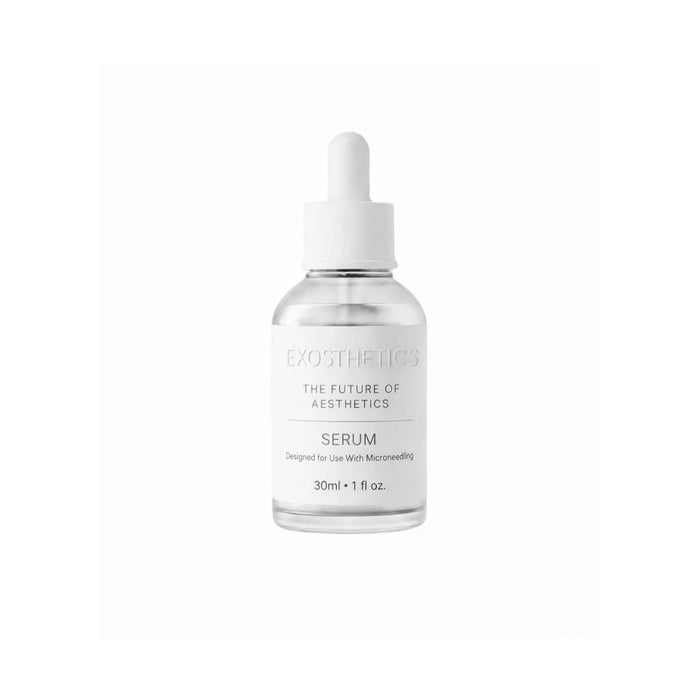
For supporting the recovery phase, formulations designed specifically for post-microneedling care can make a meaningful difference. Products like the microneedling serum are formulated with barrier-supporting ingredients and inflammation modulators that align with the skin's healing process - though any gentle, science-backed serum focusing on hydration and barrier repair can serve this purpose.
The key is avoiding anything that compromises healing: retinoids, acids, harsh exfoliants, or irritating ingredients should be avoided for at least a week post-treatment.
Is microneedling at home worth it?
We've touched on this, but let's be direct: at-home microneedling is fundamentally different from professional treatment.
✅ What home microneedling CAN do:
-
Enhance absorption of topical products
-
Provide very superficial exfoliation
-
Serve as maintenance between professional treatments
-
Offer psychological satisfaction of "doing something"
❌ What home microneedling CANNOT do:
-
Reach depths needed for true dermal remodeling
-
Deliver results comparable to professional treatments
-
Treat acne scars or significant skin concerns effectively
Safety concerns:
-
Risk of cross-contamination if not properly sanitized
-
Potential for infection with inadequate technique
-
Possibility of causing more harm than benefit if done incorrectly
The bottom line: Home devices aren't inherently dangerous if used properly, but expecting them to deliver professional results sets you up for disappointment. They're supplementary at best.
Is microneedling worth it for hair growth?
The data here is limited but intriguing.
Proposed mechanisms:
-
Increased blood flow to hair follicles
-
Release of growth factors
-
Enhanced absorption of topical hair growth treatments (minoxidil, etc.)
Current evidence: The 2017 systematic review mentioned androgenetic alopecia as an area where microneedling showed some promise, typically as an adjunct to other therapies rather than standalone treatment.(1)
Practical reality:
-
Often combined with minoxidil or PRP
-
Requires ongoing maintenance
-
Works better for hair thickening than regrowing completely bald areas
-
Not FDA-approved specifically for hair loss
Verdict: Potentially helpful as part of a comprehensive hair restoration protocol, but don't expect dramatic standalone results. Treat it as an enhancer, not a primary solution.
Microneedling Aftercare Protocols
Proper aftercare isn't optional - it's fundamental to results and safety. Here's your evidence-based post-procedure protocol:
Immediate Post-Treatment (0-24 hours):
DO:
-
Apply provided healing serum or gentle hyaluronic acid
-
Keep skin cool (avoid heat, exercise, hot showers)
-
Sleep on clean pillowcase
-
Avoid touching your face
DON'T:
-
Apply makeup
-
Use active ingredients (retinol, acids, vitamin C)
-
Expose skin to sun
Days 2-7 (Healing Phase):
DO:
-
Gentle cleanser only (no foaming agents)
-
Hydrating, barrier-supporting products
-
Physical sunscreen (SPF 30+ minimum)
-
Continue avoiding actives
DON'T:
-
Pick at flaking skin (let it shed naturally)
-
Return to gym/sauna until fully healed
-
Rush to resume normal skincare routine
Week 2+ (Remodeling Phase):
DO:
-
Gradually reintroduce gentle actives
-
Continue diligent sun protection
-
Support collagen production with appropriate nutrition
-
Stay hydrated
DON'T:
-
Restart aggressive exfoliation too soon
-
Neglect sun protection (UV damage undermines collagen synthesis)
-
Schedule another session too soon (minimum 4 weeks between treatments)
Contraindications: Who Should Avoid Microneedling
⚠️ Absolute Contraindications (Do NOT proceed):
-
Active infection (bacterial, viral, or fungal)
-
Active acne in treatment area
-
Open wounds or abrasions
-
Active herpes simplex (risk of viral spread)
-
Blood clotting disorders
-
Current use of anticoagulants (without physician clearance)
-
Keloid tendency (high risk of scarring)
-
Isotretinoin (Accutane) use within past 6 months
⚕️ Relative Contraindications (Proceed with caution/physician consultation):
-
Immunosuppression or autoimmune conditions
-
History of poor wound healing
-
Uncontrolled diabetes
-
Very sensitive or rosacea-prone skin
-
Recent cosmetic injectables (wait 2-4 weeks minimum)
-
History of post-inflammatory hyperpigmentation
-
Darker skin types (Fitzpatrick IV-VI) - higher PIH risk
The 2023 study confirmed that when properly selected patients receive microneedling, the procedure did not cause post-treatment complications, emphasizing the importance of appropriate patient screening.(2)
How to Choose a Qualified Provider
Given that you're creating controlled injury to your face, provider selection deserves serious consideration.
✅ Look for:
Professional credentials:
-
Board-certified dermatologist or plastic surgeon (ideal)
-
Licensed aesthetician with specialized training (acceptable)
-
Medical supervision even in spa settings
Technical indicators:
-
Discusses contraindications and risks candidly
-
Performs thorough skin assessment
-
Uses FDA-cleared devices
-
Follows proper sterilization protocols
-
Provides comprehensive aftercare instructions
-
Photographs treatment area for tracking
Red flags:
-
Guarantees specific results
-
Pushes most expensive options without explanation
-
Dismisses your concerns or questions
-
Unclear about device type or needle depth
-
Rushed consultation
-
Vague about aftercare
-
Extremely low prices that seem too good to be true
Questions to ask:
-
"What device will you use and what needle depth?"
-
"How many microneedling procedures have you performed?"
-
"What results should I realistically expect for my concern?"
-
"What are the risks specific to my skin type?"
-
"What's your protocol if complications occur?"
-
"Can I see before/after photos of similar cases?"
So, is microneedling worth the money?
Microneedling is worth it when:
✅ You have appropriate indications (acne scars, texture issues, fine lines)
✅ Your expectations align with realistic, gradual outcomes
✅ You're committed to proper aftercare and sun protection
✅ You select a qualified provider
✅ You're willing to invest in multiple sessions
✅ You're not seeking dramatic, immediate transformation
Microneedling is NOT worth it when:
❌ You expect it to replace surgery or more aggressive procedures
❌ You have active skin conditions or contraindications
❌ You're looking for instant results
❌ Your primary concern doesn't respond well to collagen induction
❌ You're unwilling/unable to follow proper protocols
❌ You're choosing the cheapest provider regardless of qualifications
📝 Comprehensive Pros vs Cons
|
Pros ✅ |
Cons ❌ |
|
Minimal downtime (2-3 days) |
Requires multiple sessions |
|
Lower risk than ablative procedures |
Results develop gradually (3-6 months) |
|
Can treat all skin types (with proper technique) |
Can cause PIH in darker skin if done improperly |
|
Combines well with other treatments |
Professional treatment costs add up |
|
Natural collagen stimulation |
Not effective for all skin concerns |
|
Safer than some alternatives |
Requires strict sun protection |
|
Well-tolerated by most patients |
Home devices deliver minimal results |
|
Evidence-based for specific indications |
Quality varies dramatically by provider |
FAQ
Is microneedling painful?
Most patients describe microneedling as tolerable discomfort rather than significant pain. Topical numbing cream (lidocaine) is typically applied 30-45 minutes before treatment, reducing sensation to a "scratchy" or "prickly" feeling. Pain varies by needle depth, individual tolerance, and treatment area - bony regions like forehead may be more sensitive. The 2023 study confirmed microneedling was well-tolerated without reports of severe pain when proper protocols were followed.(2)
Is microneedling a good idea generally?
Microneedling is a good idea for properly selected patients with appropriate indications, realistic expectations, and commitment to post-care protocols. The 2017 systematic review positioned it as "a safe and effective therapeutic option for the treatment of scars and wrinkles" when performed correctly.(1) It's not universally appropriate but represents a valuable tool in the dermatological arsenal for specific concerns.
Is microneedling worth it in your 20s?
Microneedling in your 20s depends on your specific concerns. For acne scarring, it can be highly beneficial regardless of age. For "preventive anti-aging," the evidence doesn't support early intervention - collagen degradation significant enough to benefit from stimulation typically begins in the 30s. The 2017 review focused on treatment of existing conditions rather than prevention.(1) Better prevention strategies include sun protection, gentle skincare, and healthy lifestyle habits.
When microneedling is a waste of money?
Microneedling wastes money when: expectations don't match capabilities (wanting surgery-level results), you have contraindications making treatment risky, your concern doesn't respond to collagen induction (deep ice-pick scars, significant laxity), you're seeking instant results, you skip proper aftercare undermining results, or you choose unqualified providers causing complications. The 2017 systematic review noted poor efficacy for certain indications where evidence doesn't support use.(1)
What is the downside of microneedling?
Downsides include: required multiple sessions and cumulative costs, gradual results requiring patience (3-6 months), risk of post-inflammatory hyperpigmentation particularly in darker skin types, temporary redness and swelling lasting several days, potential for infection if sterility isn't maintained, variable results depending on individual response and provider skill, and strict post-treatment requirements including sun avoidance. The 2023 study noted no post-treatment complications when protocols were properly followed, emphasizing importance of technique.(2)
How many sessions of microneedling are needed?
Most concerns require 3-6 sessions spaced 4-6 weeks apart for optimal results, with maintenance treatments annually or semi-annually thereafter. The 2023 acne study used protocols of 3-4 treatments with significant lesion reduction.(2) Milder concerns might show improvement with 2-3 sessions, while severe scarring could require 6+ treatments. Individual response varies - your provider should assess progress and adjust recommendations accordingly based on healing response and result progression.
Does microneedling help with folliculitis?
There is no strong clinical evidence supporting microneedling specifically for folliculitis treatment. The condition involves infected or inflamed hair follicles, and creating micro-injuries in actively infected areas could theoretically spread bacteria and worsen the condition. The 2017 systematic review did not include folliculitis among validated indications.(1) Folliculitis requires targeted antimicrobial or anti-inflammatory treatment rather than collagen induction therapy. Consult a dermatologist for appropriate folliculitis management.
Conclusion: A Dermatologist's Verdict on Whether Microneedling Is Worth It
After dissecting the evidence, cutting through the marketing claims, and examining what clinical studies actually demonstrate, here's the bottom line: microneedling is a legitimate, science-backed tool with specific strengths and clear limitations.
It's not the miracle cure social media sometimes portrays, nor is it the overhyped waste of money that skeptics claim. It occupies valuable middle ground in dermatological therapeutics - more effective than topical treatments alone, less invasive than ablative procedures, and genuinely capable of improving specific skin concerns when applied appropriately.
The key to worth is alignment:
-
Right concern (acne scars, texture, fine lines) ✓
-
Right expectations (gradual, moderate improvement) ✓
-
Right provider (qualified, experienced, using proper protocols) ✓
-
Right aftercare (diligent sun protection, proper healing support) ✓
-
Right mindset (patient, realistic, committed) ✓
When these factors align, microneedling delivers meaningful results that justify the investment. When any factor misaligns - wrong indication, unrealistic expectations, poor provider choice, inadequate aftercare, or impatience - disappointment follows.
The evidence from systematic reviews and clinical trials confirms: microneedling works for specific applications, particularly acne scarring and skin rejuvenation, when properly executed.(1)(2)(3) It's not for everyone, and it's not for everything, but for the right patient with the right concerns, it's absolutely worth considering.
Your investment isn't just financial - it's time, commitment to healing protocols, and acceptance of gradual rather than instant transformation. If you're comfortable with that reality, microneedling might be exactly what your skin needs.
References
Ramaut L, Hoeksema H, Pirayesh A, Stillaert F, Monstrey S. Microneedling: Where do we stand now? A systematic review of the literature. J Plast Reconstr Aesthet Surg. 2018;71(1):1-14. doi:10.1016/j.bjps.2017.06.006
Alqam ML, Jones BC, Hitchcock TM. Study to determine the safety and efficacy of microneedling as an effective treatment for acne vulgaris. Skin Health Dis. 2023;3(5):e264. doi:10.1002/ski2.264. PMCID: PMC10549865.
Khattak A, Almusawi MAY, Mistarihi D, et al. Comparative effectiveness of microneedling, chemical peels, and laser therapy for acne scarring: A meta-analysis of clinical and long-term outcomes. J Popul Ther Clin Pharmacol. 2024;31(11):1443-1451. doi:10.53555/s81r0x63

The first week
Everything in this guide, in two products
Exosome Serum for the night of. 72-Hour+ Cream from day three. $99 together, ships from the US — arrives before it gets bad.
See the Kit — $99