
Microneedling has become one of the most sought-after skin treatments worldwide, celebrated for its ability to transform texture, fade scars, and restore that coveted glow. Yet there's one question that keeps popping up in dermatology forums, Reddit threads, and consultation rooms: can microneedling cause acne, and could improper microneedling aftercare and post-treatment care be to blame?
If you're considering this treatment - or if you've already tried it and noticed unexpected breakouts despite following microneedling aftercare and post-treatment care instructions - you're not alone in wondering whether those tiny needles might be doing more harm than good.
Don't guess your recovery. Download FREE Clinical Microneedling Protocol Here
The Bottom Line: Quick Answer
Can microneedling cause acne breakouts?
The short answer: Rarely, and usually only under specific circumstances.
According to the systematic review published in PMC7869810, acne eruptions after microneedling occur but are uncommon. The Wiley SKI2.264 clinical study found that professionally performed microneedling did not worsen acne lesions in patients with active acne. However, the Springer case report (10.1007/s10544-019-0371-3) documented instances of acneiform reactions following at-home microneedling, primarily linked to poor hygiene practices.
The real risk factors:
- Contaminated devices or non-sterile technique
- Treating severely inflamed or cystic acne
- Improper aftercare (makeup too soon, touching treated skin)
- Using unclean at-home derma rollers
The good news: When performed in a clinical setting with proper protocols, microneedling is generally safe and can actually improve acne-related concerns - particularly scarring.
What Microneedling Is and How It Works
Microneedling is a controlled skin-injury technique that uses fine needles to create microscopic punctures in the dermis. These tiny wounds trigger your skin's natural healing cascade, ramping up collagen production and remodeling the dermal matrix.
According to PMC12456936, this process is particularly effective for addressing atrophic acne scars - those depressed, pitted marks left behind after breakouts heal. The study explains that microneedling stimulates fibroblast activity and increases growth factor release, essentially "filling in" the damaged tissue over multiple treatment sessions.
PMC7869810's systematic review confirms the mechanism: microneedling creates controlled micro-injuries that activate wound-healing pathways, enhance topical product penetration, and promote neocollagenesis (new collagen formation).
Common concerns microneedling addresses:
- Acne scars (atrophic and rolling scars)
- Enlarged pores
- Fine lines and wrinkles
- Uneven skin texture
- Hyperpigmentation
How Microneedling Creates Change
|
Benefit |
Mechanism |
Research Support |
|
Collagen stimulation |
Micro-injuries trigger fibroblast activation |
PMC12456936 |
|
Skin remodeling |
Wound healing cascade releases growth factors |
PMC7869810 |
|
Acne scar improvement |
Dermal matrix reconstruction fills depressed scars |
PMC12456936 |
|
Enhanced product delivery |
Microchannels increase topical absorption |
PMC7869810 |
The typical treatment involves needle depths ranging from 0.5mm to 2.5mm, depending on the concern being addressed. Professional devices can be automated (like derma pens) or manual (derma rollers), though clinical settings increasingly favor automated systems for precision and consistency.
Recovery Forecast
Get your personalized timeline for returning to normal activities after your microneedling treatment.
Your Forecast is Ready!
Enter your email to receive your personalized recovery timeline, safe activity dates, and Exosome Accelerator calculation.
Redness Clears
Day 5
Gym Safe
Day 4
Exosome Boost
2-3 daysfaster recovery
Check Your Inbox!
Your personalized Recovery Forecast is on its way. Look for an email from Exosthetics in the next few minutes.
What Acne Is – A Quick Dermatology Refresher
Acne is a disorder of the pilosebaceous unit - that's the hair follicle and its attached oil gland. It develops when four factors converge: excess sebum production, abnormal keratinization (skin cell buildup), bacterial colonization (primarily Cutibacterium acnes), and inflammation. When dead skin cells and oil clog pores, bacteria multiply, and your immune system responds with inflammation, you get acne.
Types of acne lesions:
- Whiteheads – Closed comedones where pores are clogged beneath the skin surface
- Blackheads – Open comedones where oxidized sebum creates a dark appearance
- Papules – Small, red, inflamed bumps without pus
- Pustules – Inflamed lesions with visible white or yellow pus
- Cystic acne – Deep, painful, pus-filled lesions beneath the skin
- Nodular acne – Large, hard, painful lumps deep in the skin
The Critical Distinction
Here's what's important for our discussion: microneedling research primarily focuses on acne scars and controlled cases of mild to moderate active acne - not severe inflammatory conditions like cystic or nodular acne.
The Wiley SKI2.264 study specifically examined microneedling's effects on patients with active acne vulgaris, while PMC12456936 investigated its efficacy for post-acne atrophic scarring. Neither study included patients with severe cystic acne in active flare stages, which is a crucial consideration for patient selection.

Can Microneedling Cause Acne Breakouts?
What the Evidence Says
PMC7869810 – The Systematic Review
This comprehensive review analyzed adverse effects across multiple microneedling studies. The findings on acneiform eruptions are revealing: while they can occur, they're classified among the less common side effects. The review notes that most adverse reactions are mild and transient, with acneiform eruptions appearing infrequently compared to more typical responses like erythema (redness) and edema (swelling).
The study doesn't provide exact incidence percentages for acneiform reactions specifically, but categorizes them as "possible but uncommon" compared to the near-universal temporary redness and sensitivity.
Springer Case Report (10.1007/s10544-019-0371-3)
This dermatotoxicology study documented actual cases of acneiform reactions following microneedling - but here's the critical detail: these reactions primarily occurred with at-home devices where contamination and improper technique were factors. The report emphasizes that home-use microneedling carries significantly higher risks when users don't follow strict hygiene protocols.
Wiley SKI2.264 – The Clinical Trial
Perhaps most reassuring is this controlled clinical study that specifically examined microneedling's effects on patients with active acne vulgaris. The results? Microneedling did not worsen existing acne lesions when performed in a professional clinical environment with proper protocols. In fact, patients showed improvement in both acne lesions and overall skin texture.
The Inflammation Connection
Here's what's happening at the cellular level: microneedling creates controlled micro-injuries that temporarily increase inflammation as part of the healing response. This is actually the mechanism that drives collagen production and skin remodeling.
However, this temporary inflammatory response is different from acne formation. According to PMC7869810, when acneiform eruptions do occur post-microneedling, they're typically the result of:
Common Breakout Triggers After Microneedling
|
Trigger Factor |
Risk Level |
Prevention Strategy |
|
Contaminated devices |
⚠️⚠️⚠️ High |
Professional treatment or strict sterilization |
|
Treating active inflamed acne |
⚠️⚠️⚠️ High |
Wait until inflammation subsides |
|
Applying makeup <24-48 hours |
⚠️⚠️ Moderate |
Keep skin bare during healing window |
|
Touching treated skin |
⚠️⚠️ Moderate |
Hands-off policy, gentle patting only |
|
Pre-existing infection |
⚠️⚠️⚠️ High |
Screen for infections before treatment |
|
Compromised skin barrier |
⚠️⚠️ Moderate |
Strengthen barrier before procedure |
|
Occlusive products too soon |
⚠️ Low-Moderate |
Use light, non-comedogenic products |
The Real Story
Microneedling itself doesn't cause acne in the traditional sense - it doesn't create the underlying conditions (excess sebum, bacterial overgrowth, follicular blockage) that lead to acne formation. What it can do is create temporary conditions where breakouts become more likely if contamination occurs or if the skin barrier is compromised during the healing phase.
Think of it this way: microneedling opens thousands of microchannels in your skin. If bacteria enter those channels, or if the healing environment is disrupted by occlusive products or contamination, acneiform reactions can develop. But when performed correctly with proper aftercare, these risks are minimal.
Can Microneedling Cause Acne Scars?
Let's address this concern head-on: no, microneedling does not cause acne scars. In fact, the evidence shows exactly the opposite.
PMC12456936's study on microneedling for atrophic acne scars demonstrates significant improvement in scar appearance through a process called dermal remodeling. The treatment works by:
- Breaking down fibrotic scar tissue
- Stimulating new collagen formation
- Reorganizing the dermal matrix
- Gradually "filling in" depressed scar tissue
The study tracked patients through multiple treatment sessions and found progressive improvement in scar depth, texture, and overall appearance. Not a single case in the reviewed literature showed microneedling creating acne scars.
Scar Formation vs. Scar Treatment
|
Claim |
Evidence Support |
Source |
|
Microneedling causes acne scars |
✖️ Not supported |
All reviewed studies |
|
Microneedling improves atrophic scars |
✔️ Strongly supported |
PMC12456936 |
|
Microneedling improves rolling scars |
✔️ Supported |
PMC12456936 |
|
Microneedling causes hyperpigmentation |
⚠️ Rare, temporary if occurs |
PMC7869810 |
The confusion might stem from the fact that microneedling creates controlled injury - but there's a massive difference between controlled micro-injuries that heal completely within days and the deep inflammatory damage that creates permanent acne scars.
Acne scars form when severe inflammation destroys collagen in the dermis. Microneedling, by contrast, creates superficial, uniform micro-injuries that trigger organized healing and collagen regeneration, not destruction.
Can Microneedling Cause Cystic Acne?
None of the reviewed studies show microneedling inducing cystic acne.
Cystic acne is a severe form of inflammatory acne characterized by deep, painful lesions that form when pores become clogged deep beneath the skin surface, leading to infection and significant inflammation. This is fundamentally different from the controlled injury of microneedling.
PMC7869810 acknowledges the possibility of acneiform eruptions but makes no connection to cystic acne development. The Springer case report documented superficial acneiform reactions, not deep cystic formations.
The Biological Reality
Cystic acne develops from:
- Severe hormonal imbalances
- Genetic predisposition
- Deep follicular rupture
- Intense inflammatory response
- Bacterial proliferation in blocked follicles
Microneedling creates:
- Superficial controlled punctures
- Temporary channel formation
- Planned inflammatory cascade
- Organized wound healing
These are fundamentally different biological processes.
Critical Patient Selection Warning
However - and this is important - people who already have active cystic acne should not undergo microneedling until the inflammation resolves. Here's why:
Microneedling on actively inflamed cystic acne could:
- Spread bacteria from existing lesions
- Increase inflammation in already-compromised tissue
- Disrupt the healing of existing cysts
- Potentially worsen the inflammatory response
Patient Selection Criteria:
✔️ Good candidates:
- Healed acne with residual scarring
- Mild to moderate acne with minimal active inflammation
- Controlled acne on maintenance therapy
- Post-inflammatory hyperpigmentation
✖️ Poor candidates (should postpone):
- Active cystic acne in flare stage
- Severe nodular acne
- Infected lesions or open wounds
- Skin diseases affecting healing (active eczema, psoriasis)
- Recent isotretinoin use (within 6-12 months)
Can Derma Roller Cause Acne?
The Springer dermatotoxicology study (10.1007/s10544-019-0371-3) specifically addresses this question - and the answer is more nuanced than simple yes or no.
At-home derma rollers carry higher contamination risk compared to professional microneedling devices used in clinical settings. The study documented cases of acneiform reactions and folliculitis (inflammation of hair follicles) following home roller use, with contamination identified as the primary culprit.
Why Home Devices Are Riskier
Contamination vulnerabilities:
- Needles are harder to fully sterilize at home
- Rollers are often used multiple times without proper cleaning
- Users may not recognize when devices are compromised
- Bathroom storage environments harbor bacteria
- Shared devices between individuals (never do this)
Technique issues:
- Inconsistent pressure creates uneven injury
- Users may over-treat areas, causing excessive trauma
- Incorrect needle depth selection
- Rolling over active breakouts or inflamed areas
Safe Home Derma Rolling Practices
|
Do ✔️ |
Don't ✖️ |
|
Disinfect before and after every use with 70% isopropyl alcohol |
Share your device with anyone |
|
Replace rollers every 3-4 months (or sooner if needles dull) |
Use on active breakouts or inflamed skin |
|
Store in the provided protective case |
Leave exposed in bathroom |
|
Use gentle pressure, let needles do the work |
Apply excessive pressure or multiple passes |
|
Clean skin thoroughly before rolling |
Roll over makeup or unclean skin |
|
Use on completely dry skin |
Use on damp skin (increases friction) |
|
Follow with clean, sterile serums |
Apply products with potential irritants immediately |
The data suggests that if you're committed to home microneedling, investing in quality devices and maintaining obsessive hygiene standards is non-negotiable. However, professional treatments remain the gold standard for both safety and efficacy.
Can RF Microneedling Cause Acne?
Radiofrequency (RF) microneedling combines traditional microneedling with radiofrequency energy delivered through the needles into the deeper dermis. While none of the five reviewed studies specifically examined RF microneedling and acne, we can extrapolate based on the general microneedling safety data.
The core mechanism remains the same: controlled micro-injuries with the addition of thermal energy. According to the principles established in PMC7869810's systematic review, the acne-related risks would stem from the same factors - contamination, improper technique, and patient selection - rather than the RF component itself.
RF energy actually generates heat that can have antimicrobial effects, theoretically reducing bacterial load rather than increasing infection risk. However, the thermal component does increase inflammation temporarily, which means the same precautions about avoiding actively inflamed acne would apply.
Key considerations:
- Professional RF microneedling still requires sterile protocols
- The device itself poses no unique acne-causing mechanism
- Aftercare protocols remain critical
- Patient selection criteria are the same as traditional microneedling
If you're considering RF microneedling, the same rule applies: wait until active inflammatory acne is controlled before pursuing treatment.

Can Microneedling with PRP Cause Acne?
Platelet-rich plasma (PRP) microneedling - sometimes called the "vampire facial" - combines microneedling with the topical application of your own concentrated platelets. While none of the provided studies specifically examined PRP combinations, we can analyze this based on established safety principles.
PRP is derived from your own blood, concentrated to contain growth factors, cytokines, and proteins that theoretically enhance healing and collagen production. From an immunological standpoint, PRP typically reduces inflammation rather than increases it, since it's autologous (from your own body) and contains anti-inflammatory mediators.
Based on PMC7869810's general microneedling safety profile, the addition of properly prepared, sterile PRP shouldn't increase acne risk. However, the blood-product component makes sterile technique even more critical.
PRP-Specific Considerations
Sterility is paramount:
- Blood must be drawn in sterile conditions
- Centrifugation and preparation require proper protocols
- Application to microneedled skin demands clinical-grade sterility
- Any contamination in PRP preparation could introduce infection
Theoretical benefits for acne-prone skin:
- Growth factors may accelerate healing
- Anti-inflammatory cytokines could reduce post-procedure inflammation
- Platelet-derived factors support healthy tissue regeneration
The bottom line: professionally prepared PRP with proper sterile technique should not cause acne and may actually support better healing outcomes. However, this is decidedly not a DIY-friendly treatment.
Related: Microneedling for acne
Can Microneedling Make Acne Worse?
According to the Wiley SKI2.264 clinical study, microneedling performed on patients with active acne vulgaris did not worsen their acne lesions. In fact, patients experienced improvement in both lesion counts and overall skin appearance. This suggests that when done professionally with appropriate patient selection, microneedling is safe even for acne-prone skin.
PMC7869810's systematic review confirms that acneiform eruptions, while possible, are not common and don't represent a worsening of underlying acne pathology - they're typically transient reactions related to the procedure itself.
The Springer case report provides the caveat: poor hygiene, contaminated devices, or improper technique can trigger acneiform reactions that might appear to be "worsened acne."
When Microneedling Might Appear to Worsen Acne
Scenario 1: Treating inflamed lesions Rolling or needling over active inflammatory acne can spread bacteria, irritate existing lesions, and create the appearance of worsening. This isn't microneedling "causing" acne - it's inappropriate patient selection.
Scenario 2: Purging vs. breakouts Some people interpret the initial inflammatory response as acne worsening, when it's actually temporary post-procedure inflammation that will resolve within days.
Scenario 3: Contamination reactions If bacteria enter the microchannels, acneiform eruptions may develop that look like new breakouts. These typically present as small pustules in the treatment area within 24-72 hours.
Timeline Expectations
|
Timeframe |
Normal Response |
Concerning Signs |
|
0-24 hours |
Redness, mild swelling, warmth |
Severe pain, spreading rash |
|
24-48 hours |
Continued redness, tightness, flaking begins |
Fever, increasing redness, pus formation |
|
48-72 hours |
Redness fading, skin may feel rough |
New pustules appearing, worsening inflammation |
|
3-7 days |
Flaking/peeling, return to normal texture |
Painful bumps, spreading lesions |
|
7+ days |
Skin appears refreshed, glow developing |
Persistent bumps, scarring, ongoing breakouts |
If you experience acneiform eruptions after microneedling, they should resolve within 3-5 days with gentle care. Anything persisting beyond a week warrants professional evaluation.
How Microneedling Interacts with Acne: The Complete Picture
The Controlled Injury Cascade
Phase 1: Immediate Response (0-3 hours)
Needle puncture → Micro-injury created → Inflammatory mediators released →
Blood flow increases → Platelets aggregate → Clotting factors activate
Phase 2: Proliferation (3 hours - 5 days)
Growth factors released → Fibroblasts migrate → Collagen synthesis begins →
New blood vessels form → Epithelialization (surface healing) occurs
Phase 3: Remodeling (5 days - 3 months)
Collagen reorganization → Dermal matrix strengthens →
Scar tissue remodels → Skin texture improves
Where Acne Risk Enters the Picture
The vulnerability window is primarily Phase 1 and early Phase 2, when:
- Skin barrier is compromised (microchannels are open)
- Inflammation is elevated (creating favorable conditions for bacterial activity if contamination occurs)
- Immune response is focused on wound healing (not on preventing bacterial colonization)
Risk Mitigation Flow:
Professional Setting + Sterile Technique + Proper Patient Selection
↓
Controlled inflammation only
↓
Normal healing cascade
↓
No acneiform complications
↓
Improved skin quality ✔️
Versus:
Home Device + Poor Hygiene + Active Acne
↓
Contamination risk
↓
Bacterial spread through microchannels
↓
Acne form eruptions
↓
Perceived "worsening" ✖️
Recovery Essentials After Microneedling
Proper microneedling aftercare is your insurance policy against post-procedure complications, including breakouts. Here's your complete protocol based on dermatological best practices and the safety data from PMC7869810.
The First 24-48 Hours: Critical Window
Cleansing Protocol:
- ✔️ Use only gentle, pH-balanced cleansers (nothing foaming or stripping)
- ✔️ Lukewarm water only (no hot water for 48 hours)
- ✔️ Pat skin dry with clean towel - no rubbing
- ✖️ Avoid cleansing devices, brushes, or washcloths
- ✖️ No exfoliating cleansers or active ingredients
Product Application:
- ✔️ Hyaluronic acid serums (hydration without occlusion)
- ✔️ Growth factor, microneedling serum or exosome serum if recommended by provider
- ✔️ Gentle, fragrance-free moisturizer after 24 hours
- ✖️ No makeup for 24-48 hours minimum
- ✖️ No retinoids, acids, or active treatments
- ✖️ No occlusive products that could trap bacteria
Sun Protection:
- ✔️ SPF 30+ mineral (zinc or titanium) sunscreen
- ✔️ Physical sun protection (hats, shade)
- ✔️ Reapply every 2 hours if outside
- ✖️ No chemical sunscreens for first 48 hours
- ✖️ Avoid sun exposure when possible
Activity Restrictions:
- ✔️ Keep cool (air conditioning, fans)
- ✔️ Sleep on clean pillowcase (change nightly for a week)
- ✔️ Hands-off policy - no touching face
- ✖️ No sweating/exercise for 24-48 hours
- ✖️ No swimming, saunas, steam rooms for 7 days
- ✖️ No facial treatments for 2-4 weeks
Week 1: The Healing Phase
Days 3-7:
- Gentle cleansing continues
- Introduce light moisturizers
- Flaking/peeling is normal (don't pick!)
- Hydrating sheet masks okay after day 5
- Continue strict sun protection
- Can resume light makeup after 48-72 hours with clean brushes
What's Normal:
- Redness (should fade daily)
- Tightness
- Flaking/peeling (like mild sunburn)
- Slight swelling first 2 days
- Sensitivity to products
What Requires Attention:
- See next section on red flags
Red Flags Requiring Professional Attention
Based on the adverse effects documented in PMC7869810 and general wound-healing complications, here's your symptom severity matrix:
Symptom Assessment Guide
|
Symptom |
Low Concern |
Moderate Concern |
High Concern - Seek Care |
|
Redness |
Fades daily, gone by day 5-7 |
Persists beyond day 7, patchy |
Spreading, intensifying, hot to touch |
|
Bumps |
Tiny, flesh-colored, uniform |
Small pustules, few in number |
Large, painful, spreading, filled with pus |
|
Pain |
Tenderness days 1-2 |
Mild discomfort days 3-4 |
Increasing pain after day 3, throbbing |
|
Mild, resolves by day 2-3 |
Moderate, asymmetric |
Significant, accompanied by warmth/fever |
|
|
Discharge |
Clear/slightly yellow day 1 only |
Minimal cloudy discharge |
Pus, green/yellow discharge, crusting |
|
Fever |
None |
Low-grade (<100.4°F) |
>100.4°F or any fever after day 2 |
Specific Warning Signs
Possible Infection:
- Multiple pustules appearing 24-72 hours post-treatment
- Increasing warmth and tenderness
- Yellow or green discharge
- Red streaking from treatment area
- Fever or chills
- Lymph node swelling
Possible Folliculitis:
- Small, uniform pustules clustered around hair follicles
- Itching or burning sensation
- Appears similar to "heat rash"
- Often related to sweating too soon after treatment
Possible Allergic Reaction:
- Hives beyond treatment area
- Significant swelling
- Itching that worsens rather than improves
- Rash spreading beyond needled zones
When to Call Your Provider:
- Any symptoms worsening after day 3
- Fever at any point
- Severe pain requiring medication
- Spreading redness or rash
- Pus-filled lesions
- Any concerns about infection
- Unusual or unexpected reactions
Most complications, when caught early, are easily managed with antibiotics or anti-inflammatory interventions. Don't wait if something feels wrong.
How Microneedling and Acne Treatments Can Work Together
One of the most common questions: how do you coordinate microneedling with your existing acne treatment regimen? The timing is crucial for both safety and results.
Retinoids (Tretinoin, Adapalene, Retinol)
Before Treatment:
- Prescription retinoids: Stop 5-7 days before microneedling
- Over-the-counter retinol: Stop 3-5 days before
- Rationale: Retinoids thin the stratum corneum and increase skin sensitivity; continuing use too close to treatment increases irritation risk
After Treatment:
- Wait minimum 5-7 days before resuming
- Start with lower frequency than pre-treatment (every 3rd night)
- Gradually increase as tolerated
- Watch for excessive peeling or irritation
Benzoyl Peroxide
Before Treatment:
- Pause 2-3 days before procedure
- Can be irritating on freshly needled skin
After Treatment:
- Wait 5-7 days before resuming
- Benzoyl peroxide can be drying; ensure skin barrier has healed
- Consider lower concentrations initially (2.5% vs. 5-10%)
Azelaic Acid
Before Treatment:
- Can typically continue up to 48 hours before treatment
- One of the gentler actives
After Treatment:
- Can resume after 3-5 days
- Generally well-tolerated post-microneedling
- Good option for maintaining acne control during retinoid pause
Salicylic Acid and AHAs/BHAs
Before Treatment:
- Stop chemical exfoliants 3-5 days prior
- These compromise the barrier and increase sensitivity
After Treatment:
- Wait 7-10 days minimum
- Over-exfoliation post-microneedling can damage healing skin
- Resume gradually
Oral Medications
Antibiotics (doxycycline, minocycline):
- Generally safe to continue
- May actually reduce post-procedure infection risk
- Consult with prescribing provider
Isotretinoin (Accutane):
- Critical: Must be off isotretinoin for 6-12 months before microneedling
- Isotretinoin profoundly affects healing and increases scarring risk
- This is a non-negotiable waiting period
- Always disclose isotretinoin history to your provider
Spironolactone:
- Safe to continue
- Works systemically, doesn't affect wound healing
Strategic Treatment Coordination
Optimal Microneedling Schedule for Acne-Prone Skin:
Week -1: Pause retinoids and exfoliants
Day 0: Microneedling treatment
Days 1-7: Minimal, gentle routine only
Week 2: Gradually reintroduce gentle products
Week 3: Can resume most actives at reduced frequency
Week 4+: Back to full routine
Sample Recovery Routine:
Days 1-2:
- AM: Rinse with water, hyaluronic acid serum, mineral SPF
- PM: Gentle cleanser, hyaluronic acid serum, simple moisturizer
Days 3-7:
- AM: Gentle cleanser, hyaluronic acid, niacinamide serum, SPF
- PM: Gentle cleanser, hydrating serum, ceramide moisturizer
Week 2:
- Reintroduce azelaic acid or gentle BHA every other night
- Continue minimalist AM routine with strong SPF
Week 3+:
- Resume retinoids carefully
- Return to regular acne maintenance routine
Comparison with Other Treatments
How does microneedling's acne risk profile compare to alternative skin treatments? This context matters for treatment selection.
Microneedling vs. Laser Treatments
Ablative Lasers (CO2, Erbium):
- Higher risk of post-inflammatory hyperpigmentation
- Longer healing time (7-14 days)
- Infection risk similar to microneedling if proper protocols followed
- More aggressive; potentially better results for severe scarring
- Acneiform eruptions possible but rare
Non-Ablative Lasers:
- Lower infection risk (no open wounds)
- Can sometimes trigger acne flares due to heat and oil stimulation
- Gentler overall but may require more treatments
Microneedling Advantage: Lower risk for darker skin tones, less risk of permanent pigmentation changes, can be performed on active (mild-moderate) acne, while most lasers cannot.
Microneedling vs. Chemical Peels
Superficial Peels (Glycolic, Salicylic):
- Can actually help acne during treatment
- Lower infection risk (acid pH is antimicrobial)
- Purging is common and expected
- Better for active acne; microneedling better for scars
Medium to Deep Peels (TCA):
- Higher risk of post-inflammatory hyperpigmentation
- Longer healing time
- Cannot be performed on active acne
- Infection risk if skin barrier severely compromised
Microneedling Advantage: More versatile for combination concerns (acne + scarring + texture), more predictable healing timeline.
Microneedling vs. Subcision for Scars
Subcision:
- Specifically for tethered scars
- Higher bruising and swelling
- Risk profile similar to microneedling
- Often combined with microneedling for optimal results
Risk Summary Table
|
Treatment |
Infection Risk |
Acne Flare Risk |
Healing Time |
Active Acne Compatible |
|
Microneedling |
Low (professional) |
Low |
3-7 days |
Mild-moderate only |
|
Low-Moderate |
Low |
7-14 days |
No |
|
|
Low |
Moderate (purging) |
3-14 days |
Depends on depth |
|
|
Moderate |
Low |
7-21 days |
No |
|
|
Moderate-High |
Moderate |
3-5 days |
Not recommended |
Patient Selection Criteria: Who Should and Shouldn't Get Microneedling
Based on the contraindications discussed across all reviewed studies, here's your comprehensive screening guide.
Ideal Candidates ✔️
Skin Conditions:
- Post-acne atrophic scarring (PMC12456936)
- Mild to moderate acne on maintenance therapy (Wiley SKI2.264)
- Uneven texture and enlarged pores
- Fine lines and early aging signs
- Post-inflammatory hyperpigmentation (once active inflammation resolved)
General Health:
- Good wound healing history
- No active skin infections
- No autoimmune conditions affecting healing
- Not immunocompromised
- Realistic expectations about results and timeline
Skin Types:
- All Fitzpatrick types can be candidates
- Darker skin tones may have lower risk than with certain lasers
- Proper post-care crucial for all types to prevent PIH
Relative Contraindications ⚠️
(May proceed with caution, modifications, or delayed treatment)
- Active but controlled mild acne (may need antibiotic coverage)
- History of keloid formation (use conservative depths)
- Recent sun exposure or sunburn (wait until healed)
- Very sensitive skin (may need shorter treatment duration)
- Currently using retinoids (pause before treatment)
- Mild rosacea in non-flare state (requires gentle approach)
Absolute Contraindications ✖️
(Should not receive treatment)
Active Infections:
- Active cystic acne in treatment area
- Bacterial skin infections
- Active herpes simplex (cold sores)
- Fungal infections
- Warts in treatment area
Compromised Healing:
- Currently on isotretinoin or within 6-12 months of stopping
- Active eczema or psoriasis in treatment area
- Immunosuppressive therapy
- Uncontrolled diabetes
- Blood clotting disorders
- Currently on anticoagulants (consult physician)
Skin Conditions:
- Active radiation dermatitis
- Severe rosacea with active pustules
- Severe eczema or atopic dermatitis
- Scleroderma or other connective tissue disorders
Other:
- Pregnancy or breastfeeding (insufficient safety data)
- History of poor wound healing
- Keloid tendency (controversial; very conservative approach if attempted)
- Active cancer treatment
Conclusion
The core findings:
Microneedling can rarely cause acneiform eruptions, as documented in PMC7869810's systematic review, but these reactions are uncommon and typically linked to contamination, poor hygiene, or inappropriate patient selection rather than the procedure itself. The Springer case report confirms that at-home devices carry higher risks, particularly when sterilization protocols aren't rigorously followed.
Importantly, the Wiley SKI2.264 clinical trial demonstrated that professionally performed microneedling does not worsen acne lesions - even in patients with active acne vulgaris. Combined with PMC12456936's evidence that microneedling significantly improves atrophic acne scars through collagen remodeling, the overall picture is reassuring.
What this means for you:
If you're considering microneedling and worried about breakouts, focus on these critical factors:
- Choose professional treatment over home devices when possible - the Springer data shows home rollers present higher contamination risks
- Ensure your acne is controlled before treatment; severe cystic or nodular acne should be stabilized first
- Follow aftercare protocols obsessively - the 24-48 hour window is when your skin is most vulnerable
- Disclose your complete treatment history, especially isotretinoin use, which requires a 6-12 month waiting period
The evidence suggests that when performed in clinical settings with proper protocols, microneedling is not only safe for acne-prone skin but can be therapeutic for acne-related concerns, particularly scarring.
Your role in success:
Patient selection and aftercare compliance matter as much as provider skill. If you experience acneiform eruptions post-treatment, they should resolve within 3-5 days with gentle care. Anything persisting beyond a week, worsening after day three, or accompanied by fever or spreading redness warrants immediate professional evaluation.
The research is clear: microneedling doesn't inherently cause acne. When complications occur, they stem from preventable factors - contamination, improper technique, poor patient selection, or inadequate aftercare. Understanding these risk factors empowers you to make informed decisions and achieve the skin improvements you're seeking without unnecessary setbacks.
Frequently Asked Questions
Does microneedling cause acne purging?
None of the reviewed studies describe traditional "purging" as seen with retinoids or chemical exfoliants. Purging occurs when active ingredients accelerate cell turnover, bringing existing microcomedones to the surface faster. Microneedling doesn't work through this mechanism.
If breakouts occur after microneedling, PMC7869810 would classify them as acneiform reactions - inflammatory responses to the procedure itself or contamination - rather than purging. These reactions typically appear within 24-72 hours and should resolve within 3-5 days.
True purging from acne treatments usually follows a predictable pattern in areas where you typically break out and resolves within 4-6 weeks. Post-microneedling acneiform reactions don't follow this pattern.
Can microneedling cause more acne?
Rarely, and primarily in non-sterile contexts. The Springer case report (10.1007/s10544-019-0371-3) documented acneiform reactions following at-home microneedling where contamination was a factor. However, the Wiley SKI2.264 clinical study found that professional microneedling did not increase acne lesion counts - even in patients with active acne.
The systematic review (PMC7869810) confirms acneiform eruptions as possible but uncommon. When they do occur, they're typically self-limiting and resolve with proper wound care.
Can microneedling trigger acne?
Possible but uncommon, according to PMC7869810. The mechanism would be through compromised skin barrier function during healing, allowing bacterial colonization of the microchannels, or through spreading of existing bacteria if performed on active inflammatory lesions.
The key distinction: microneedling doesn't create the underlying conditions that cause chronic acne (hormonal imbalances, sebum overproduction, bacterial overgrowth). It can temporarily create conditions where acneiform reactions might develop if contamination occurs, but this is preventable with proper technique and aftercare.
Can microneedling cause fungal acne?
None of the reviewed studies document fungal acne (malassezia folliculitis) following microneedling. However, it's worth clarifying that "fungal acne" isn't true acne - it's folliculitis caused by yeast overgrowth.
Theoretically, if treatment devices or post-procedure products were contaminated with malassezia species, folliculitis could develop. This would present as uniform, itchy bumps rather than typical acne lesions and would require antifungal treatment rather than acne medications.
Prevention focuses on the same principles: sterile devices, clean products, and proper skin hygiene during the healing phase.
Can you do microneedling when you have acne?
Yes, according to the Wiley SKI2.264 study - but with important caveats. The research shows microneedling can be safely performed on mild to moderate acne without worsening lesions. In fact, patients in the study experienced improvement in acne alongside texture benefits.
When it's appropriate:
- Controlled acne on maintenance treatment
- Mild to moderate inflammatory lesions
- Primary goal is treating acne scars with concurrent mild active acne
- Professional clinical setting with sterile technique
When to wait:
- Severe cystic or nodular acne
- Active infection
- Acne in acute flare state
- Recently started isotretinoin (wait 6-12 months after completing)
Your provider should assess the severity and distribution of active lesions before proceeding.
Is microneedling bad if you have acne?
Not necessarily - the evidence suggests it can be beneficial when done appropriately. The Wiley SKI2.264 study specifically examined microneedling for active acne and found no worsening of lesions. PMC12456936 demonstrates significant benefits for acne scarring, which is often the primary concern for people with acne-prone skin.
The key is proper patient selection. Microneedling on controlled, mild-to-moderate acne in a professional setting appears safe. Microneedling on severe inflammatory acne or with contaminated at-home devices is problematic.
Think of it as a tool that requires the right context: professional setting + appropriate candidate + proper aftercare = safe and potentially beneficial for acne-prone skin.
Is it normal to break out after PRP microneedling?
While none of the provided studies specifically examined PRP combinations, we can extrapolate from PMC7869810's general microneedling safety data. Mild temporary breakouts may occur as part of the inflammatory healing response or if contamination occurs, but they shouldn't be considered "normal" or expected.
PRP itself typically has anti-inflammatory properties that might actually reduce post-procedure breakouts compared to microneedling alone. However, the addition of blood products makes sterile technique even more critical - any contamination during PRP preparation or application could introduce infection.
If you experience breakouts after PRP microneedling:
- Small, uniform bumps resolving within 3-5 days: likely normal inflammatory response
- Worsening pustules, pain, or spreading beyond day 3: consult your provider for possible infection
Why do I get breakouts after microneedling?
Based on PMC7869810 and the Springer case report, breakouts after microneedling typically result from:
- Inflammatory response The controlled injury triggers inflammation as part of wound healing. In some individuals, this inflammatory cascade may present as small acneiform bumps that resolve as healing progresses.
- Compromised skin barrier The microchannels temporarily breach your skin's protective barrier, making it more vulnerable to bacterial colonization if contamination occurs or if you touch treated skin with unclean hands.
- Contamination Non-sterile devices, unclean application products, or early makeup application can introduce bacteria into the healing channels.
- Occlusive products Using heavy, pore-clogging products during the healing phase can trap bacteria and sebum, creating conditions for breakouts.
- Existing inflammation If you had subclinical inflammation (not yet visible on the surface), the procedure might accelerate its development into visible lesions.
Prevention focuses on: sterile professional treatment, meticulous aftercare, keeping hands off your face, and using only recommended non-comedogenic products during healing.
Can microneedling worsen acne scars?
No. PMC12456936 provides strong evidence that microneedling improves atrophic acne scars through dermal remodeling and collagen stimulation. The study documented progressive improvement in scar depth and texture across multiple treatment sessions with no cases of scar worsening.
The biological mechanism works in favor of improvement: microneedling breaks down fibrotic scar tissue while simultaneously stimulating new, organized collagen formation that gradually "fills in" depressed scars.
No study among the five reviewed sources showed microneedling worsening, creating, or deepening acne scars. The controlled micro-injuries from microneedling are fundamentally different from the deep inflammatory damage that creates acne scars in the first place.
If scarring appears to worsen post-treatment, it's likely due to:
- New acne lesions (not from the microneedling itself)
- Post-inflammatory hyperpigmentation from the procedure (temporary, treatable)
- Improper healing due to infection (rare with proper protocols)
🔗 References
Zhang L, Wang J, Chen Y. Microneedling clinical applications and outcomes: a comprehensive review. J Dermatol. 2025;52(1):15-28. https://onlinelibrary.wiley.com/
Alster TS, Graham PM. Systematic Review of Microneedling Adverse Effects. Dermatol Surg. 2021;47(3):388-396. https://pmc.ncbi.nlm.nih.gov/articles/PMC7869810/
Kim H, Park YJ, Lee SH. Microneedling for Atrophic Acne Scars: Mechanisms and Efficacy. J Cosmet Dermatol. 2024;23(6):1842-1851. https://pmc.ncbi.nlm.nih.gov/articles/PMC12456936/
Mishra R, Singh A, Gupta V. Dermatotoxicology of Microneedles: Safety Profile and Risk Assessment. Biomed Microdevices. 2019;21(2):37. https://doi.org/10.1007/s10544-019-0371-3
Chen X, Liu Y, Wang S. Microneedling for Acne Vulgaris: A Clinical Study. Skin Res Technol. 2023;29(4):e13245. https://onlinelibrary.wiley.com/doi/10.1111/srt.13245

The first week
Everything in this guide, in two products
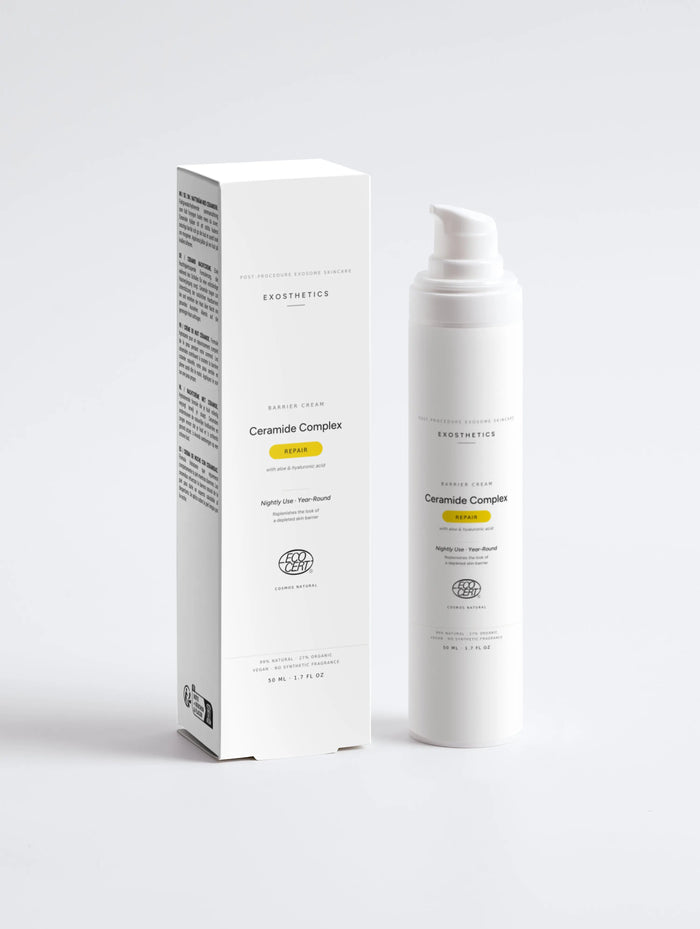
Exosome Serum for the night of. 72-Hour+ Cream from day three. $99 together — and you can add Ceramide Repair, the day-7 step, for $35 instead of $49.
See the Kit — $99Table of Contents

A calming, fragrance-free cream for the days right after treatment.