
Microneedling Before and After 3 treatments isn't just a trending search term - it's a question born from confusion. Type it into any search bar, and you'll find a split-screen reality: Instagram feeds showcasing flawless transformations after a handful of sessions, while dermatology journals quietly publish studies on gradual collagen remodeling that takes months to unfold.
Here's the tension: patients expect dramatic results. Clinicians know biology moves slower.
If you're researching microneedling before and after results, you've likely encountered conflicting information. Some sources promise poreless perfection. Others warn of risks without explaining what normal healing actually looks like. And almost no one addresses how post-treatment care can make or break your outcomes—not through expensive serums, but through understanding what your skin actually needs during repair.
This guide exists in that gap between expectation and reality.
You'll learn what truly happens to your skin across three microneedling sessions, backed entirely by peer-reviewed dermatological research. We'll walk through the biological timeline of collagen remodeling, decode what "normal" healing looks like versus red flags, and explain why the most dramatic results appear weeks after your final treatment—not during.
No marketing promises. No filtered before-and-after photos. Just the science of what microneedling can and cannot do for your skin.
Don't guess your recovery. Download FREE Clinical Microneedling Protocol Here
What Is Microneedling and How Does It Work?
Microneedling, also known as collagen induction therapy, is controlled dermal injury using fine needles. Think of it as strategically wounding your skin to trigger repair.
Here's the biological cascade
Epidermal microchannels are created when needles penetrate the skin's surface. These tiny punctures breach the stratum corneum and extend into the dermis, activating the body's wound-healing machinery.
The dermal wound-healing cascade follows three phases: inflammation, proliferation, and remodeling. Immediately after treatment, cytokines and growth factors flood the injured area. Fibroblasts - the cells responsible for collagen production - migrate to the wound site and begin synthesizing new collagen and elastin fibers.
Neocollagenesis and neoelastogenesis are the technical terms for this new structural protein production. Over weeks and months, these proteins mature and reorganize, gradually improving skin texture.
But here's the critical limitation: microneedling improves texture, not structure. It can soften fine lines and smooth uneven surfaces, but it won't lift sagging skin or erase deep wrinkles. The biological mechanism simply doesn't support that level of architectural change.
What to Expect: Session-by-Session Timeline
|
Session |
Immediate Effect |
Weeks 2-4 |
Cumulative Change |
|
Session 1 |
Redness, mild swelling, temporary "glow" |
Texture feels smoother, mild radiance |
Minimal visible change |
|
Session 2 |
Similar inflammation, shorter recovery |
Noticeable texture refinement, pores appear smaller |
Early signs of collagen remodeling |
|
Session 3 |
Reduced inflammation response |
Continued improvement in smoothness and tone |
Peak results appear 4-6 weeks post-treatment |
This table is your reality check. If someone promises dramatic change after one session, they're either using aggressive settings that carry higher risk, or they're conflating temporary swelling with real collagen remodeling.
What Conditions Microneedling Can and Cannot Treat
Not all skin concerns respond equally to microneedling. Here's what the evidence actually supports:
|
Condition |
Evidence-Supported Improvement |
Limitations |
|
Acne scars |
Moderate improvement, especially rolling scars |
Ice-pick and boxcar scars respond poorly |
|
Fine lines |
Mild to moderate softening |
No effect on dynamic wrinkles from muscle movement |
|
Hyperpigmentation |
Indirect improvement through skin turnover |
Risk of post-inflammatory hyperpigmentation in darker skin tones |
|
Skin laxity |
Minimal tightening |
Not a substitute for surgical or RF-based lifting |
|
Large pores |
Temporary appearance reduction |
Pore size is genetically determined |
Contraindications
Microneedling is not appropriate if you have:
|
Absolute Contraindications |
Relative Contraindications |
|
Active infection (bacterial, viral, fungal) |
Active acne (may spread bacteria) |
|
Keloid scarring history |
Eczema or rosacea flare |
|
Blood clotting disorders |
Recent isotretinoin use (within 6 months) |
|
Skin cancer in treatment area |
Uncontrolled diabetes |
If you fall into any of these categories, microneedling could cause more harm than benefit. This isn't about being overly cautious - it's about respecting biology.
What to Do Before Microneedling
Your skin barrier determines how well you'll heal. Compromised barriers lead to prolonged inflammation, increased infection risk, and unpredictable results.
Two weeks before treatment:
-
Discontinue retinoids, AHAs, BHAs, and prescription exfoliants
-
Avoid direct sun exposure and tanning beds
-
Pause vitamin C serums if your skin is sensitive
48 hours before:
-
Stop all active skincare ingredients
-
Use only gentle cleansers and fragrance-free moisturizers
-
Stay well-hydrated
The goal is to arrive with calm, intact skin. Think of it as preparing a canvas - you want it smooth and stable, not inflamed or sensitized.
Recovery Forecast
Get your personalized timeline for returning to normal activities after your microneedling treatment.
Your Forecast is Ready!
Enter your email to receive your personalized recovery timeline, safe activity dates, and Exosome Accelerator calculation.
Redness Clears
Day 5
Gym Safe
Day 4
Exosome Boost
2-3 daysfaster recovery
Check Your Inbox!
Your personalized Recovery Forecast is on its way. Look for an email from Exosthetics in the next few minutes.
What Happens After 1 Microneedling Session
The first 72 hours are pure inflammation. Your skin will be red, warm, and possibly swollen - this is the acute inflammatory response, not damage. Here's the normal timeline:
Hours 0-24: Intense erythema (redness), mild edema (swelling), occasional pinpoint bleeding. Skin feels tight and warm to the touch.
Days 1-3: Redness fades to pink, skin begins flaking as the stratum corneum regenerates. You might experience transient "glow" from swelling that plumps fine lines temporarily.
Days 4-7: Barrier function returns to baseline. Most visible inflammation resolves. The real collagen remodeling is just beginning, but you won't see it yet.
Normal vs. Not Normal
✅ Normal:
-
Redness lasting 24-72 hours
-
Mild dryness and flaking
-
Temporary skin tightness
-
Slight bronzing or darkening that fades within a week
❌ Not Normal:
-
Persistent oozing or crusting beyond 48 hours
-
Worsening pigmentation that doesn't fade
-
Severe pain unresponsive to over-the-counter pain relief
-
Signs of infection (increasing warmth, pus, spreading redness)
If you experience any red flags, contact your provider immediately. Don't wait to "see if it gets better."
Why Skin May Look Better or Worse After Microneedling
The immediate post-treatment "glow" confuses people. Here's why.
Optical swelling vs. real collagen: Edema temporarily fills in fine lines and pores, creating an illusion of improvement. This fades within days. Real collagen takes 4-6 weeks to mature.
Transepidermal water loss (TEWL): Microneedling disrupts barrier function, increasing TEWL. If you don't compensate with adequate hydration, skin can look drier and more textured than before treatment.
Purging myth: Microneedling doesn't cause "purging" like retinoids do. If you break out post-treatment, it's likely due to product contamination, bacterial spread from active acne, or pore-clogging post-care products.
How Often Should Microneedling Be Done?
Standard recommendation: 4-6 weeks between sessions.
Why? Collagen remodeling takes time. Rushing treatments doesn't accelerate results - it risks overwhelming fibroblasts, leading to what some clinicians call "fibroblast fatigue." This theoretical concept suggests that excessive stimulation without adequate recovery may diminish collagen quality rather than enhance it.
More frequent sessions also increase cumulative inflammation, raising the risk of post-inflammatory hyperpigmentation, especially in darker skin tones (Fitzpatrick IV-VI).
The patience principle: Three sessions spaced 4-6 weeks apart gives you approximately 3-4 months of treatment time. Peak results appear 4-6 weeks after your final session, meaning you're looking at a 5-6 month timeline from start to optimal outcome.
That's not marketing-friendly, but it's biology.
Realistic Microneedling Results After 3 Treatments
Let's be clear about what three sessions can and cannot do.
What Is Realistic:
-
Smoother skin texture: The most consistent benefit across all skin types
-
Slight softening of fine lines: Particularly superficial lines from sun damage
-
More even skin tone: Through enhanced cell turnover and pigment distribution
-
Reduced appearance of shallow acne scars: Rolling scars respond best

What Is Unrealistic:
-
Deep wrinkle removal: Microneedling doesn't replace neurotoxins or fillers
-
Tightening sagging skin: Collagen remodeling improves quality, not quantity
-
Complete scar erasure: Improvement, yes. Perfection, no
-
Pore size reduction: Temporary appearance changes only

Collagen maturation peaks weeks after your third session. The fibers laid down during treatment need time to cross-link and organize. This is why before-and-after photos taken immediately after treatment are misleading - you're seeing swelling, not remodeling.
Microneedling Before and After 3 Treatments: Interpreting Photos
Photos are powerful marketing tools, but they're also easily manipulated. Here's how to evaluate them critically:
Lighting consistency: Harsh overhead lighting exaggerates texture; soft diffused light minimizes it. Compare photos taken in identical lighting conditions.
Angle bias: Slight changes in camera angle can make pores appear larger or smaller. Look for identical positioning.
Timepoint accuracy: "After" photos should be taken 4-6 weeks post-final treatment, not immediately after when swelling is present.
Makeup and filters: Obvious, but worth stating - filtered images aren't clinical documentation.
Ask your provider for unedited, standardized photography. Reputable clinics use consistent protocols for before-and-after documentation.
Area-Specific Results
Microneedling Before and After 3 Treatments: Face
The face is the most responsive area due to higher vascular supply and dermal thickness. Results tend to be most visible on cheeks, forehead, and around the mouth.
Microneedling Before and After 3 Treatments: Neck
Neck skin has a thinner dermis and fewer sebaceous glands, leading to slower collagen response and higher irritation risk. Manage expectations here - improvement is more subtle than facial results.
Microneedling Before and After 3 Treatments: Wrinkles
Best for superficial wrinkles from photoaging. Dynamic wrinkles caused by muscle movement (forehead lines, crow's feet) require neurotoxin intervention - microneedling alone won't address them.
Microneedling Before and After 3 Treatments: Acne Scars
Rolling scars show moderate improvement. Ice-pick scars (deep, narrow indentations) and boxcar scars (wider depressions with defined edges) respond poorly to microneedling alone. These often require combination treatments like TCA cross or subcision.
Microneedling Before and After 3 Treatments: Stomach
Used primarily for stretch marks, with variable outcomes. Depth of treatment matters - superficial passes won't reach striae depth. Results are modest at best.
RF Microneedling Before and After 3 Treatments
Radiofrequency (RF) microneedling combines traditional needling with thermal injury from radiofrequency energy delivered through the needles.
|
Feature |
Traditional Microneedling |
RF Microneedling |
|
Mechanism |
Mechanical injury only |
Mechanical + thermal injury |
|
Collagen stimulation |
Moderate |
Higher (dual mechanism) |
|
Tightening potential |
Minimal |
Moderate (thermal collagen contraction) |
|
Downtime |
2-4 days |
3-7 days |
|
Risk profile |
Lower |
Higher (burns, scarring if improperly performed) |
|
Cost |
$200-400/session |
$600-1200/session |
|
Evidence quality |
Strong |
Moderate (fewer long-term studies) |
RF microneedling may offer superior tightening for mild skin laxity, but it requires experienced operators. Poor technique can cause thermal burns, hyperpigmentation, or scarring. The cost-benefit analysis depends on your specific concerns and risk tolerance.
What to Use Before and After Microneedling
Post-treatment care directly impacts results. Here's the science-backed approach:
Immediately post-procedure (Days 0-3):
-
Gentle, fragrance-free cleanser
-
Barrier-supportive ingredients: ceramides (restore lipid barrier), hyaluronic acid (hydration without occlusion), niacinamide (anti-inflammatory, tolerable even on compromised barriers)
-
Mineral sunscreen SPF 30+ (avoid chemical filters that may irritate)
Barrier recovery phase (Days 4-7):
-
Continue barrier support
-
Add growth factor or specialized microneedling serums if tolerated (EGF, TGF-β support collagen synthesis)
-
Avoid all actives: no retinoids, AHAs, BHAs, vitamin C
Maintenance phase (Week 2+):
-
Gradually reintroduce actives if desired
-
Peptide serums may complement collagen remodeling
-
Continue religious sun protection
The goal is supporting natural healing, not forcing faster results. Your skin will remodel on its biological timeline regardless of what you apply - but poor post-care can definitely slow or sabotage the process.
Pros and Cons of Microneedling After 3 Treatments
|
Pros |
Cons |
|
Noticeable texture improvement |
Slow, cumulative results require patience |
|
Minimal downtime (2-4 days) |
Multiple sessions needed for visible change |
|
Lower cost than laser resurfacing |
Risk of complications with poor technique |
|
Safe for most skin types when properly performed |
Results vary significantly by individual |
|
Can be combined with other treatments |
Post-inflammatory hyperpigmentation risk in darker skin |
Red Flags, Do's and Don'ts
Red Flags (Seek Immediate Care):
-
Persistent inflammation beyond 5 days
-
Increasing pain, warmth, or spreading redness
-
Pus, crusting, or oozing beyond 48 hours
-
New hyperpigmentation that darkens over days
Do's:
-
Sun protection (SPF 30+ minimum, reapply every 2 hours)
-
Gentle, hands-off approach to cleansing
-
Sleep on clean pillowcases
-
Stay hydrated and support healing from within
Don'ts:
-
Over-treat (respect 4-6 week intervals)
-
Layer active ingredients during healing
-
Pick at flaking skin
-
Exercise or expose skin to heat/sweat for 24-48 hours post-treatment
-
Apply makeup for at least 24 hours
FAQ
What happens after 3 sessions of microneedling?
Collagen remodeling becomes more visible several weeks after the third session, primarily improving texture rather than structure. Peak results appear 4-6 weeks post-final treatment.
Is 3 treatments of microneedling enough?
For mild concerns like texture irregularities and superficial lines, yes. Moderate to severe acne scarring or photoaging often require 4-6 sessions for optimal improvement.
How long do microneedling results last?
Results can last 6-12 months, depending on age, skin care routine, and sun protection habits. Maintenance sessions (1-2 per year) help sustain collagen production.
Can microneedling help with Bell's palsy?
No. There is no evidence supporting microneedling for Bell's palsy, which is a neurological condition affecting facial nerve function.
Does microneedling help with folliculitis?
No. Microneedling is not indicated for folliculitis and may worsen the infection by spreading bacteria.
References:
Review of microneedling applications in dermatology. Iriarte, C., Awosika, O., Rengifo-Pardo, M., & Ehrlich, A. (2017). Review of applications of microneedling in dermatology. Clinical, Cosmetic and Investigational Dermatology, 10, 289–298. https://www.dovepress.com/review-of-applications-of-microneedling-in-dermatology-peer-reviewed-fulltext-article-CCID
Microneedling in atrophic acne scar treatment (systematic review). Sitohang, I. B. S., Sirait, S. A. P., & Suryanegara, J. (2021). Microneedling in the treatment of atrophic scars: A systematic review of randomized controlled trials. International Wound Journal, 18(5), 577–585. https://pmc.ncbi.nlm.nih.gov/articles/PMC8450803/
Microneedling overview (NCBI Bookshelf). Hughes, K., & (2024). Microneedling. In StatPearls. Treasure Island (FL): StatPearls Publishing. https://www.ncbi.nlm.nih.gov/books/NBK459344/
Adverse effects of microneedling. Desai, S., & (2021). A systematic review examining the potential adverse effects of microneedling. Journal of Cutaneous Aesthetic Surgery. https://pmc.ncbi.nlm.nih.gov/articles/PMC7869810/
Microneedling advances and clinical use. McCrudden, M. T. C., McAlister, E., Courtenay, A. J., González-Vázquez, P., Singh, T. R. R., & Donnelly, R. F. (2015). Microneedling: Advances and widening horizons. Skin Research and Technology. https://pmc.ncbi.nlm.nih.gov/articles/PMC4976400/

The first week
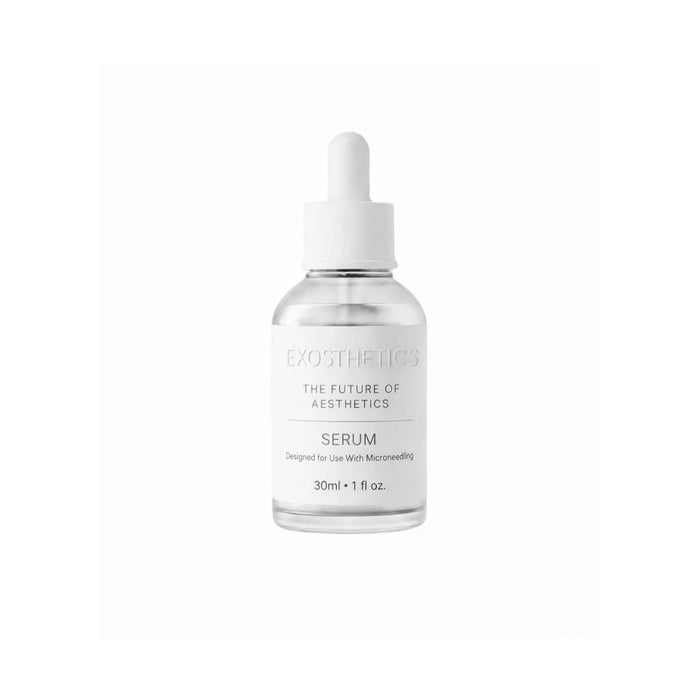
Everything in this guide, in two products
Exosome Serum for the night of. 72-Hour+ Cream from day three. $99 together, ships from the US — arrives before it gets bad.
See the Kit — $99