
Acne scars are more than cosmetic imperfections - they're permanent structural changes in your skin's architecture. When you search for "microneedling before and after for acne scars," you're likely hoping for dramatic transformations. But here's what dermatology research actually shows: microneedling improves how scars look, not whether they exist.
This isn't about managing expectations downward. It's about understanding what's genuinely possible so you can make informed decisions about treatment timing, post-treatment care, and realistic outcomes. Clinical evidence supports microneedling as a legitimate intervention for certain scar types - but the results depend on wound-healing biology, treatment protocols, and recovery behavior, not just the number of sessions you book.
Don't guess your recovery. Download FREE Clinical Microneedling Protocol Here
What Is Microneedling and Why It Works for Acne Scars
How microneedling stimulates collagen remodeling
Microneedling works through controlled injury - not magic. When tiny needles create micro-channels in your skin, they trigger a cascade of biological responses: platelet activation, release of transforming growth factor-beta (TGF-β), and the gradual formation of new collagen and elastin fibers.
This process, called neocollagenesis, is why improvement unfolds over weeks and months, not days. Your skin isn't simply "healing" from the needle punctures - it's actively remodeling the disorganized collagen that creates atrophic scars (PMC4509584, PMID: 29543377).
Here's the critical distinction: microneedling works best for rolling and boxcar acne scars - the indented, shallow-to-moderate depressions that result from collagen loss. It's less effective for ice-pick scars (narrow, deep punctures) and can actually worsen hypertrophic or keloid scars where collagen is already overproduced (PMID: 31173459).
Think of it as organized construction on unstable ground. The micro-injuries don't fill the hole; they create scaffolding for your body to deposit new structural proteins more evenly.
What Causes Acne Scars and What Microneedling Can and Cannot Treat
Acne scars form when inflammatory acne lesions damage the dermis - the deeper layer where collagen lives. Your body's repair response can either underproduce collagen (creating atrophic scars) or overproduce it (creating hypertrophic scars).
Atrophic scars respond to microneedling because the goal is to stimulate more collagen production in areas where it's deficient. Hypertrophic scars don't benefit - and may worsen - because they already have excess collagen tissue.
Ice-pick scars present a unique challenge. Their narrow, deep structure means needles can't effectively reach the base where remodeling needs to occur. These often require punch excision or chemical reconstruction before microneedling can add any benefit (PMID: 31356435, PMC12046493).
One non-negotiable rule: active acne must be controlled first. Microneedling during active breakouts can spread bacteria, deepen inflammation, and worsen scarring outcomes.
Recovery Forecast
Get your personalized timeline for returning to normal activities after your microneedling treatment.
Your Forecast is Ready!
Enter your email to receive your personalized recovery timeline, safe activity dates, and Exosome Accelerator calculation.
Redness Clears
Day 5
Gym Safe
Day 4
Exosome Boost
2-3 daysfaster recovery
Check Your Inbox!
Your personalized Recovery Forecast is on its way. Look for an email from Exosthetics in the next few minutes.
How to do microneedling for acne scars?
Clinical studies typically use needle depths ranging from 0.5mm to 2.5mm, depending on scar depth and skin thickness. Sessions are usually spaced 4–6 weeks apart to allow complete healing and collagen maturation between treatments (PMID: 29543377, PMID: 35426044).
Here's what many patients misunderstand: deeper needles don't automatically produce better results. Overly aggressive depth increases inflammation risk, prolongs recovery, and can trigger post-inflammatory hyperpigmentation - especially in darker skin tones.
Professional depth control matters because at-home dermarollers can't replicate the precision or sterility of clinical devices. Studies showing measurable improvement used medical-grade equipment with controlled penetration, not consumer rollers marketed online (PMID: 31173459).
The treatment itself involves numbing cream, the microneedling session (typically 15–30 minutes), and immediate application of growth factors or hyaluronic acid while channels are open. What happens after you leave the clinic determines whether your skin responds optimally or develops complications.
What to Do Before Microneedling – Preparing Skin for Optimal Results
Successful microneedling outcomes begin days before your appointment:
-
Optimize your skin barrier: Use gentle, hydrating products for 5–7 days prior. Compromised barriers heal poorly and inflame easily.
-
Sun avoidance: No tanning or prolonged UV exposure for at least one week before treatment. Melanocyte activity increases inflammation risk.
-
Active ingredient washout: Stop retinoids, acids, and exfoliants 3–5 days before. These thin the stratum corneum and increase sensitivity.
-
Infection risk reduction: If you have a history of cold sores, prophylactic antiviral medication may be necessary (PMC4509584).
Pre-treatment preparation isn't optional - it's the difference between controlled inflammation that triggers remodeling and chaotic inflammation that creates new problems (PMID: 33538106).
What Happens After Microneedling – Normal vs Concerning Changes
Why skin may look better or worse after treatment
Immediately after microneedling, your skin will look flushed, feel tight, and appear slightly swollen. This edema creates a temporary "plump" effect that can make scars look softer - but it's not real improvement. It's fluid retention.
Days 3–10 often look worse than baseline. As swelling resolves, you'll see the actual texture of your skin without the masking effect of edema. Some people experience mild peeling or dryness during this phase. This is normal.
True collagen remodeling begins around week 4 and continues for 3–6 months after each session. That's when you'll notice genuine textural changes - if you're going to see them (PMID: 31173459, PMID: 33538106).
Normal post-treatment signs:
-
Mild swelling
-
Temporary dryness or flaking
-
Sensitivity to products
Concerning signs requiring follow-up:
-
Redness persisting beyond one week
-
Increasing pain or warmth (suggests infection)
-
Post-inflammatory hyperpigmentation developing
-
Severe dryness or barrier breakdown
Post-treatment care isn't passive. Your recovery behavior directly influences outcomes.
Microneedling Before and After for Acne Scars in Pictures
Here's what dermatologists want you to know about before-and-after photos: most are captured under optimal lighting at the peak of the collagen remodeling phase - usually 3–6 months after the final session.
Photos rarely show the "worse before better" phase or the subtle, textural improvements that define realistic outcomes. Studies consistently report "improvement," not elimination (PMID: 29543377, PMC12046493).
What you're actually seeing in most clinical photos is smoother skin texture, softer scar edges, and more even light reflection - not scar disappearance. Structural depth remains, but visual prominence decreases.
Microneedling Before and After 1 Treatment for Acne Scars
One session produces minimal visible change. You might notice slightly improved skin texture and marginally softer scar edges, but there's no true collagen remodeling after a single treatment.
The biological timeline doesn't allow it. Neocollagenesis takes weeks to initiate and months to mature. One session creates the signal for remodeling, but not the structural outcome (PMID: 31173459, PMID: 35426044).
Realistic after 1 session:
-
Improved skin texture (temporary)
-
Slightly softened scar edges
-
Enhanced product absorption
Unrealistic after 1 session:
-
Scar disappearance
-
Structural depth correction
-
Permanent textural improvement
If someone claims dramatic results after one treatment, they're showing you swelling, not remodeling.

Microneedling Before and After 3 Treatments for Acne Scars
Three sessions represent the clinical sweet spot - the point where studies most commonly report "moderate improvement." Why three? Because collagen remodeling cycles align with 4–6 week treatment intervals, allowing cumulative effects without inflammatory overload.
Most peer-reviewed studies define "moderate improvement" as 25–50% reduction in scar prominence as measured by validated assessment scales. That means scars remain visible but less noticeable (PMID: 29543377, PMID: 35426044, PMC12046493).
Progress typically plateaus after early gains. The first three sessions generate the most dramatic change; additional treatments yield diminishing returns. This isn't treatment failure - it's biological reality. Your skin can only remodel so much disorganized collagen before reaching a new equilibrium.
Three sessions improve appearance, not scar anatomy.

Is More Microneedling Better – Frequency, Cumulative Effect, and Risks
More isn't always better. While collagen production does accumulate across sessions, so does inflammation. Over-treatment creates chronic low-grade inflammation that damages the skin barrier, disrupts pigmentation regulation, and paradoxically worsens texture.
Spacing matters more than frequency. Rushing treatments before complete healing compromises outcomes and increases complication risk. Most protocols space sessions 4–6 weeks apart for this reason (PMID: 33538106, PMC4509584).
Disadvantages of over-treatment:
-
Prolonged inflammation and delayed healing
-
Barrier dysfunction and increased sensitivity
-
Post-inflammatory hyperpigmentation
-
Diminished treatment response over time
If your provider suggests monthly sessions indefinitely, ask about the evidence supporting that protocol. Sustainable outcomes come from strategic treatment, not aggressive repetition.
Microneedling Before and After for Acne Scars on Black Skin
Darker skin tones face higher risk of post-inflammatory hyperpigmentation (PIH) after any inflammatory procedure, including microneedling. Melanocytes respond aggressively to injury, and dysregulated melanin production can persist for months.
Conservative needle depth, longer recovery intervals between sessions, and rigorous sun protection are essential for minimizing PIH risk. Some dermatologists recommend pre-treatment with tyrosinase inhibitors (like kojic acid or tranexamic acid) to stabilize melanocyte activity (PMID: 31356435, PMID: 33538106).
This doesn't mean darker skin can't benefit from microneedling - it means treatment protocols must be adapted to respect higher inflammation sensitivity.
Microneedling Before and After for Red Acne Scars
Red acne scars aren't technically scars - they're post-inflammatory erythema (PIE) caused by dilated blood vessels and residual inflammation. Microneedling improves skin texture but doesn't directly target vascular redness.
For truly red scars, combination approaches work better: vascular lasers (like pulsed dye laser) to address redness, followed by microneedling to improve texture. Microneedling alone may modestly reduce redness over time as inflammation resolves, but it's not the optimal first-line treatment (PMID: 31173459, PMC12046493).
RF Microneedling Before and After for Acne Scars
Radiofrequency (RF) microneedling adds thermal energy to the mechanical injury of traditional microneedling. The heat causes additional collagen contraction and stimulates deeper remodeling - theoretically enhancing results.
But RF microneedling also carries higher risk: more inflammation, longer recovery, and greater potential for complications like burns or pigmentation changes. It's not categorically superior; it's a different tool with a different risk-benefit profile (PMID: 35426044, PMID: 33538106).
Vivace Microneedling Before and After for Acne Scars
Vivace is a brand of RF microneedling device - not a unique treatment category. Outcomes depend on treatment protocol, practitioner skill, and patient factors, not the device name on the marketing materials.
Device branding doesn't determine clinical outcomes. The principles remain the same: controlled injury, appropriate depth, adequate recovery time, and realistic expectations (PMID: 35426044, PMC12046493).
Microneedling with Exosomes for Acne Scars
Exosomes are cell-derived vesicles containing growth factors and signaling molecules. Some clinicians apply exosome-containing serums during or immediately after microneedling to support recovery signaling and reduce inflammation.
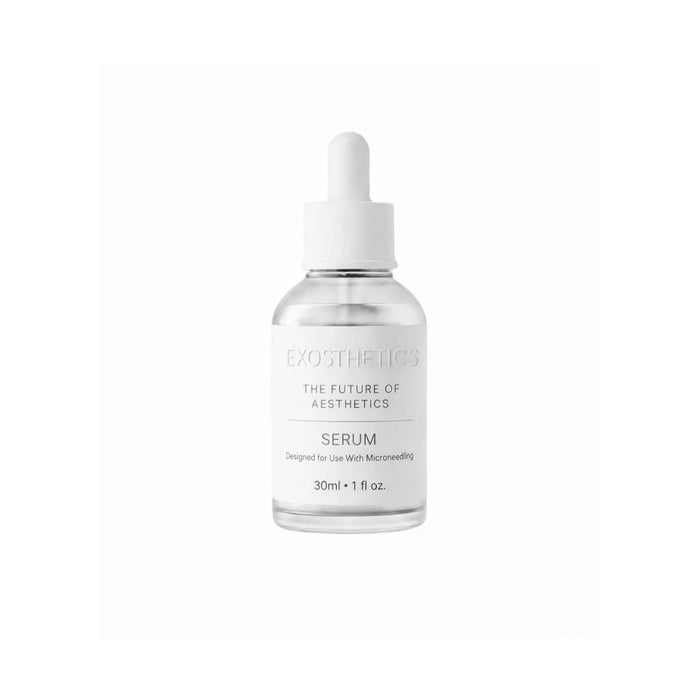
Here's the important distinction: exosomes don't resurface scars or create new collagen. They may optimize the healing environment, but they're an adjunct - not a primary treatment. Some practitioners incorporate recovery-focused formulations like specialized microneedling serums to support barrier repair without aggressive actives during the vulnerable post-treatment phase.
Exosome science is promising but early. Don't expect them to replace proper technique or recovery discipline (PMID: 33538106, PMC12046493).
What Actually Helps vs What Doesn't – Pros, Cons, and Red Flags
|
What Helps |
What Doesn't |
|
Proper 4–6 week spacing |
Over-treating with frequent sessions |
|
Disciplined barrier recovery |
Aggressive actives too soon after treatment |
|
Realistic expectations |
Expecting total scar removal |
|
Sun protection during healing |
Skipping SPF or using tanning beds |
|
Professional depth control |
At-home dermarolling for deep scars |
Success depends less on the device and more on how you prepare, recover, and set expectations (PMC4509584, PMID: 31173459).
Conclusion – A Dermatologic Reality Check
Microneedling improves how acne scars look - not whether they exist. The best outcomes come from correct patient selection (atrophic scars, controlled acne, realistic expectations), appropriate treatment protocols (conservative depth, adequate spacing), and disciplined recovery (barrier support, sun protection, patience).
Three sessions will likely produce noticeable improvement if you're a good candidate. Six sessions might add modest additional benefit. But no amount of microneedling will erase structural scar tissue entirely.
That's not a limitation of the treatment - it's the biology of scarring.
FAQ
Does microneedling get rid of acne scars permanently?
No. Studies show microneedling improves scar appearance by stimulating collagen remodeling, but it does not remove scar tissue entirely. Improvements are gradual and partial, not complete elimination.
Does microneedling work on old acne scars?
Yes, atrophic scars can respond regardless of age, but older scars typically require more sessions and show less dramatic improvement compared to newer scars.
How many sessions of microneedling is needed for acne scars?
Most studies evaluate outcomes after 3–6 sessions spaced several weeks apart, with 3 sessions commonly showing moderate visible improvement in scar texture and appearance.
How long does microneedling last for acne scars?
Results are long-lasting if skin health is maintained through sun protection and proper skincare. Collagen remodeling stabilizes rather than continuously improving after treatment concludes.
Is microneedling worth it for acne scars?
For mild to moderate atrophic scars, evidence supports measurable improvement. It is not a cure, but can be worthwhile when expectations are realistic and treatment protocols are appropriate.
What is the success rate of microneedling for acne scars?
Studies report improvement in most patients, but success is defined as partial texture improvement (typically 25–50% reduction in scar prominence), not scar elimination.
🔗 References
Al-Qarqaz, F., & Al-Yousef, A. (2018). Skin microneedling for acne scars associated with pigmentation in patients with dark skin. Journal of Cosmetic Dermatology, 17(3), 390–395. https://doi.org/10.1111/jocd.12520
Shen, Y.-C., Chiu, W.-K., Kang, Y.-N., & Chen, C. (2022). Microneedling Monotherapy for Acne Scar: Systematic Review and Meta-Analysis of Randomized Controlled Trials. Aesthetic Plastic Surgery, 46(4), 1913–1922. https://doi.org/10.1007/s00266-022-02845-3
El-Domyati, M., et al. (2015). Microneedling Therapy for Atrophic Acne Scars: An Objective Evaluation. Journal of Cutaneous and Aesthetic Surgery, 8(3), 124–131. (Full text available on PMC) https://www.ncbi.nlm.nih.gov/pmc/articles/PMC4509584/
Chao, Y.-C., et al. (2019). Amniotic fluid-derived mesenchymal stem cell products combined with microneedling for acne scars: A split-face clinical, histological, and histometric study. Journal of Cosmetic Dermatology, 18(5), 1275–1284. https://doi.org/10.1111/jocd.12994
Sitohang, I. B. S., et al. (2021). Microneedling in the treatment of atrophic scars: A systematic review of randomized controlled trials. International Wound Journal, 18(5), 578–584. https://pubmed.ncbi.nlm.nih.gov/33538106/
Sharad, J. (2019). Microneedling as a treatment for acne scarring: A systematic review. Dermatologic Therapy, 32(3), e12964. https://pubmed.ncbi.nlm.nih.gov/31356435/
Elsaie, M. L., et al. (2013). Advancements in Acne Scar Treatment: Exploring Novel Therapies. Journal of Clinical and Aesthetic Dermatology, 6(9), 20–27. (Includes discussion of microneedling mechanisms) https://www.ncbi.nlm.nih.gov/pmc/articles/PMC12046493/

The first week
Everything in this guide, in two products
Exosome Serum for the night of. 72-Hour+ Cream from day three. $99 together, ships from the US — arrives before it gets bad.
See the Kit — $99