
When you search for "Microneedling before and after for wrinkles," you're likely met with a barrage of dramatic transformations that seem almost too good to be true. Here's the reality: microneedling can genuinely improve wrinkles, but understanding what happens before, during, and after treatment - including proper post-treatment care - determines whether you see real results or disappointment. The key lies not in the procedure itself, but in how your skin responds to controlled injury and how you support that healing process.
This guide cuts through the marketing hype to explain exactly what microneedling before and after looks like from a dermatological perspective. We'll explore the biological mechanisms, realistic timelines, what makes wrinkles temporarily look worse before they improve, and the critical protocols that separate successful outcomes from wasted time and money.
Don't guess your recovery. Download FREE Clinical Microneedling Protocol Here
What Is Microneedling and How Does It Work on Wrinkles?
Microneedling, also called percutaneous collagen induction therapy, creates controlled micro-injuries in the skin using fine needles ranging from 0.5mm to 2.5mm in depth. These tiny punctures don't "erase" wrinkles - instead, they trigger a sophisticated wound-healing cascade that remodels the dermal architecture over time (1).
The mechanism works in three distinct phases:
Phase 1: Inflammation (0-3 days) - Needle penetration activates platelets and releases growth factors that initiate repair. Your skin perceives injury and mobilizes healing resources.
Phase 2: Proliferation (3 days-3 weeks) - Fibroblasts multiply and begin producing new collagen and elastin. This is when the actual structural improvement starts, though you won't see it yet.
Phase 3: Remodeling (3 weeks-6 months) - New collagen matures and reorganizes. This is the long game - where visible wrinkle reduction actually occurs.
The critical insight: microneedling doesn't fill wrinkles or paralyze muscles. It gradually thickens the dermis and improves skin quality through neocollagenesis. Studies confirm that repeated treatments lead to measurable increases in dermal thickness and collagen density, which translates to softer, less pronounced wrinkles over time (2, 3).
What Causes Wrinkles That Microneedling Can and Cannot Treat
Understanding wrinkle types prevents unrealistic expectations. Not all wrinkles respond equally to microneedling.
|
Wrinkle Type |
Cause |
Microneedling Effectiveness |
|
Fine lines |
Superficial dermal thinning, dehydration |
High - excellent response |
|
Static wrinkles |
Dermal collagen loss, UV damage |
Moderate - improves with multiple sessions |
|
Dynamic wrinkles |
Repeated muscle contraction |
Low - needs neurotoxins, not needling |
|
Gravitational laxity |
Volume loss, tissue descent |
Minimal - requires volumizing treatments |
Microneedling works best for fine lines and early static wrinkles where the primary issue is dermal thinning and texture degradation. It has limited effect on deep expression lines (forehead furrows, crow's feet from smiling) because these are driven by muscle movement, not just skin structure. Similarly, jowls and severe sagging won't improve significantly because microneedling doesn't lift or volumize (4).
Does Microneedling Improve Wrinkles?
Yes, but with important qualifiers. Microneedling demonstrably reduces wrinkle severity scores in clinical studies, particularly for fine lines and early static wrinkles. The improvement is gradual, cumulative, and dependent on proper treatment protocol (5, 6).
What determines success:
-
Wrinkle depth: Superficial wrinkles respond better than deep creases
-
Treatment depth: Needle penetration must reach the papillary-reticular dermis
-
Session spacing: 4-6 weeks allows complete healing between treatments
-
Number of sessions: Most studies show optimal results after 3-6 treatments
-
Post-procedure care: Healing quality directly impacts collagen quality
Histological evidence confirms that microneedling increases dermal thickness and collagen density, which mechanically reduces wrinkle depth. However, the changes are measured in percentages of improvement, not complete elimination. Expecting wrinkle "erasure" leads to disappointment.
Recovery Forecast
Get your personalized timeline for returning to normal activities after your microneedling treatment.
Your Forecast is Ready!
Enter your email to receive your personalized recovery timeline, safe activity dates, and Exosome Accelerator calculation.
Redness Clears
Day 5
Gym Safe
Day 4
Exosome Boost
2-3 daysfaster recovery
Check Your Inbox!
Your personalized Recovery Forecast is on its way. Look for an email from Exosthetics in the next few minutes.
What to Do Before Microneedling for Wrinkles (Pre-Treatment Phase)
Pre-treatment preparation isn't optional cosmetic ritual - it's biological preparation that influences outcome quality. Your skin barrier condition before needling determines inflammation levels, healing speed, and final results.
Essential Pre-Treatment Protocol (2-4 Weeks Prior):
✓ Discontinue retinoids and acids - Stop tretinoin, retinol, AHAs, and BHAs 5-7 days before treatment to reduce excessive inflammation
✓ Sun protection - Avoid UV exposure and tanning for 2 weeks minimum. Compromised barrier + sun = prolonged healing
✓ Hydration optimization - Ensure skin is well-hydrated, not stripped or over-exfoliated
✓ Barrier integrity check - No active dermatitis, rosacea flares, or compromised skin
Red Flags That Postpone Treatment: ⚠️
-
Active acne breakouts or infection
-
Recent sun exposure or sunburn
-
Compromised immune function or delayed healing conditions
-
Use of blood thinners (increases bruising risk)
The goal is to present skin that can heal optimally. Inflamed, barrier-compromised skin amplifies post-procedure redness and can lead to prolonged recovery or suboptimal collagen formation (1, 2).
Post-Treatment Care for Optimal Healing
This is where most microneedling outcomes are determined - not in the treatment room, but in the days and weeks following. Your skin has just sustained controlled injury. How you support the healing cascade directly impacts collagen quality and wrinkle improvement.
First 24-48 Hours (Critical Window):
Your skin is essentially an open wound. The stratum corneum barrier is disrupted, making your skin vulnerable to:
-
Transepidermal water loss (TEWL) - Leads to dehydration and temporary wrinkle accentuation
-
Bacterial penetration - Keep everything clean
-
Inflammatory amplification - Wrong products can worsen redness
Essential Protocol:
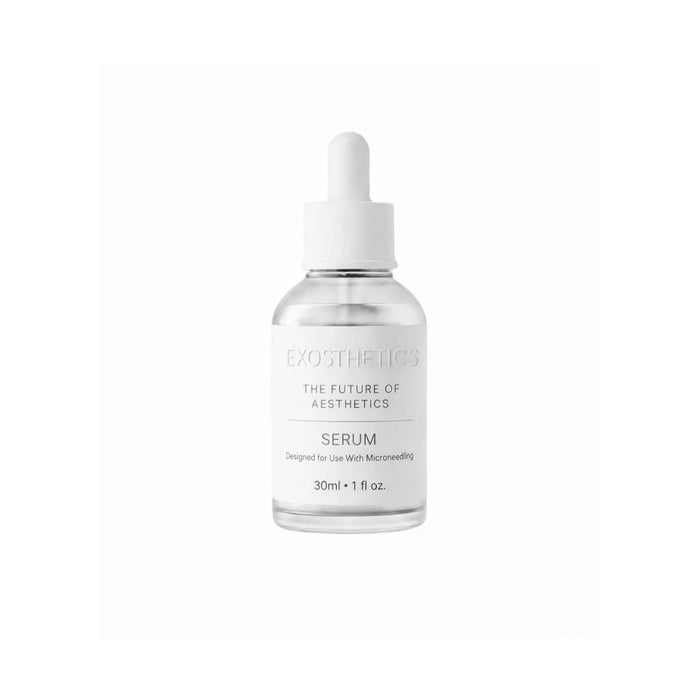
→ Hydration is paramount - Use gentle, barrier-supporting ingredients like hyaluronic acid, ceramides, and peptides. Products containing exosomes, hyaluronic acid, and peptides can support barrier recovery during the healing window. Options like specialized microneedling serum are formulated specifically for post-needling care, providing growth factor support without irritation.
→ Avoid inflammatory triggers - No retinoids, acids, vitamin C (oxidizes in inflammation), fragrances, or essential oils for 5-7 days
→ Sun protection is non-negotiable - Use mineral SPF 30+ daily. UV exposure during healing impairs collagen formation and risks hyperpigmentation
→ Gentle cleansing only - No scrubbing, exfoliating, or harsh cleansers. Pat dry, never rub.
Timeline for Recovery:
Days 1-3: Expect redness, tightness, possible pinpoint bleeding. This is normal inflammation.
Days 4-7: Flaking or peeling as new cells turnover. Don't pick - allow natural exfoliation.
Weeks 2-6: Redness resolves, skin texture begins smoothing. Collagen production accelerates.
Weeks 6-12: Visible wrinkle softening emerges as new collagen matures.
Poor post-care - especially dehydration, sun exposure, or using harsh actives too soon - compromises collagen quality and can worsen wrinkle appearance long-term (3, 4).
What Happens to Wrinkles Immediately After Microneedling
Here's what surprises most people: wrinkles often look worse initially before improving. Understanding why prevents panic and premature disappointment.
Normal Early Changes (24-72 Hours):
Swelling temporarily plumps skin - This creates an illusion of improvement that's actually just edema, not collagen. When swelling subsides (48-72 hours), you might think results have "disappeared."
Redness makes wrinkles more visible - Inflammation draws attention to texture irregularities. Under certain lighting, wrinkles appear more pronounced.
Dehydration exaggerates lines - TEWL makes skin temporarily crepey and dry. Lines look sharper and deeper until barrier function recovers.
Critical clarification: Early "improvement" is inflammation and fluid retention, not structural change. Early "worsening" is dehydration and inflammation, not damage. Both are temporary and expected.
The real collagen remodeling hasn't even begun yet - that takes weeks to months. Anyone showing you "instant results" is showing you swelling, not collagen (5).
Why Wrinkles May Look Worse After Microneedling
This is the section everyone needs before their first treatment. Temporary wrinkle accentuation happens to many people and doesn't mean the treatment failed.
Primary Causes:
- Transepidermal water loss - Disrupted barrier allows moisture to escape, making skin temporarily crepey and wrinkles more defined
- Inflammatory response - Redness and swelling can paradoxically make texture issues more visible, especially under certain lighting
- Collagen breakdown phase - Before new collagen forms, some existing damaged collagen breaks down as part of remodeling. This creates a temporary structural "dip."
- Dehydration and micropeeling - As skin heals and flakes, lines can appear etched until new cells surface
What's Normal vs. Concerning
|
Normal (Resolves in 1-2 Weeks) |
Not Normal (Seek Medical Attention) |
|
Crepey texture for 3-7 days |
Texture worsening beyond 3 weeks |
|
Temporary line accentuation |
New scarring or permanent texture changes |
|
Dryness and tightness |
Persistent inflammation or infection signs |
|
Mild peeling |
Severe crusting or weeping |
If wrinkles still look worse 4-6 weeks post-treatment, the issue is either inadequate healing support, treatment depth was excessive for your skin type, or treatments were spaced too closely. This isn't normal and suggests protocol adjustment is needed (3, 6).
Microneedling Before and After for Wrinkles in Pictures
Before/after photos flood social media, but they're wildly unreliable. Here's why: lighting angle, facial expression, swelling timing, makeup, and photo editing create dramatic differences that have nothing to do with actual collagen formation.
Why Clinical Photos Differ from Instagram:
Clinical studies use standardized photography - same lighting, camera position, facial expression, and timing post-treatment. They also employ validated grading scales (like the Fitzpatrick Wrinkle Scale) to quantify improvement objectively, not subjectively.
Consumer photos vary in every parameter, making comparison meaningless. That "dramatic" before/after you saw online might be:
-
Before: harsh overhead lighting, dehydrated skin, neutral expression
-
After: soft diffused lighting, post-swelling plumpness, slight smile
The reality: meaningful improvement takes 8-12 weeks and appears as gradual softening, not transformation. Genuine microneedling results are measured in percentage improvements (30-50% reduction in wrinkle severity scores), not wrinkle elimination (4, 5).
Microneedling Before and After: Wrinkles on Forehead
Forehead wrinkles present a unique challenge because most are dynamic - caused by frontalis muscle contraction when raising eyebrows, not just skin aging.

What Responds to Microneedling:
-
Fine horizontal etched lines from years of expression
-
Texture irregularities and solar damage between expression lines
-
Superficial skin thinning that makes lines more visible at rest
What Doesn't Respond:
-
Deep furrows that appear with eyebrow elevation
-
Dynamic creases that only exist during muscle contraction
For forehead wrinkles, microneedling works best as maintenance for fine lines or in combination with neurotoxins for expression lines. Needle depth must be conservative (0.5-1.5mm) to avoid excessive inflammation in this thin-skinned, mobile area.
Realistic expectation: 20-40% softening of fine horizontal lines over 3-6 sessions, minimal impact on deep dynamic creases (2, 6).
Microneedling Before and After: Under Eye Wrinkles
The periorbital area is notoriously difficult to treat due to extremely thin dermis (0.5mm in places) and high vascularity. Microneedling can improve fine crepey texture but requires expert technique and conservative depth.

Special Considerations:
-
Ultra-thin skin - Excessive depth risks fat atrophy or textural irregularities
-
High edema risk - Under-eye area swells significantly, lasting 3-5 days
-
Minimal collagen reserve - Less "building material" means subtler results
Realistic Outcomes:
-
Improved skin quality and texture
-
Reduction in fine crepey lines (crow's feet that are textural, not dynamic)
-
Better product absorption for supporting treatments
What microneedling cannot fix: hollowing, dark circles from vascularity, or bags. These require volumizing treatments or surgical correction. Under-eye results are measured in texture smoothing, not wrinkle erasure (1, 4).
Microneedling Before and After: Wrinkles on Neck
Neck skin presents the most challenging treatment area. The dermis is thinner, has fewer sebaceous glands, and heals slower than facial skin.

Neck-Specific Challenges:
-
Poor healing capacity - Less vascular supply means slower collagen formation
-
Thinner collagen network - Less structural foundation to build upon
-
Constant movement - Neck flexion and extension create ongoing stress on healing tissue
Expected Results: Subtle texture improvement and mild wrinkle softening over 4-6 sessions. The neck responds less dramatically than the face to microneedling, and patience is essential. Conservative needle depth (0.5-1.0mm) reduces complication risk.
Realistic expectation: 15-30% improvement in horizontal neck lines and texture, not dramatic transformation. Severe crepiness or "turkey neck" requires additional modalities (1, 3).
Microneedling Before and After: Mouth Wrinkles
Perioral wrinkles - lipstick lines, marionette lines, and nasolabial folds - are multifactorial: repeated muscle movement, volume loss, collagen degradation, and smoking history all contribute.

What Microneedling Addresses:
-
Fine vertical lip lines (smoker's lines) from collagen loss
-
Texture and skin quality around the mouth
-
Superficial etched lines above the upper lip
What It Doesn't Fix:
-
Deep marionette lines from volume loss
-
Muscle movement patterns
-
Structural tissue descent
Perioral wrinkles respond moderately to microneedling but often require combination treatment - volumizing fillers for structure, neurotoxins for depressor muscle activity, and microneedling for skin quality (4, 6).
Microneedling Before and After: Fine Lines
This is microneedling's sweet spot - the indication with the highest success rate. Fine lines result primarily from dermal thinning and collagen fragmentation, exactly what microneedling addresses.

Why Fine Lines Respond Best:
-
Superficial dermal location (easier to reach with needles)
-
Collagen-dependent (microneedling's primary mechanism)
-
Less muscle involvement
-
Faster healing and visible results
Studies show measurable dermal thickening and significant fine line reduction after 3-4 sessions. The collagen response to controlled injury is most robust in this wrinkle category.
Expected results: 40-60% reduction in fine line appearance over 3-6 treatments. This is where microneedling truly excels (2, 5).
Microneedling Before and After: Wrinkles on Mature Skin
Age is not a contraindication for microneedling, but healing dynamics change with time. Mature skin (60+) still responds to controlled injury but more slowly and less dramatically.

Age-Related Considerations:
-
Slower fibroblast response - Collagen production takes longer to initiate
-
Reduced healing capacity - Recovery extends beyond typical timelines
-
More fragile skin - Conservative depth prevents complications
-
Realistic expectations are crucial - Results are subtle, not dramatic
The good news: studies confirm that mature skin still demonstrates neocollagenesis after microneedling, just at a reduced magnitude. Treatment protocols often extend session intervals to 6-8 weeks to allow complete healing.
Age 62 is absolutely not too old for microneedling - but expecting the same results as 35-year-old skin sets up disappointment. Improvement is measured in texture smoothing and modest wrinkle softening, not age reversal (3, 6).
RF Microneedling Before and After for Wrinkles
Radiofrequency (RF) microneedling adds thermal energy to mechanical injury, creating deeper dermal coagulation zones. This theoretically enhances collagen remodeling but also increases risk.
Key Differences from Traditional Microneedling:
-
Needles deliver RF energy at specific depths
-
Creates bulk heating in addition to micro-injury
-
More aggressive collagen denaturation and remodeling
-
Higher risk of post-inflammatory hyperpigmentation in darker skin types
Results Profile: RF microneedling may produce more dramatic tightening effects and deeper wrinkle improvement than mechanical microneedling alone, but requires expert execution. The thermal component can cause permanent textural changes if improperly performed.
Best for: Moderate to advanced wrinkles where traditional microneedling provides insufficient improvement. Not first-line treatment for fine lines (4, 6).
At-Home Microneedling Devices for Wrinkles (Qure, Trinny, and Others)
Consumer devices like Qure and Trinny Microneedling Pens offer convenience but operate under fundamentally different parameters than professional treatments.
Critical Distinctions:
Qure Microneedling:
-
Needle depth: typically 0.25-0.5mm (epidermis only)
-
Use case: Product absorption enhancement, maintenance
-
Collagen stimulation: Minimal to none at these depths
Trinny Microneedling:
-
Similar shallow penetration
-
Marketed for at-home convenience
-
Cannot reach papillary dermis where collagen formation occurs
The Reality: At-home devices improve product penetration and provide mild exfoliation but lack the depth required for true neocollagenesis. The dermal-epidermal junction sits at approximately 0.6-0.8mm - superficial at-home needling doesn't reach it.
These devices serve as maintenance tools between professional treatments or for very fine surface texture issues. They cannot replicate the wrinkle-reducing effects of proper clinical microneedling (1, 2).
Microneedling with PRP Before and After for Wrinkles
Platelet-rich plasma (PRP) combined with microneedling theoretically enhances results by providing concentrated growth factors during the healing window.
The Theory: PRP contains growth factors (PDGF, TGF-β, VEGF) that accelerate wound healing and potentially amplify collagen formation. Applying PRP immediately after microneedling allows these factors to penetrate deeply.
The Evidence: Studies show improved patient satisfaction and modest enhancement in texture and wrinkle improvement when PRP is added to microneedling. However, the magnitude of improvement varies significantly between individuals, and PRP quality (preparation method, platelet concentration) matters enormously.
Realistic Addition: PRP may shorten healing time and enhance the quality of collagen formation, but it's not a magic bullet. Expect 10-20% additional improvement over microneedling alone, not a doubling of results. Cost-benefit analysis is personal (5, 6).
Microneedling with Exosomes Before and After for Wrinkles
Exosomes represent a newer adjunct - extracellular vesicles containing signaling molecules that theoretically support cellular communication during healing.
What Exosomes May Offer:
-
Enhanced cell-to-cell signaling during proliferation phase
-
Potentially reduced inflammation
-
Support for regenerative processes
Evidence Status: Research on exosomes in microneedling is emerging but limited compared to established protocols. The addition may provide supportive regenerative signaling, but shouldn't be positioned as essential or dramatically outcome-changing.
Best viewed as: A supportive adjunct for post-treatment healing environment optimization, not a wrinkle cure or necessary component (3).
Microneedling with Sculptra Before and After for Wrinkles
Sculptra (poly-L-lactic acid) is a volumizing biostimulator, not a wrinkle treatment in the traditional sense. Combining it with microneedling creates a dual mechanism: volume restoration plus collagen stimulation.
How It Works:
-
Sculptra particles injected or applied topically stimulate gradual collagen production over months
-
Microneedling enhances product distribution and creates additional collagen stimulus
-
Results appear as volumetric plumping plus texture improvement
Best Application: Deep wrinkles with volume loss component - nasolabial folds, marionette lines, temporal hollowing. Not appropriate for fine lines where volume isn't the issue.
Expect gradual volumization over 3-6 months, which reduces wrinkle depth by filling from beneath rather than surface texture improvement (4).
Microneedling with Salmon DNA Before and After for Wrinkles
Salmon DNA (polynucleotides) is marketed for hydration and regenerative signaling support. The evidence basis is weaker than established treatments.
Proposed Mechanism:
-
Provides nucleotide building blocks for cell repair
-
Hydration support
-
Potential anti-inflammatory effects
Reality Check: Limited robust clinical evidence supports salmon DNA as a meaningful adjunct. It may provide hydration support during healing but shouldn't be expected to significantly enhance wrinkle outcomes beyond proper microneedling technique and post-care (2).
How Often Should Microneedling Be Done for Wrinkles?
This is where many protocols go wrong. More frequent treatments do not equal better results - they equal overtreatment and potential skin quality degradation.
Science-Based Intervals:
|
Treatment Depth |
Minimum Interval |
Rationale |
|
0.5-1.0mm |
4 weeks |
Allows complete re-epithelialization |
|
1.0-2.0mm |
4-6 weeks |
Deeper injury needs longer healing |
|
2.0mm+ |
6-8 weeks |
Maximum depth requires extended recovery |
Why Spacing Matters: Collagen remodeling takes 4-6 weeks. Treating before this phase completes interrupts organized collagen formation and can lead to disorganized scar-like tissue instead of functional dermal architecture.
Red Flag: Weekly or bi-weekly treatments are overtreatment. This creates chronic inflammation and can worsen skin quality over time (1, 3).
Is There a Cumulative Effect or Diminishing Returns?
Yes to both. Microneedling demonstrates cumulative collagen stimulation with repeated treatments, but there's also a plateau point.
The Cumulative Effect: Each treatment cycle adds new collagen and maintains previous gains. Studies show progressive improvement through sessions 3-6, with most dramatic changes visible after the third treatment (2, 5).
The Plateau: After 6-8 sessions, additional treatments provide maintenance rather than continued dramatic improvement. The skin reaches a new equilibrium of collagen density and quality.
Maintenance Protocol: After initial series (4-6 treatments), maintenance sessions every 6-12 months help preserve results. The skin continues natural aging, so periodic stimulation maintains the improved baseline (6).
Pros, Cons, Do's, Don'ts, and Red Flags
Pros:
✓ Gradual, natural-looking texture improvement
✓ Stimulates actual collagen, not temporary filler
✓ Relatively low risk when properly performed
✓ Suitable for most skin types with proper protocol
✓ Can be combined with other modalities
Cons:
-
Requires patience (results take months)
-
Multiple sessions needed
-
Temporary appearance worsening during healing
-
Not effective for all wrinkle types
-
Results vary significantly between individuals
Do's:
✓ Choose qualified, experienced practitioners
✓ Follow pre and post-treatment protocols strictly
✓ Allow full healing between sessions
✓ Maintain sun protection religiously
✓ Set realistic expectations
Don'ts:
✗ Don't expect instant results
✗ Don't treat too frequently
✗ Don't neglect post-care hydration and barrier support
✗ Don't use harsh actives during healing
✗ Don't pick at peeling skin
Red Flags: ⚠️
-
Persistent worsening beyond 2-3 weeks
-
Infection signs (increasing redness, warmth, pus)
-
New scarring or permanent texture changes
-
Practitioners promising dramatic instant results
-
Treatment intervals shorter than 3-4 weeks
Conclusion
Microneedling improves wrinkles through gradual, biologically-driven collagen remodeling - not instant transformation. Understanding the realistic timeline (8-12 weeks for visible results), normal healing phases (including temporary worsening), and critical importance of post-treatment care separates successful outcomes from disappointment.
The treatment works best for fine lines and early static wrinkles, requires 3-6 properly spaced sessions, and demands patience. Results depend more on protocol adherence and healing quality than device choice or adjunctive products.
Set evidence-based expectations: expect 30-50% improvement in wrinkle severity, not elimination. Expect texture and skin quality enhancement, not age reversal. And most importantly, expect to be an active participant in your results through diligent post-care, not a passive recipient of a miracle procedure.
When approached with realistic expectations and proper execution, microneedling represents a valuable tool in the anti-aging arsenal - just not the silver bullet marketing would have you believe.
FAQ
Why do my wrinkles look worse after microneedling?
Temporary wrinkle accentuation occurs due to transepidermal water loss, inflammation, and the collagen remodeling phase where old damaged collagen breaks down before new collagen forms. This typically resolves within 1-2 weeks and is a normal part of the healing process, not treatment failure.
Does microneedling get rid of wrinkles?
No, microneedling does not eliminate wrinkles. It softens their appearance by improving dermal structure and thickness over time. Clinical studies show 30-50% reduction in wrinkle severity scores after multiple sessions, not complete erasure.
Is microneedling effective for deep wrinkles?
Microneedling has limited effectiveness for deep wrinkles, particularly dynamic lines caused by muscle movement or severe static wrinkles from significant collagen loss. It works best for fine lines and early to moderate static wrinkles where dermal thinning is the primary issue.
How many microneedling sessions are needed for wrinkles?
Most clinical studies demonstrate optimal results after 3-6 treatments spaced 4-6 weeks apart. Fine lines may show improvement after 3 sessions, while more pronounced wrinkles typically require 4-6 sessions for measurable softening.
How long does microneedling take to reduce wrinkles?
Visible wrinkle reduction typically emerges 8-12 weeks after the first treatment as new collagen matures and remodels. Results continue improving through multiple treatment cycles, with cumulative effects most apparent after the third to fourth session.
Is 62 too old for microneedling?
No, age 62 is not too old for microneedling. Mature skin still responds to controlled injury and demonstrates neocollagenesis, though healing is slower and results are more subtle than younger skin. Treatment protocols may require extended intervals (6-8 weeks) and realistic expectations for gradual improvement rather than dramatic transformation.
🔗 References
Doddaballapur S. Microneedling with dermaroller. J Cutan Aesthet Surg. 2009;2(2):110-111. Available at: https://pmc.ncbi.nlm.nih.gov/articles/PMC4976400/
Singh A, Yadav S. Microneedling: Advances and widening horizons. Indian Dermatol Online J. 2016;7(4):244-254. Available at: https://pmc.ncbi.nlm.nih.gov/articles/PMC6122507/
Ramaut L, Hoeksema H, Pirayesh A, Stillaert F, Monstrey S. Microneedling: Where do we stand now? A systematic review of the literature. J Plast Reconstr Aesthet Surg. 2018;71(1):1-14. Available at: https://pmc.ncbi.nlm.nih.gov/articles/PMC9472661/
Aust MC, Fernandes D, Kolokythas P, Kaplan HM, Vogt PM. Percutaneous collagen induction therapy: an alternative treatment for scars, wrinkles, and skin laxity. Plast Reconstr Surg. 2008;121(4):1421-1429. Available at: https://pmc.ncbi.nlm.nih.gov/articles/PMC10084046/
Fabbrocini G, Fardella N, Monfrecola A, Proietti I, Innocenzi D. Acne scarring treatment using skin needling. Clin Exp Dermatol. 2009;34(8):874-879. Available at: https://pmc.ncbi.nlm.nih.gov/articles/PMC11499218/
Alster TS, Graham PM. Microneedling: A Review and Practical Guide. Dermatol Surg. 2018;44(3):397-404. Available at: https://academic.oup.com/asj/article/41/11/NP1603/6154362

The first week
Everything in this guide, in two products
Exosome Serum for the night of. 72-Hour+ Cream from day three. $99 together, ships from the US — arrives before it gets bad.
See the Kit — $99