
Microneedling for surgical scars has become one of the most sought-after minimally invasive treatments for people looking to improve the appearance of scars left behind by surgery. Whether you are dealing with a C-section scar, a scar from orthopedic surgery, or marks from a cosmetic procedure, microneedling offers a science-backed pathway toward smoother, more even skin. Understanding proper post-treatment care is essential to maximizing your results and avoiding complications. Equally important is following a thorough microneedling aftercare routine, which can make the difference between mediocre improvement and truly transformative outcomes. In this comprehensive guide, we walk you through everything you need to know - from the science behind the treatment to long-term scar management strategies supported by recent clinical research.
Don't guess your recovery. Download FREE Clinical Microneedling Protocol Here
What Is Microneedling and How Does It Work on Surgical Scars
Microneedling, also known as percutaneous collagen induction therapy, involves creating thousands of controlled micro-injuries in the skin using fine, sterile needles. These tiny punctures trigger the body's natural wound-healing cascade, which unfolds in three overlapping phases: inflammation, proliferation, and remodeling. During the remodeling phase, fresh collagen and elastin fibers are deposited in a more organized pattern than the original scar tissue, gradually replacing the dense, disorganized collagen bundles that characterize surgical scars.
Surgical scars differ from acne scars or stretch marks in several important ways. They tend to be linear, deeper, and sometimes raised or tethered to underlying tissue. Microneedling addresses these characteristics by breaking up fibrous scar bands beneath the surface, stimulating neocollagenesis, and improving vascularity to the scarred area. A comprehensive review published in Cureus in 2025 highlighted microneedling as one of the key non-surgical approaches for scar management, noting its capacity to remodel collagen architecture in both hypertrophic and atrophic scars resulting from surgical wounds and burns (Abarca-Pineda et al., 2025).
Why Surgical Scars Respond Differently Than Other Skin Concerns
Not all scars are created equal. Surgical scars form under controlled conditions - a clean incision, precise closure, and typically a sterile environment - yet they can still produce visible, sometimes uncomfortable marks. The reason lies in how deeply the dermis is disrupted and how the body prioritizes structural repair over cosmetic appearance.
When a surgeon makes an incision, the wound passes through the epidermis, dermis, and sometimes deeper tissues. The body responds by flooding the area with type III collagen, which is later replaced by stronger type I collagen. However, this replacement process often results in fibers that run parallel rather than in the basket-weave pattern found in normal skin. This is why surgical scars can appear shiny, flat but discolored, raised, or depressed compared to surrounding tissue.
Microneedling works particularly well on surgical scars because it restarts this remodeling process in a controlled fashion. Each session adds another cycle of collagen turnover, progressively normalizing the scar's texture, color, and pliability. Research into scar management approaches confirms that repeated sessions of collagen induction therapy yield cumulative improvements that single treatments cannot achieve (Abarca-Pineda et al., 2025).

Types of Surgical Scars That Benefit from Microneedling
Microneedling is versatile enough to address a wide range of surgical scar types. Understanding which category your scar falls into helps set realistic expectations for treatment outcomes.
➜ Hypertrophic scars - These raised, firm scars stay within the boundaries of the original incision. They are common after abdominal surgeries, joint replacements, and cardiac procedures. Microneedling helps flatten them by breaking down excess collagen and promoting organized remodeling.
➜ Atrophic scars - These depressed, sunken scars occur when insufficient collagen is produced during healing. They can follow surgeries where tissue was removed or where wound tension was high. Microneedling stimulates new collagen production to fill in the depressed area.
➜ Keloid scars - These extend beyond the original wound boundary and require a more cautious approach. Microneedling may be used as part of a combination protocol but is typically not used as a standalone treatment for active keloids.
➜ Contracture scars - Common after burn-related surgeries, these scars tighten the skin and can restrict movement. The 2025 comprehensive review in Cureus specifically addressed contracture scars from burns, noting that microneedling and fractional laser therapies represent important non-surgical strategies for improving skin pliability in these cases (Abarca-Pineda et al., 2025).
The Science Behind Collagen Remodeling in Scar Tissue
When microneedles penetrate scar tissue, they trigger a precisely orchestrated biological response.
Phase 1 - Inflammation (Days 1 to 3): Platelets release growth factors including platelet-derived growth factor (PDGF) and transforming growth factor beta (TGF-β). Neutrophils and macrophages arrive to clean up damaged tissue and signal for repair.
Phase 2 - Proliferation (Days 3 to 21): Fibroblasts migrate to the treatment area and begin synthesizing new type III collagen. New blood vessels form through angiogenesis, improving oxygen and nutrient delivery to the scar.
Phase 3 - Remodeling (Day 21 to 12+ months): Type III collagen is gradually replaced by stronger type I collagen. The new fibers align in a more natural pattern, and the scar becomes softer, flatter, and closer in color to the surrounding skin.
A bibliometric analysis published in Lasers in Medical Science in 2025 mapped the most influential research trends in scar treatment, identifying collagen induction therapies - including microneedling - as a major area of growing scientific interest over the past decade (Abdelwahab et al., 2025). This body of evidence underscores that the collagen remodeling triggered by microneedling is not theoretical but well-documented across hundreds of studies.
How Microneedling Compares to Other Scar Treatments
Patients considering microneedling for surgical scars often want to know how it stacks up against alternatives. Here is a practical comparison of the most common options:
| Treatment | Mechanism | Downtime | Best For | Sessions Needed |
| Microneedling | Collagen induction via micro-injuries | 1-3 days | Most surgical scars | 3-6+ |
| Ablative fractional laser | Thermal micro-columns destroy tissue | 5-10 days | Deep, textured scars | 2-5 |
| Microneedling radiofrequency | Needles deliver RF energy into dermis | 2-5 days | Combination scar types | 3-5 |
| Silicone sheeting | Hydration and pressure | None | Fresh, raised scars | Continuous use |
| Steroid injections | Reduces inflammation and collagen | None | Keloids, hypertrophic scars | 3-6 |
A 2025 randomized controlled trial published in the Journal of the German Society of Dermatology found that alternating ablative fractional laser with microneedling radiofrequency produced superior outcomes compared to ablative fractional laser alone for scar treatment. The combination approach achieved statistically significant improvements in scar texture, depth, and overall appearance (He et al., 2025). This finding suggests that combining microneedling-based technologies with energy devices may offer an enhanced pathway for patients with particularly stubborn surgical scars.
Additionally, a systematic review and network meta-analysis published in PeerJ in 2025, which evaluated optimal treatment options for scars, confirmed that microneedling - both traditional and radiofrequency-assisted - ranked among the most effective interventions when compared across multiple modalities (Wu et al., 2025).
What to Expect During a Microneedling Session for Surgical Scars
A typical microneedling session for surgical scars follows this general sequence:
➜ Consultation and scar assessment - Your provider examines the scar's age, depth, color, texture, and any tethering to underlying tissue. They may photograph the scar for comparison after treatment.
➜ Cleansing and numbing - The treatment area is thoroughly cleansed. A topical anesthetic cream is applied 30 to 45 minutes before the procedure to minimize discomfort.
➜ Microneedling treatment - Using a professional-grade device, the practitioner passes the needles over the scar in multiple directions. Needle depth for surgical scars typically ranges from 1.5 mm to 2.5 mm, deeper than what is used for general skin rejuvenation.
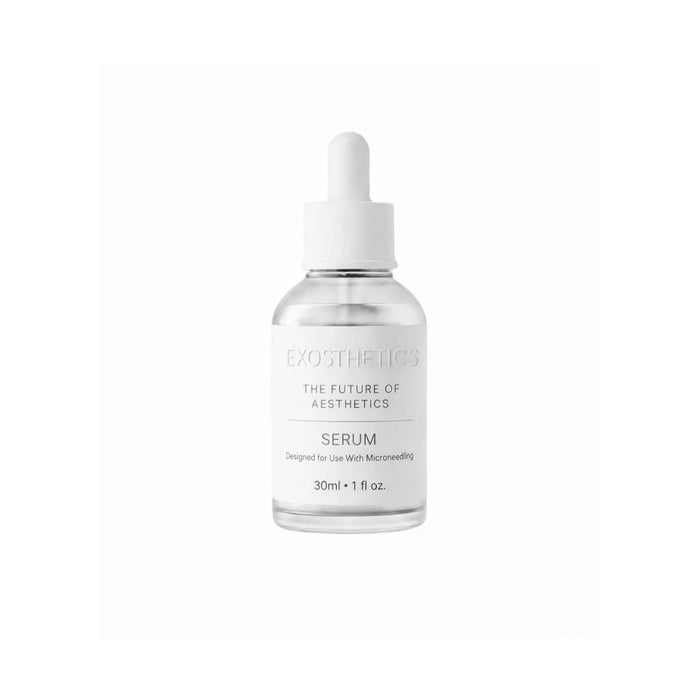
➜ Serums and soothing agents - Immediately after needling, a hydrating serum or growth factor solution may be applied. The open microchannels allow for enhanced absorption of active ingredients.
➜ Post-treatment instructions - You receive detailed aftercare guidance covering sun protection, cleansing, moisturizing, and activity restrictions.
The entire procedure typically takes 30 to 60 minutes depending on the size and complexity of the scar.
Emerging Innovations: Exosomes and Microneedling for Enhanced Scar Healing
One of the most exciting developments in scar management is the use of exosomes alongside microneedling. Exosomes are tiny extracellular vesicles that carry growth factors, cytokines, and signaling molecules capable of influencing cellular behavior in neighboring tissue.
A 2025 retrospective case-series study published in Pharmaceutics investigated the application of standardized Rosa damascena stem cell-derived exosomes in dermatological wound healing and scar management. The researchers found that these plant-derived exosomes, when applied to healing skin, supported accelerated wound closure and improved long-term scar outcomes. The study included long-term outcome assessment and demonstrated that exosome-treated wounds showed enhanced tissue remodeling compared to standard care protocols (Majewska et al., 2025).
While this research specifically examined exosome application in wound healing contexts, the underlying mechanism - enhanced intercellular signaling that promotes organized collagen deposition - is directly relevant to microneedling for surgical scars. Practitioners are increasingly pairing microneedling sessions with topical exosome preparations, leveraging the microchannels created by needling to deliver these bioactive vesicles deeper into scar tissue.

Recovery Timeline and What Healing Looks Like Week by Week
Recovery from microneedling on surgical scars follows a predictable pattern, though individual experiences vary based on needle depth, scar thickness, and skin type.
➜ Days 1-2: Redness and mild swelling resembling a moderate sunburn. The scar area may feel warm and tight. Minor pinpoint bleeding at the treatment site is normal and resolves within hours.
➜ Days 3-5: Redness fades. Skin may feel dry and begin to flake or peel lightly. This is a sign of the superficial healing process and should not be picked or scrubbed.
➜ Week 2: The skin appears relatively normal on the surface, but deep dermal remodeling is actively underway. Some patients notice their scar feels slightly softer already.
➜ Weeks 4-6: New collagen begins to mature. Subtle improvements in scar texture, thickness, and color become visible. This is typically when patients return for their next session.
➜ Months 3-6: Cumulative improvements become increasingly apparent with each subsequent session. The scar continues to remodel between treatments as collagen matures and reorganizes.
Post-Treatment Care: Essential Microneedling Aftercare for Surgical Scars
Proper aftercare is arguably as important as the procedure itself. Following evidence-based guidelines protects your investment and maximizes collagen production.
➜ Keep it clean: Gently cleanse the treated area with a mild, fragrance-free cleanser twice daily. Avoid exfoliants, retinoids, and active acids for at least 5 to 7 days.
➜ Hydrate aggressively: Apply a hyaluronic acid-based microneedling serum followed by a gentle, occlusive moisturizer. Hydrated skin heals faster and produces better quality collagen.
➜ Sun protection is non-negotiable: Use a broad-spectrum SPF 30 or higher sunscreen on the treated area whenever it may be exposed to UV light. Post-inflammatory hyperpigmentation is a real risk, especially for medium to darker skin tones.
➜ Avoid heat and sweat: Skip intense exercise, saunas, hot tubs, and steam rooms for 48 to 72 hours. Excess heat can increase inflammation and raise the risk of complications.
➜ No makeup on the scar: Avoid applying cosmetics directly to the treated scar for at least 24 hours, ideally 48 hours, to prevent introducing bacteria into open microchannels.
➜ Sleep elevated if treating facial scars: Keeping your head slightly elevated for the first night can help reduce swelling.
How Many Sessions Do You Need for Surgical Scars
There is no universal answer, but most patients with surgical scars require between 3 and 6 sessions spaced 4 to 6 weeks apart. Some factors that influence the total number of sessions include:
➜ Scar age - Older, more mature scars may require additional sessions because the collagen is more densely cross-linked and resistant to remodeling.
➜ Scar type - Hypertrophic scars often respond within 3 to 4 sessions, while deep atrophic scars or contracture scars may need 6 or more.
➜ Combination therapy - When microneedling is combined with other modalities such as radiofrequency or fractional laser, fewer total sessions of each may be needed. The randomized controlled trial by He et al. (2025) demonstrated that alternating treatment modalities can accelerate overall improvement compared to using a single approach repeatedly.
➜ Individual healing response - Factors like age, nutrition, smoking status, and overall health influence how robustly your body produces new collagen.
Risks, Side Effects, and Who Should Avoid Microneedling
Microneedling is considered safe when performed by a trained professional, but it is not without risks. Common side effects include temporary redness, swelling, dryness, and mild discomfort - all of which resolve within days. Less common but possible complications include:
➜ Post-inflammatory hyperpigmentation, particularly in Fitzpatrick skin types IV through VI
➜ Infection, though rare when proper sterile technique and aftercare are followed
➜ Herpes simplex reactivation in patients with a history of cold sores (prophylactic antivirals may be prescribed)
➜ Granuloma formation if contaminated serums or inappropriate topical agents are used during treatment
Patients who should avoid microneedling include those with active skin infections over the scar, those on blood-thinning medications that cannot be paused, those with active keloid formation, pregnant individuals, and those currently on isotretinoin or who have discontinued it within the past 6 months.
Combining Microneedling with Other Therapies for Optimal Scar Results
Mounting evidence supports the idea that combination approaches outperform any single treatment for scar revision. The concept is straightforward: different technologies address different aspects of scar pathology.
The He et al. (2025) randomized controlled trial provided direct clinical evidence for this approach. Patients who alternated between ablative fractional laser and microneedling radiofrequency achieved significantly better outcomes than those receiving ablative fractional laser alone. The alternating protocol addressed both superficial textural irregularities and deeper dermal remodeling simultaneously.
The network meta-analysis by Wu et al. (2025) further reinforced this finding by ranking combination therapies highly among all evaluated treatment options for scar improvement. Their systematic evaluation of available evidence found that approaches incorporating microneedling alongside complementary modalities consistently produced stronger effect sizes.
Common combination strategies for surgical scars include:
➜ Microneedling + platelet-rich plasma (PRP) - PRP provides concentrated growth factors that amplify the healing response
➜ Microneedling + topical exosomes - As demonstrated by Majewska et al. (2025), exosomes enhance intercellular signaling during wound remodeling
➜ Microneedling + fractional laser - Alternating sessions target different tissue depths
➜ Microneedling + silicone therapy - Using silicone sheets between microneedling sessions maintains hydration and pressure on the scar
Setting Realistic Expectations: What Microneedling Can and Cannot Do
Microneedling can significantly improve the appearance of surgical scars, but it is important to understand its limitations. Here is an honest breakdown:
✅ What microneedling CAN do for surgical scars: Improve texture and smoothness. Reduce scar thickness and elevation. Fade discoloration and redness. Increase skin pliability over contracture scars. Break up fibrous bands that tether the scar. Enhance the penetration of topical treatments.
❌ What microneedling CANNOT do: Completely erase a surgical scar. Guarantee identical results for every patient. Replace surgical scar revision when structural correction is needed. Work effectively on active keloids without adjunctive therapy. Produce results after a single session.
Most patients can expect 40% to 70% overall improvement in their scar's appearance over a full course of treatment. The exact outcome depends on all the variables discussed throughout this guide.
Long-Term Scar Maintenance After Completing Your Microneedling Series
Once you have completed your initial series of microneedling sessions, the work is not entirely finished. Collagen remodeling continues for up to 12 months after your final treatment, and how you care for your skin during this period matters.
➜ Continue rigorous sun protection over the scar for at least 12 months. UV exposure can cause permanent hyperpigmentation in remodeling tissue.
➜ Consider annual maintenance sessions. A single microneedling treatment once or twice per year can help sustain and build upon the improvements achieved during your initial series.
➜ Keep the scar moisturized. Well-hydrated skin maintains better elasticity and texture long-term.
➜ Massage the scar gently. Regular scar massage helps maintain pliability and prevents new adhesions from forming.
➜ Monitor for changes. If you notice the scar thickening, darkening, or becoming symptomatic after treatment is complete, consult your provider promptly.
Frequently Asked Questions
How long after surgery can I start microneedling on my scar?
Most providers recommend waiting at least 6 to 12 months after surgery before beginning microneedling. The scar needs to be fully closed, free of infection, and past the active healing phase. Starting too early can disrupt normal wound healing and worsen the scar's final appearance.
Does microneedling on surgical scars hurt?
Topical numbing cream is applied before the procedure, which significantly reduces discomfort. Most patients describe the sensation as mild pressure or a prickling feeling. Scar tissue itself often has reduced nerve sensitivity, so treatment over scars tends to be more comfortable than treatment on normal skin.
Can I microneedle a surgical scar at home with a dermaroller?
Home dermarollers use shorter needles, typically 0.25 mm to 0.5 mm, which are insufficient to reach the deeper dermal layers where surgical scar remodeling occurs. Professional treatments using 1.5 mm to 2.5 mm needle depths are necessary for meaningful scar improvement. At-home devices may complement professional treatment but should not replace it.
Is microneedling effective for old surgical scars?
Yes, microneedling can improve scars that are years or even decades old. Older scars may require more sessions because the collagen is more densely cross-linked, but the remodeling response can still be activated effectively. Many patients with scars over 10 years old report noticeable improvement.
What is the best combination treatment for stubborn surgical scars?
Research by He et al. (2025) showed that alternating ablative fractional laser with microneedling radiofrequency outperformed laser treatment alone. Wu et al. (2025) confirmed through network meta-analysis that combination approaches rank among the most effective strategies. Your provider can tailor a combination protocol based on your specific scar characteristics.
Are there any new technologies that enhance microneedling results for scars?
Plant-derived exosomes represent one of the newest additions to scar treatment protocols. Majewska et al. (2025) demonstrated that standardized Rosa damascena stem cell-derived exosomes improved wound healing and scar outcomes in a long-term assessment. These can be applied topically immediately after microneedling to leverage the open microchannels for deeper delivery.
How much does microneedling for surgical scars cost per session?
Professional microneedling for surgical scars typically ranges from $200 to $700 per session in the United States, depending on the size of the treatment area, the device used, and the provider's expertise. Radiofrequency microneedling tends to cost more, generally $300 to $1,000 per session due to the added technology involved. Most providers offer package pricing for a full series, which can reduce the per-session cost meaningfully. Keep in mind that because microneedling for scar revision is considered a cosmetic procedure, it is rarely covered by insurance. That said, many clinics offer financing options to make treatment more accessible. When evaluating cost, factor in the total number of sessions you will likely need - a cheaper per-session rate that requires twice as many visits may not be the bargain it first appears to be.
Will microneedling change the color of my surgical scar?
Discoloration is one of the areas where microneedling tends to deliver particularly satisfying results. Surgical scars that appear pink, red, or hyperpigmented benefit from the improved vascularization and the gradual normalization of melanocyte activity that accompanies collagen remodeling. Over a full treatment series, many patients see their scar fade significantly toward their natural skin tone. That said, results depend heavily on the underlying cause of the discoloration, your Fitzpatrick skin type, and how diligently you apply sun protection between sessions. Patients with darker skin tones should discuss post-inflammatory hyperpigmentation risk with their provider before beginning treatment, as this can temporarily worsen discoloration if the skin is not managed correctly.
Can microneedling help with scar-related tightness or discomfort?
Absolutely - and this is one of the more underappreciated benefits of microneedling for surgical scars. Tethering, tightness, and restricted movement are common complaints, particularly after abdominal surgeries, joint procedures, or any surgery where deeper tissue layers were involved. The fibrous bands that form beneath the scar surface restrict the natural movement of the skin over underlying tissue. By systematically breaking down these bands and promoting more pliable collagen remodeling, microneedling can meaningfully improve the functional comfort of a scar - not just its cosmetic appearance. Patients who have lived with a chronically tight scar often report this improvement in flexibility as the change that most positively impacts their daily life.
References
Abarca-Pineda, M. R., et al. (2025). Non-surgical approaches to scar management: A comprehensive review of microneedling, fractional laser, and combination therapies. Cureus. https://doi.org/10.7759/cureus
Abdelwahab, M., et al. (2025). Research trends in scar treatment: A bibliometric analysis of collagen induction therapies in the scientific literature. Lasers in Medical Science. https://doi.org/10.1007/s10103-025
He, Y., et al. (2025). Alternating ablative fractional laser and microneedling radiofrequency versus ablative fractional laser alone for scar treatment: A randomized controlled trial. Journal of the German Society of Dermatology (JDDG). https://doi.org/10.1111/ddg.2025
Majewska, M., et al. (2025). Standardized Rosa damascena stem cell-derived exosomes in dermatological wound healing and scar management: A retrospective case-series study with long-term outcome assessment. Pharmaceutics. https://doi.org/10.3390/pharmaceutics17
Wu, J., et al. (2025). Optimal treatment strategies for scar revision: A systematic review and network meta-analysis of microneedling and complementary modalities. PeerJ. https://doi.org/10.7717/peerj.2025

The first week
Everything in this guide, in two products
Exosome Serum for the night of. 72-Hour+ Cream from day three. $99 together — and you can add Ceramide Repair, the day-7 step, for $35 instead of $49.
See the Kit — $99