
Firmer, smoother skin without surgery - that's the promise driving thousands of people to ask about microneedling for skin tightening every month. But here's the uncomfortable truth: the gap between what's marketed and what's actually supported by clinical evidence is wide enough to waste your money and your recovery time. Whether you're researching before booking your first session or you've just had a treatment and need reliable guidance on post-treatment care and microneedling aftercare, this article was written to be the honest, evidence-first resource you deserve.
We're not going to tell you microneedling is a miracle cure for all loose skin. We're also not going to dismiss it. Instead, we'll walk through what recent clinical research actually shows - where the evidence is strong, where it's still emerging, and where it simply doesn't exist yet. Every claim in this article is anchored to peer-reviewed studies published between 2025 and 2026, and we'll tell you exactly which ones.
A recent survey of board-certified dermatologists confirmed that microneedling and energy-based rejuvenation devices are widely used in real-world clinical practice for skin rejuvenation goals, reflecting growing confidence in these modalities among trained practitioners (Oh et al., 2025).
Let's start with what "skin tightening" actually means in a clinical context - because the answer changes everything about what to expect.
Don't guess your recovery. Download FREE Clinical Microneedling Protocol Here
What "Skin Tightening" Actually Means (and Doesn't Mean)
When most people search for "skin tightening," they're picturing something dramatic - loose skin pulling taut, jowls lifting, a visible transformation that mimics what surgery can do. Clinical skin tightening, however, means something more specific and more modest.
In dermatology, "tightening" typically refers to improved firmness, skin texture density, and overall skin quality. It does not mean surgical repositioning of tissue. Think of it as the difference between ironing a wrinkled shirt (smoothing and firming what's there) versus tailoring the shirt to fit differently (surgically removing or repositioning tissue).
"Rejuvenation" is the broader clinical term, and it often involves combining multiple treatment modalities rather than relying on a single tool. This is a key insight from real-world dermatology practice - practitioners frequently layer approaches to address skin at different depths and through different mechanisms (Oh et al., 2025).
What Causes Loose or Sagging Skin?
Photoaging (UV-driven changes) is the single most relevant cause in the context of this article's evidence base. Years of cumulative sun exposure break down the structural proteins in your skin, leading to loss of texture quality, firmness, and resilience. Both key clinical studies we're reviewing specifically studied photoaged skin, making this the area where our evidence is strongest (Nguyen et al., 2026; Wang et al., 2025).
Chronological aging involves the gradual, natural decline in collagen and elastin production that happens regardless of sun exposure. Skin becomes thinner, less elastic, and more prone to sagging over time. While the rejuvenation studies we review address aging skin broadly, they don't isolate chronological aging as a separate variable.
Post-pregnancy and post-weight-loss changes are among the most common reasons people seek skin tightening treatments. However, we need to be transparent: the clinical evidence reviewed in this article does not directly address abdominal skin laxity, post-pregnancy loose skin, or post-weight-loss skin changes. We'll discuss these topics later in the article, but you'll see us flag the evidence limitations clearly.
Where Evidence Is Strong vs. Limited
🟢 Facial photoaging (texture, firmness) - Directly studied (Nguyen et al., 2026; Wang et al., 2025)
🟢 Facial rejuvenation (multilayer approach) - Directly studied (Wang et al., 2025)
🟡 Neck skin tightening - Not specifically studied in our reviewed sources
🔴 Abdominal skin laxity - No direct data in our reviewed sources
🔴 Post-pregnancy loose skin - No direct data in our reviewed sources
🔴 Post-weight-loss loose skin - No direct data in our reviewed sources
Microneedling For Skin Tightening: The Big Picture
So what actually happens when you get microneedling for skin tightening? In clinical terms, the treatment involves controlled micro-injury to the skin - sometimes combined with radiofrequency energy or other devices - applied in a clinical setting by a trained provider. The goal is to trigger the skin's natural repair processes, which can lead to improvements in firmness, texture, and overall skin quality over time.
Patients choose microneedling-based treatments because they sit in a compelling middle ground: more effective than topical skincare alone, generally lower downtime than fully ablative procedures, and increasingly supported by clinical data for rejuvenation outcomes. Device-based modalities including RF microneedling are among the tools regularly used by board-certified dermatologists in real-world skin rejuvenation practice (Oh et al., 2025).
Here's a critical distinction that gets lost in most online content: the "microneedling" being studied for meaningful rejuvenation outcomes is professional, device-based treatment - often involving radiofrequency energy delivery or combination with other technologies. This is fundamentally different from at-home dermarolling with a consumer device. When we discuss results and evidence throughout this article, we're referring exclusively to professional-grade treatments.
It's also worth noting that rejuvenation in clinical practice increasingly combines modalities rather than relying on a single treatment. A prospective split-face trial combined microfocused ultrasound with microneedle fractional radiofrequency for multilayered facial rejuvenation, reflecting this trend toward integrated treatment approaches (Wang et al., 2025).
What Happens During Treatment: A Step-by-Step Overview
Step 1: Consultation and Skin Assessment. Your provider evaluates your skin, discusses your goals, and determines which device and settings are appropriate. This is where the treatment gets customized to your specific concerns and skin condition.
Step 2: Cleansing and Numbing. The treatment area is thoroughly cleansed, and a topical anesthetic (numbing cream) is typically applied 30-60 minutes before the procedure. This is standard clinical practice for microneedling-based treatments.
Step 3: Device Application. Your provider uses the selected device - whether RF microneedling, a combination system, or another modality - making controlled passes over the target area. Settings are adjusted based on the treatment zone and your skin's response. Clinical protocols for energy-based rejuvenation involve carefully calibrated parameters specific to each device (Wang et al., 2025; Nguyen et al., 2026).
Step 4: Immediate Post-Treatment. After the procedure, expect redness, mild swelling, and warmth in the treated area. This is a normal and expected response to controlled micro-injury. Your provider will apply initial post-treatment products and give you aftercare instructions.
What Does It Feel Like?
"How much does it hurt?" is one of the most searched questions about microneedling. The honest answer is that sensation varies significantly depending on the device type, treatment area, energy settings, and your individual pain tolerance. With topical numbing, most patients report tolerable discomfort rather than sharp pain. RF-based treatments involve the added sensation of warmth or heat from the radiofrequency energy delivery. Your provider can adjust settings to manage comfort throughout the session.

Treatment Types That Get Called "Microneedling"
One of the biggest sources of confusion in skin tightening research is that "microneedling" is an umbrella term covering very different technologies. Let's break them down based on what was actually studied in the clinical evidence we're reviewing.
Non-energy microneedling (standard microneedling) uses fine needles to create mechanical micro-injuries without delivering any additional energy. While widely available and commonly discussed online, this modality is not directly studied for skin tightening or rejuvenation outcomes in any of our reviewed clinical sources. We mention it for context only - no efficacy claims can be made based on our evidence set.
Microneedle fractional radiofrequency delivers RF energy through microneedles into the dermal layer. This was studied in a prospective, randomized, split-face trial for facial rejuvenation (Wang et al., 2025).
RF microneedling plus 1927 nm thulium laser combines radiofrequency microneedling with a non-ablative laser in a single treatment session. A comparative study evaluated this combination against RF microneedling alone for rejuvenation of photoaged skin (Nguyen et al., 2026).
Microfocused ultrasound combined with microneedle fractional RF targets multiple tissue layers simultaneously - the ultrasound component reaches deeper tissue while the microneedle RF addresses the dermal layer. This combined system was assessed in a prospective, randomized, split-face study for multilayered facial rejuvenation (Wang et al., 2025).
➡️ The pattern is clear: the most clinically studied approaches for rejuvenation involve energy-based microneedling, often combined with additional technologies to address skin at multiple depths.
Post-Treatment Care and Microneedling Aftercare
Proper aftercare isn't optional - it directly influences your results and your comfort during recovery.
Gentle cleansing: Use lukewarm (not hot) water and a mild, fragrance-free cleanser. Your skin barrier has been deliberately disrupted, and harsh products or hot water can aggravate the treated area.
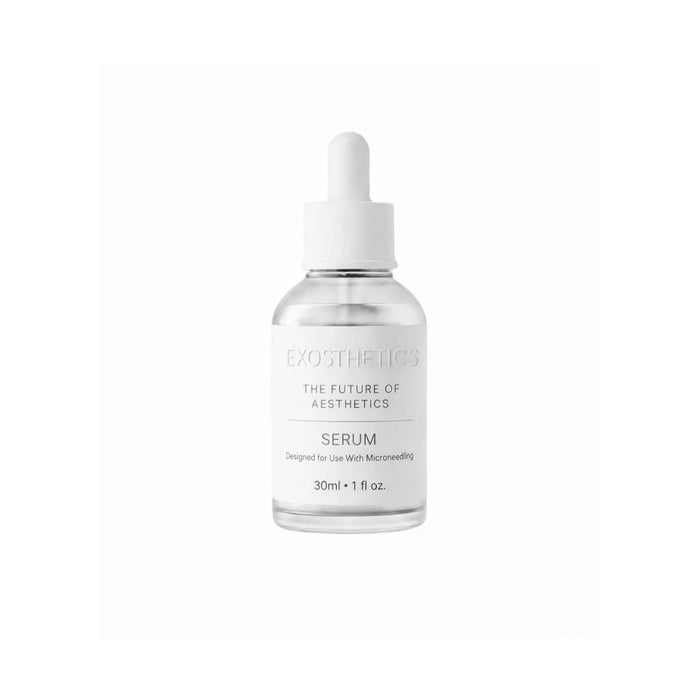
Barrier-focused moisturization: Apply a exosome-based special microneedling serum to support your skin. It needs hydration and protection, not active treatment ingredients, during this phase.
Sun protection: Once your provider clears you, apply broad-spectrum SPF 30 or higher. Treated skin is photosensitive, and UV exposure during recovery can compromise results and increase the risk of post-inflammatory changes.
Avoid active ingredients: Retinoids, AHAs, BHAs, and vitamin C at irritating concentrations should be paused until your provider gives the green light. These are excellent skincare ingredients under normal circumstances, but they can irritate a compromised skin barrier.
Skip makeup for the period your provider specifies. Your freshly treated skin has thousands of micro-channels, and makeup particles are not what you want settling into them.
Avoid heat exposure: No hot showers on the treated area, saunas, steam rooms, or intense exercise for the window your provider recommends. Heat can increase inflammation and prolong recovery.
What Are Patients Using During Recovery? The Role of Exosome-Based Aftercare
An emerging area of interest in post-procedure skincare involves exosome-based topical products. Exosomes are tiny extracellular vesicles that play a role in cell-to-cell communication, and they're increasingly being incorporated into clinical-grade recovery formulations designed specifically for post-procedure skin.
These products are positioned within the barrier support and recovery optimization phase of aftercare - the critical window when your skin is actively repairing itself and is most receptive to supportive ingredients. While the specific clinical studies reviewed in this article did not evaluate exosome-based aftercare products, the growing use of regenerative biologics in dermatology reflects a broader shift toward recovery protocols that actively support the skin's healing process rather than simply protecting it passively.
If you're interested in incorporating exosome-based recovery products into your post-treatment routine, discuss the option with your provider. Clinical-grade formulations designed for post-procedure skin are different from standard consumer skincare, and your provider can recommend products appropriate for your specific treatment and skin condition.
Aftercare Quick Reference
✅ Do: Cleanse gently with lukewarm water → Protects treated skin from aggravation
✅ Do: Apply barrier-repair moisturizer → Supports skin barrier recovery
✅ Do: Use broad-spectrum SPF 30+ once provider clears → Treated skin is photosensitive
✅ Do: Follow provider's timeline for resuming products → Barrier needs time to recover
✅ Do: Ask your provider about exosome-based recovery products → Clinical-grade products are formulated for post-procedure skin
❌ Don't: Use hot water or steam → Avoid aggravating treated skin
❌ Don't: Apply retinoids, AHAs, or BHAs → Active ingredients can irritate compromised barrier
❌ Don't: Skip sunscreen or use expired product → UV damage risk is elevated post-treatment
❌ Don't: Restart full routine immediately → Premature reintroduction causes irritation
❌ Don't: Touch, pick, or exfoliate treated skin → Risk of irritation or infection
Healing Timeline: What's Normal and What's Not
Day 0-1 (Immediate): Redness, warmth, and mild swelling are expected and normal. Your skin may look and feel sunburned. This is the acute inflammatory response to controlled micro-injury, and it's a sign that the healing process has begun.
Days 2-5: Redness gradually fades. You may experience dryness, mild flaking, or light peeling as the surface layer turns over. Mild sensitivity to products and temperature is common. Keep your routine gentle and focused on hydration.
Week 1-2: Skin begins to normalize in appearance. Some patients notice early improvements in texture and smoothness. However, the deeper rejuvenation process is just getting started.
Weeks 4-12 and beyond: This is where the real results develop. Rejuvenation outcomes - improved firmness, texture refinement, and skin quality - build gradually as the skin's remodeling processes continue beneath the surface. Patience during this phase is essential.
⚠️ When to Call Your Provider
While most recovery is straightforward, certain signs warrant immediate professional attention. Contact your provider if you experience: increasing redness or swelling after Day 3 (rather than gradual improvement); signs of infection such as pus, unusual warmth, or fever; blistering or burns, especially after RF-based treatments; persistent pain that extends beyond the expected window; or any reaction that concerns you. The rule is simple - when in doubt, call your provider.
How Often Is Too Often? Treatment Frequency and Over-Treatment
More sessions do not automatically equal better results. This is a point worth emphasizing because the temptation to "do more" is real, especially when you're invested in seeing improvement.
Treatment intervals should follow your provider's protocol, which accounts for adequate skin recovery between sessions. Your skin needs time to complete its remodeling cycle before being subjected to another round of controlled injury. Rushing this process can lead to barrier damage, persistent sensitivity, and diminishing returns.
Does Microneedling Work At All For Skin Tightening?
Yes, but the type of microneedling matters significantly, and "work" means improved skin quality and firmness appearance - not surgical lifting.
The strongest evidence in this article supports RF microneedling and combination rejuvenation systems for facial photoaging. A comparative clinical study demonstrated that RF microneedling delivered measurable rejuvenation outcomes in photoaged skin, and that combining RF microneedling with a 1927 nm thulium laser provided additional benefits (Nguyen et al., 2026). Separately, a prospective split-face trial showed that combining microfocused ultrasound with microneedle fractional radiofrequency achieved multilayered facial rejuvenation (Wang et al., 2025).
Standard at-home microneedling rollers are not what's being studied in these clinical trials. If someone tells you a $30 dermaroller will tighten your skin because "microneedling works," they're conflating fundamentally different treatments.
How Effective Is Microneedling For Skin Tightening?
Effectiveness depends on the device type, whether energy (RF) is delivered, and whether combination approaches are used.
A prospective, randomized, split-face study found that combining microfocused ultrasound with microneedle fractional radiofrequency produced multilayered facial rejuvenation results, suggesting that targeting multiple tissue depths enhances outcomes compared to single-layer approaches (Wang et al., 2025). In a separate comparative study, RF microneedling combined with a 1927 nm thulium laser was evaluated against RF microneedling alone for photoaged skin, providing evidence that combination strategies may offer incremental benefits for rejuvenation (Nguyen et al., 2026).
The key message is that effectiveness is not a yes-or-no question. It exists on a spectrum influenced by the specific technology used, the skill of the provider, the number and spacing of sessions, the patient's skin condition, and the quality of post-treatment care. Energy-based microneedling systems show the most promising clinical data for rejuvenation outcomes.

How Does Microneedling Tighten Skin?
The mechanism depends on the type of microneedling being performed.
Standard microneedling creates controlled micro-injuries using fine needles, which triggers the skin's wound-healing cascade. This process involves inflammation, proliferation, and remodeling phases that can lead to improvements in skin texture and quality over time.
RF microneedling adds a second mechanism: radiofrequency energy delivered through the needles creates controlled thermal zones in the dermis. This thermal effect targets the deeper structural layers of the skin, stimulating a more robust remodeling response than mechanical micro-injury alone. The combination of mechanical and thermal stimulation is what differentiates professional RF microneedling from standard needling approaches.
Combination systems - such as microfocused ultrasound paired with microneedle fractional RF - take this further by targeting tissue at multiple depths simultaneously. The ultrasound component reaches deeper tissue layers, while the microneedle RF works at the dermal level, creating a multilayered rejuvenation effect (Wang et al., 2025).
It's important to understand that this "tightening" reflects improved skin quality, density, and firmness - not the mechanical lifting and repositioning of tissue that surgery achieves.
How Many Microneedling Sessions Will I Need?
This is one of the most common questions, and the honest answer is: it depends on your specific treatment plan, the device being used, and your individual skin response.
The clinical studies reviewed in this article used defined treatment protocols as part of their research design, but the optimal number of sessions for individual patients in real-world practice will vary. Your provider will assess your skin, discuss your goals, and recommend a treatment series based on their clinical experience and the device manufacturer's guidelines.
What we can say from the evidence is that rejuvenation outcomes develop gradually over weeks to months following treatment, reflecting the time course of the skin's natural remodeling processes. This means that the full benefit of each session may not be apparent for several weeks, and your provider will factor this into the timing and total number of recommended sessions.
Does Microneedling Help With Sagging Skin?
"Sagging" exists on a spectrum, and where your skin falls on that spectrum determines whether microneedling-based treatments are appropriate.
For mild to moderate skin laxity associated with photoaging - where the skin has lost firmness, texture quality, and resilience but hasn't progressed to significant structural sagging - RF microneedling and combination approaches have demonstrated rejuvenation benefits in clinical studies (Nguyen et al., 2026; Wang et al., 2025).
For significant sagging involving gravitational descent of facial tissues, loss of volume, or substantial skin excess, microneedling alone - even energy-based microneedling - is not a substitute for surgical intervention. A combination approach that includes microneedling as one component of a broader treatment plan may be discussed with your provider, but expectations should be calibrated accordingly.
Does Microneedling Lift Sagging Skin?
"Lifting" implies upward repositioning of tissue, and this is where honest communication becomes essential. Microneedling does not lift skin in the way a surgical facelift does. It does not mechanically reposition tissue or remove excess skin.
What energy-based microneedling can do is improve the quality, firmness, and texture of the skin itself, which may create the visual appearance of modest improvement in mild laxity. When combined with other modalities - such as microfocused ultrasound - the multilayered approach addresses tissue at different depths, which may contribute to a more comprehensive rejuvenation effect (Wang et al., 2025). But framing this as "lifting" overpromises relative to what the evidence supports.
Does Microneedling Tighten Loose Skin?
For facial skin that has become loose due to photoaging, the evidence supports that RF microneedling and combination approaches can improve skin quality and firmness (Nguyen et al., 2026; Wang et al., 2025). The degree of improvement depends on the severity of laxity, the treatment approach, and individual patient factors.
For loose skin on the body - abdomen, arms, thighs - the clinical evidence reviewed in this article does not directly address these areas. While the underlying mechanisms of controlled micro-injury and thermal remodeling are consistent regardless of treatment location, the specific clinical data we're reviewing studied facial skin. Any claims about body skin tightening would be extrapolation, not evidence.
Does Microneedling Tighten Neck Skin?
The neck is one of the most commonly requested treatment areas for skin tightening, and understandably so - it's a visible area that shows aging early. However, the clinical studies reviewed in this article specifically evaluated facial rejuvenation protocols. Neck skin was not a studied treatment area in our evidence set.
This doesn't mean microneedling is never used on the neck - many providers do treat the neck with RF microneedling devices. But we cannot make evidence-based claims about neck-specific outcomes from the studies reviewed here. If neck tightening is your primary concern, discuss it specifically with your provider and ask about the evidence supporting the approach they recommend.
Is Microneedling Or Laser Better For Skin Tightening?
This isn't an either-or question in modern clinical practice - it's increasingly a "both, together" approach.
A comparative study directly addressed this question by evaluating RF microneedling combined with a 1927 nm thulium laser versus RF microneedling alone for photoaged skin rejuvenation (Nguyen et al., 2026). The study design reflects the clinical reality that combining modalities is a growing trend in rejuvenation practice, rather than choosing one technology over another.
The broader dermatologist survey confirmed this pattern: real-world rejuvenation practice frequently involves combining multiple modalities rather than relying on any single device (Oh et al., 2025). The "best" approach for your skin depends on your specific concerns, skin type, tolerance for downtime, and your provider's assessment of which combination of technologies will deliver the most meaningful improvement.
Asking "which is better" is less useful than asking "which combination is right for my skin, my goals, and my lifestyle?"
Microneedling For Skin Tightening Before And After
Before-and-after photos are the most compelling evidence for many patients, and there's nothing wrong with wanting to see visual results. However, it's important to evaluate before-and-after images critically.
The clinical studies reviewed in this article used standardized assessment methods to evaluate rejuvenation outcomes - including clinical photography under controlled conditions and validated assessment scales. The prospective split-face design used by Wang et al. (2025) is particularly valuable because each patient serves as their own control, with one side of the face receiving the combination treatment and the other receiving a comparator.
When reviewing before-and-after photos from clinics or online sources, consider: Were photos taken under consistent lighting? Is the same camera distance and angle used? How much time elapsed between photos? What specific treatment was performed? Before-and-after images without these controls can be misleading - both in the positive direction (making results look better than they are) and the negative direction (failing to capture real improvement).
Microneedling For Skin Tightening At Home
We need to be direct here: at-home microneedling devices are fundamentally different from the clinical devices studied in the research reviewed in this article. Consumer dermarollers and at-home microneedling pens operate at shallow depths without energy delivery, and they are not what produced the rejuvenation outcomes described in the clinical literature we've reviewed.
The clinical studies in this article evaluated professional RF microneedling devices (Nguyen et al., 2026) and combination systems involving microneedle fractional radiofrequency paired with microfocused ultrasound (Wang et al., 2025). These are clinical-grade devices operated by trained providers with adjustable energy settings - a completely different category from consumer products.
If you're considering at-home microneedling, understand that it may have value for surface-level skincare goals (like enhancing serum absorption), but it should not be expected to deliver the rejuvenation or skin tightening outcomes associated with professional energy-based treatments. And critically - at-home devices carry their own risks including infection, scarring, and barrier damage if used improperly.
Microneedling For Loose Skin After Pregnancy
Post-pregnancy skin changes - particularly on the abdomen - are one of the most common reasons people search for skin tightening solutions. The desire for restoration after pregnancy is completely valid, and microneedling-based treatments are frequently discussed in this context.
However, transparency requires us to state clearly: the clinical studies reviewed in this article did not evaluate microneedling for post-pregnancy skin laxity. The evidence we've reviewed focused on facial photoaging and facial rejuvenation (Wang et al., 2025; Nguyen et al., 2026). Extending these findings to abdominal skin after pregnancy would be speculation, not evidence-based guidance.
If post-pregnancy skin tightening is your goal, consult with a board-certified dermatologist or plastic surgeon who can evaluate your specific situation and recommend treatments supported by evidence relevant to your concern.
Microneedling For Loose Skin After Weight Loss
Significant weight loss is an incredible achievement, and it's understandable to want your skin to reflect your transformation. The degree of skin laxity after weight loss depends on many factors: the amount of weight lost, the speed of loss, age, genetics, and how long the skin was stretched.
As with post-pregnancy concerns, the clinical evidence in this article does not directly address post-weight-loss skin laxity. The studies reviewed here focused on facial photoaging (Nguyen et al., 2026; Wang et al., 2025), and the evidence cannot be extrapolated to body skin laxity following significant weight loss.
For mild skin quality concerns after weight loss, professional RF microneedling may be worth discussing with your provider as part of a comprehensive plan. For significant skin excess, surgical options such as body contouring procedures may be more appropriate. A consultation with a qualified provider will help determine what's realistic for your situation.
Microneedling For Skin Tightening On Stomach
Abdominal skin tightening is a high-demand treatment area, and RF microneedling devices are used on the abdomen in clinical practice. However, the specific clinical studies reviewed in this article did not evaluate abdominal treatments.
The studies focused on facial skin rejuvenation using RF microneedling (Nguyen et al., 2026) and a combination of microfocused ultrasound with microneedle fractional RF for facial rejuvenation (Wang et al., 2025). While the biological mechanisms of controlled thermal remodeling apply broadly, abdominal skin differs from facial skin in thickness, underlying structure, and the nature of laxity - meaning facial results should not be directly extrapolated to the stomach.
If abdominal skin tightening is your primary goal, seek a provider who can share their clinical experience with body treatments specifically and set realistic expectations based on your individual presentation.
Alternatives and Complementary Approaches to Skin Tightening
Microneedling-based treatments don't exist in isolation. Modern skin rejuvenation increasingly involves combining multiple approaches, and understanding the broader landscape helps you make informed decisions.
The dermatologist survey by Oh et al. (2025) confirmed that board-certified dermatologists in real-world practice use a variety of rejuvenation modalities, often in combination. This reflects the understanding that different technologies address different aspects of aging skin, and layered approaches can produce more comprehensive results than any single treatment.
Energy-based devices (lasers, ultrasound, radiofrequency) each target tissue in different ways and at different depths. The Nguyen et al. (2026) study specifically compared RF microneedling monotherapy against an RF microneedling plus thulium laser combination, illustrating how adding complementary technologies can enhance rejuvenation outcomes for photoaged skin.
For skin laxity beyond what non-surgical approaches can address, surgical options remain the gold standard. These include facelift procedures and body contouring surgery, which physically reposition and remove excess tissue - something no energy-based device can replicate.*
*Footnote: The term "skin tightening" spans multiple clinical contexts. While this article focuses on facial and body skin laxity treated with microneedling-based approaches, the term also appears in other medical contexts that are not relevant to this discussion.
How to Choose a Provider for Microneedling Skin Tightening
The person performing your treatment matters as much as the device being used. Here's what to look for when choosing a provider.
Credentials matter. Look for board-certified dermatologists or plastic surgeons, or licensed practitioners working under their supervision. The clinical studies reviewed in this article were conducted by trained dermatology professionals using clinical-grade devices (Wang et al., 2025; Nguyen et al., 2026).
Ask about the specific device. "Microneedling" is not one treatment. Ask your provider which device they use, whether it delivers RF energy, and what clinical evidence supports its use for your specific concern.
Request a realistic consultation. A good provider will tell you what they can and can't achieve for your skin. Be cautious of anyone who guarantees dramatic results or dismisses your questions about evidence.
Ask about aftercare protocols. Your provider should have a clear, detailed aftercare plan that includes product recommendations, activity restrictions, and follow-up scheduling. Recovery support - including the use of clinical-grade recovery products such as exosome-based formulations - should be part of the conversation.
Review their before-and-after photos with a critical eye, looking for consistent lighting, angles, and realistic representation of outcomes.
Frequently Asked Questions
Can microneedling replace a facelift?
No. Microneedling - even RF microneedling - improves skin quality, texture, and firmness but does not surgically reposition tissue or remove excess skin. It is a rejuvenation treatment, not a surgical alternative.
Is RF microneedling better than standard microneedling for skin tightening?
The clinical evidence reviewed in this article supports RF microneedling and combination energy-based systems for rejuvenation outcomes. Standard microneedling without energy delivery was not directly studied for skin tightening in our reviewed sources.
How long do microneedling skin tightening results last?
Rejuvenation outcomes develop gradually over weeks to months as the skin remodels. Maintenance treatments and consistent skincare - including sun protection - help preserve results. The studies reviewed here assessed outcomes at defined follow-up intervals but did not evaluate long-term durability over years.
Is microneedling safe for all skin types?
Professional microneedling devices can be used across a range of skin types, but settings and protocols must be adjusted by your provider. Discuss your skin type, history, and concerns during your consultation to ensure the treatment is appropriate for you.
Can I combine microneedling with other treatments?
Yes, and the clinical evidence increasingly supports combination approaches. A comparative study evaluated RF microneedling combined with a 1927 nm thulium laser (Nguyen et al., 2026), and a split-face trial assessed microfocused ultrasound combined with microneedle fractional RF (Wang et al., 2025).
What should I avoid after microneedling?
Avoid active skincare ingredients (retinoids, AHAs, BHAs), hot water, saunas, intense exercise, direct sun exposure, and makeup for the period your provider specifies. Focus on gentle cleansing, barrier-repair moisturization, and sun protection.
Does microneedling work on body skin?
While RF microneedling devices are used on body areas in clinical practice, the specific studies reviewed in this article focused on facial skin rejuvenation. We cannot make evidence-based claims about body skin outcomes from our reviewed sources.
How soon will I see results from microneedling for skin tightening?
Early texture improvements may be noticeable within 1-2 weeks as the skin heals. However, meaningful rejuvenation outcomes - improved firmness and skin quality - develop gradually over 4-12 weeks or longer as the skin's remodeling processes continue.
Are exosome products helpful after microneedling?
Exosome-based topical products are an emerging category in post-procedure recovery, increasingly used to support skin barrier repair and optimize healing. Discuss clinical-grade exosome recovery products with your provider as part of your aftercare protocol.
Is microneedling for skin tightening painful?
Topical numbing is standard practice, and most patients report manageable discomfort rather than sharp pain. Sensation varies by device type, treatment area, and energy settings. RF-based treatments involve added warmth from the radiofrequency energy delivery.
Can I do microneedling for skin tightening while pregnant or breastfeeding?
Most providers recommend postponing elective cosmetic procedures including microneedling during pregnancy and breastfeeding. Consult your dermatologist and obstetrician before scheduling any treatment during this time.
What's the difference between microneedling and RF microneedling?
Standard microneedling creates mechanical micro-injuries with fine needles only. RF microneedling delivers radiofrequency energy through the needles into the dermis, adding a thermal component that targets deeper structural remodeling. The clinical evidence reviewed here primarily supports RF microneedling for rejuvenation outcomes.
References
Oh S, Kim YH, Kim BR, Seo HM, Kwon SH, Choi H, Lee H, Na JI, Choi CP, Ko JY, Ryu HJ, Seo SB, Lee JH, Kim HS, Huh CH. Real-World Clinical Practice on Skin Rejuvenation Among Korean Board-Certified Dermatologists: Survey-Based Results. Ann Dermatol. 2025;37(3):123-130. doi: 10.5021/ad.24.167. Available at: https://pmc.ncbi.nlm.nih.gov/articles/PMC12117550/
Wang R, Peng G, Chen Y, Shao X, Liu L, Chen T, Shi M, Zhong J, Ou Y, Chen J. Combined Novel Microfocused Ultrasound and Microneedle Fractional Radiofrequency System for Multilayered Facial Rejuvenation: A Prospective, Randomized, and Split-Face Study. J Cosmet Dermatol. 2025;24(10):e70455. doi: 10.1111/jocd.70455. Available at: https://pmc.ncbi.nlm.nih.gov/articles/PMC12452053/
Nguyen L, Blessmann M, Schneider SW, Herberger K. Radiofrequency Microneedling With 1927 nm Thulium Laser Versus Radiofrequency Microneedling Monotherapy for Rejuvenation of Photoaged Skin. J Cosmet Dermatol. 2026;25(1):e70685. doi: 10.1111/jocd.70685. Available at: https://pmc.ncbi.nlm.nih.gov/articles/PMC12824051/

The first week
Everything in this guide, in two products
Exosome Serum for the night of. 72-Hour+ Cream from day three. $99 together, ships from the US — arrives before it gets bad.
See the Kit — $99