
Microneedling for jowls has become one of the most searched cosmetic treatments for people hoping to tighten, lift, or redefine the lower face without going under the knife. But here is the truth that most marketing glosses over - your results depend heavily on what is actually causing your jowls, which microneedling technology is used, and what post-treatment care you follow afterward. If you are reading this before your procedure, this guide will help you set realistic expectations. If you have already had your treatment and are looking for microneedling aftercare guidance right now, we have got you covered too.
In this comprehensive guide, we are anchoring our evidence-based claims to a peer-reviewed study by Demesh et al. (2021), published in the Journal of Cosmetic Dermatology, which specifically examined radiofrequency-assisted lipolysis combined with RF microneedling for premature jowl and neck laxity following facialplasty. Where the study does not address a topic directly, we will tell you so - no invented statistics, no inflated promises.
Don't guess your recovery. Download FREE Clinical Microneedling Protocol Here
Understanding Jowls - What They Are and What Causes Them
In the simplest terms, jowls refer to the sagging skin and soft tissue that forms along and below the jawline, disrupting what was once a clean, defined jaw contour. They are one of the most common visible signs of facial aging, and they can make people feel like their face looks heavier or older than it should.
Jowls can be driven by several factors. Skin laxity - meaning a loss of elasticity and collagen support in the skin itself - is a major contributor. Soft tissue descent, where the fat pads and muscle structures of the face gradually shift downward due to gravity over time, plays another significant role. Volume loss in the midface can also shift the perceived contour of the lower face downward, even when the jawline itself has not changed dramatically. Bone structure changes that occur with aging, including resorption of the jaw bone, further contribute to the appearance of jowling. And in some cases, jowl and neck laxity can develop prematurely following facial surgery - which is the specific context that Demesh et al. (2021) investigated in their study.
This broader context on causes of jowling reflects general dermatological understanding and is not a specific finding from the study cited in this article.
Understanding which of these factors is driving your jowls matters enormously because different causes respond to different treatments. RF microneedling may influence skin laxity and tightening in the treated area, and it may produce mild contouring effects through the tissue's healing response. However, it cannot reshape bone structure, address significant fat deposits without a lipolysis component, or correct deep structural ptosis that would require surgical intervention (Demesh et al., 2021).
What Is Microneedling - And How It Differs From RF Microneedling?
This is where a critical distinction needs to be made, because the word "microneedling" gets used to describe very different procedures, and conflating them leads to unrealistic expectations.
Standard microneedling - sometimes called collagen induction therapy - uses a device with fine needles to create controlled micro-injuries in the skin. These tiny punctures trigger the body's natural wound-healing process, which can stimulate collagen and elastin production over time. It is widely used for improving skin texture, reducing the appearance of acne scars, and enhancing product absorption.
RF microneedling takes the concept further. The needles not only penetrate the skin but also deliver radiofrequency energy into the dermal and subdermal layers. This thermal energy creates a more robust tissue-tightening response compared to mechanical micro-injuries alone. The heat from radiofrequency stimulates deeper remodeling of collagen and can produce a measurable tissue contraction effect.
In the Demesh et al. (2021) study, the intervention used was RF microneedling combined with RF-assisted lipolysis - a combination protocol, not RF microneedling in isolation. RF-assisted lipolysis uses radiofrequency energy specifically for tissue contouring and fat reduction in the treatment area. This is an important distinction because the outcomes reported in the study reflect the combined effect of both technologies working together (Demesh et al., 2021).
⚠️ Key takeaway: When this article discusses evidence for "microneedling for jowls," the evidence behind it is specifically RF microneedling combined with RF-assisted lipolysis - not a standard microneedling pen session you might receive at a med spa without the radiofrequency component.
The Evidence - What the Research Actually Shows
The Demesh et al. (2021) study, published in the Journal of Cosmetic Dermatology, examined the use of radiofrequency-assisted lipolysis combined with radiofrequency microneedling specifically in patients who had developed premature jowl and neck laxity following facialplasty. This is a very specific patient population - people who had already undergone facial plastic surgery and then developed laxity as a secondary concern.
The researchers used a combination protocol that paired RF-assisted lipolysis with RF microneedling to address this laxity in the lower face and neck area. The study reported on patient outcomes including improvement assessments and overall treatment results for this combined approach. Outcomes were evaluated through clinical assessment, and the study documented the treatment parameters and patient responses across the cohort (Demesh et al., 2021).
There are several important boundaries to keep in mind when interpreting this evidence. First, the study population consisted of post-facialplasty patients, so results may not directly generalize to people experiencing age-related jowling who have never had surgery. Second, the treatment was a combination protocol, meaning the outcomes cannot be attributed to RF microneedling alone. Third, this is a single study - not a meta-analysis or consensus guideline - so while it provides valuable clinical evidence, it represents one data point in a larger scientific conversation.
Even though this study focused on post-facialplasty patients, the underlying mechanism - using RF energy to address skin laxity in the lower face and neck - is relevant context for anyone considering RF microneedling for jawline concerns. The tissue-tightening principles are similar, even if the starting clinical scenario is different. That said, you should always discuss with your provider whether your specific situation is comparable to the population studied here.
Can Microneedling Fix Jowls?
The word "fix" implies a structural repositioning - a return to a previous state, as though jowls can be reversed entirely. Based on the evidence from Demesh et al. (2021), the combined RF protocol (RF-assisted lipolysis plus RF microneedling) was used to address laxity, but this is not the same as fixing or eliminating jowls in the way surgery might.
The combined approach demonstrated improvement in the appearance of premature jowl and neck laxity in the post-facialplasty patients studied. However, "improvement" and "fix" are very different claims. Improvement means a measurable or visible positive change. Fixing implies complete resolution, which the study does not support for microneedling alone or even for the combined protocol in all cases (Demesh et al., 2021).
If your jowls are caused by significant structural ptosis - meaning the deeper tissue layers have descended substantially - microneedling of any kind is unlikely to "fix" the problem. For mild to moderate skin laxity contributing to a softened jawline, there is a more reasonable argument that RF-based treatments could produce visible improvement, particularly as part of a comprehensive treatment plan.
Can Microneedling At Least Lift Jowls?
"Lift" is another word that gets used loosely in cosmetic marketing, and it means something very specific in clinical terms. A true lift involves the physical repositioning of tissue - moving sagging structures back to a higher position and securing them there. This is what a surgical facelift does. RF microneedling does not mechanically lift tissue in this way.
What RF microneedling may produce is a tightening or contouring perception. When the skin becomes firmer and more taut through collagen remodeling and tissue contraction from RF energy, the visual effect can mimic a mild lift. The jawline may appear more defined, and the transition from jaw to neck may look cleaner. But this is a skin-quality improvement and a superficial tissue response, not a structural repositioning of the deeper facial anatomy.
The Demesh et al. (2021) study reported outcomes for the combined RF protocol that suggested improvement in the appearance of lower face and neck laxity. However, the study does not quantify a specific "lifting" measurement in millimeters or centimeters, and readers should be cautious about before-and-after photographs that may be influenced by differences in lighting, camera angle, timing relative to treatment, and post-procedure swelling (Demesh et al., 2021).
It is also worth understanding the difference between lift and tighten. Tightening means the skin becomes firmer and less lax in place - think of it like taking in the slack on a piece of fabric without moving the fabric's attachment points. Lifting means physically relocating tissue to a higher position. RF microneedling falls more into the tightening category.

So How Effective It Actually Is?
Effectiveness depends on your starting point, your specific concern, the technology used, and whether your treatment is part of a broader protocol. Based on Demesh et al. (2021), the combined approach of RF-assisted lipolysis with RF microneedling showed favorable outcomes in treating premature jowl and neck laxity in post-facialplasty patients. The study reported that this combined approach was effective for addressing the laxity concerns in their patient population, with results that were deemed clinically meaningful by the treating physicians (Demesh et al., 2021).
Several factors influence how effective any RF microneedling treatment will be for your jowls. The severity of your laxity matters - mild laxity is more responsive than severe sagging. The underlying cause plays a role, as laxity driven primarily by skin quality changes may respond better than laxity caused by deep structural descent. The specific technology and device used make a difference, since different RF microneedling platforms operate at different depths and energy levels. Whether the treatment is combined with other modalities - as it was in the study - also significantly impacts outcomes. And finally, your individual healing response and aftercare compliance can meaningfully influence your results.
Here is a practical reality check to keep in mind:
✅ Supported by the evidence: A combined RF approach (RF-assisted lipolysis plus RF microneedling) can improve laxity appearance in the lower face and neck.
⚠️ Not proven in this study: Standard microneedling alone for jowl reduction in the general population.
⚠️ Not proven in this study: RF microneedling alone, without the lipolysis component, for jowl tightening.
❌ Not supported: Microneedling of any type as a replacement for surgical facelift in cases of significant ptosis.
Post-Treatment Care and Microneedling Aftercare
Proper aftercare is not a nice-to-have. It directly influences your healing, your comfort, and your final results. The quality of your recovery period can make a meaningful difference in how your skin responds to treatment.
Immediate Aftercare - First 24 to 48 Hours
The first two days after your treatment are the most critical window for protecting your skin and supporting the healing response. Keep the treated area clean and hydrated according to your clinician's specific instructions. Use only products that have been approved for post-procedure use - this means nothing with active ingredients like retinoids, vitamin C serums, AHAs, BHAs, or any exfoliating agents. Fragrance-free and minimal-ingredient formulations are your safest bet during this window.
Avoid direct sun exposure entirely during the first 48 hours. Your skin barrier has been deliberately disrupted, and UV exposure at this stage can cause hyperpigmentation, prolonged inflammation, and compromise your results. Once your clinician confirms your skin barrier has sufficiently closed - typically within the first few days - begin applying a broad-spectrum SPF 30 or higher sunscreen daily and continue this practice for several weeks.
Do not apply makeup to the treated area for the timeframe your clinician specifies. Many providers recommend waiting at least 24 to 48 hours, though this varies based on the depth and intensity of your treatment. Avoid strenuous exercise, saunas, steam rooms, and hot showers during the first 24 to 48 hours, as increased blood flow and heat can exacerbate swelling, redness, and discomfort.
How to Sleep After Microneedling on the Lower Face
This is a concern that many patients searching for jowl-specific aftercare have, and it makes complete sense. If your treatment targeted the jawline and lower face, sleeping on your side puts direct pressure on the treated area. For the first few nights after your procedure, try to sleep on your back with your head slightly elevated. An extra pillow or a wedge pillow can help reduce swelling and keep you from rolling onto the treated side during the night. If you are a dedicated side sleeper, a travel pillow positioned to keep your jaw off the pillow surface can be a practical workaround.
Sun Protection After Microneedling
Sun protection deserves its own emphasis because it is arguably the single most impactful aftercare behavior you can control. Post-procedure skin is significantly more vulnerable to UV damage. Hyperpigmentation, prolonged redness, and compromised collagen remodeling are all real risks from sun exposure during your recovery window. Apply a mineral-based broad-spectrum sunscreen with SPF 30 or higher once your skin barrier has closed. Reapply every two hours if you are outdoors. Wear a wide-brimmed hat when possible. This is not optional - it is one of the most protective things you can do for your results.
When Can I Wear Makeup and Return to My Normal Routine?
Most clinicians advise waiting at least 24 to 48 hours before applying any makeup to the treated area after RF microneedling. However, this timeline can vary depending on the depth of needle penetration, the energy settings used, and how your individual skin is responding. Your provider's specific instructions take priority over any general guidance. When you do return to makeup, use clean brushes or applicators, and opt for mineral-based or non-comedogenic products for the first week to minimize the risk of irritation or infection.
Returning to your normal skincare routine - including active ingredients like retinol, vitamin C, or chemical exfoliants - typically happens gradually over the course of one to two weeks. Again, your clinician will provide a personalized timeline based on your healing progress.
Healing Timeline - What to Expect During Recovery
Here is a general timeline for RF microneedling recovery on the lower face, though individual experiences will vary based on treatment intensity and personal healing factors.
- Days 1-3: Redness, warmth, and mild swelling in the treated area are completely normal. The skin may feel tight or slightly tender, similar to a moderate sunburn. Some patients experience minor pinpoint bleeding or oozing in the first few hours after treatment. The lower face and jawline area may feel puffy.
- Days 3-5: Redness begins to fade. You may notice some dryness, flaking, or a rough texture as the skin's surface layer turns over. This is part of the normal healing process - do not pick, peel, or exfoliate. Keep the skin hydrated with approved products.
- Days 5-7: Most visible signs of treatment (redness, flaking) have significantly diminished for most patients. Many people feel comfortable returning to social activities and normal makeup use by this point, depending on treatment depth.
- Weeks 2-4: The deeper collagen-remodeling process is underway beneath the surface. You may begin to notice subtle improvements in skin firmness and texture during this period.
- Months 1-3 and beyond: Collagen remodeling continues for several months after treatment. Final results from a single session typically become apparent at the 8 to 12 week mark. For combination protocols like the one studied in Demesh et al. (2021), this timeline may vary based on the specific treatment parameters used.
Exosome-Based Recovery Support
One of the most exciting developments in post-procedure skin recovery involves exosome-based microneedling aftercare products. Exosomes are extracellular vesicles - tiny communication packets released by cells - that carry growth factors, peptides, and signaling molecules involved in tissue repair and regeneration. When applied topically after microneedling, exosome formulations are designed to support the skin's natural recovery process by delivering these regenerative signals directly to the treated tissue.
For patients recovering from RF microneedling on the lower face and jawline, exosome-based serums and recovery products represent a targeted approach to aftercare that goes beyond simple moisturization. By supporting the cellular communication pathways involved in collagen synthesis and tissue repair, these products aim to optimize the healing environment that determines your final results.
How Many Microneedling Sessions Are Needed For Jowls?
This is one of the most practical questions patients ask, and unfortunately, it does not have a single universal answer. The number of sessions depends on the severity of your laxity, the specific technology and settings being used, whether your treatment is standalone or part of a combination protocol, and your individual tissue response.
The Demesh et al. (2021) study examined a specific treatment protocol for their patient population, but extrapolating an exact session count from this study to the general population would be inappropriate given the differences in starting condition and treatment context (Demesh et al., 2021).
In general clinical practice, RF microneedling for skin tightening concerns is commonly performed as a series of treatments - often three to four sessions spaced four to six weeks apart - though some patients may need more or fewer based on their response. Your treating clinician is the best source for a personalized treatment plan, as they can assess your tissue in person, consider your goals, and adjust the approach based on how you respond to each session.
Maintenance sessions - typically once or twice per year - are often recommended to sustain results, since the aging process and collagen degradation continue over time regardless of treatment.
Can Microneedling Itself Cause Jowls?
The short answer is that microneedling - whether standard or RF - is not known to cause jowls. The mechanism of action involves stimulating collagen production and tissue remodeling, not breaking down structural support.
However, there are a few nuances worth addressing. If microneedling is performed too aggressively, too frequently, or at inappropriate depths, it could theoretically contribute to chronic inflammation, which over time might degrade tissue quality rather than improve it. This is why proper treatment parameters, adequate spacing between sessions, and working with a qualified provider are all essential.
There is also a perception concern - post-procedure swelling in the lower face can temporarily make the jawline look fuller or less defined. This is not jowling. It is a normal inflammatory response that resolves within days to a week. If you notice your jawline looks "worse" immediately after treatment, it is almost certainly swelling, not a structural change.
Morpheus8 RF Microneedling Treatment For Jowls And Chin
Morpheus8 is one of the most well-known branded RF microneedling devices on the market, and it is frequently marketed specifically for lower face and jawline contouring. It combines fractional radiofrequency energy with microneedling at adjustable depths, allowing practitioners to target different tissue layers depending on the treatment goal.
What makes Morpheus8 particularly relevant to jowl treatment is its ability to deliver RF energy at deeper levels than some other microneedling devices - reaching the subdermal adipose tissue in addition to the dermis. This deeper targeting is what enables the tissue remodeling and fat coagulation effects that can contribute to a more defined jawline appearance.
It is important to note that Demesh et al. (2021) did not specifically evaluate the Morpheus8 device. The study used a combination of RF-assisted lipolysis and RF microneedling, and while the underlying principles of RF energy delivery share similarities with what Morpheus8 does, direct outcome comparisons cannot be made without dedicated comparative studies (Demesh et al., 2021).
If you are considering Morpheus8 for jowl treatment, ask your provider about the specific depth settings they plan to use, whether the treatment will be combined with any other modality, and what results they have observed in patients with a similar degree of laxity to yours.
PRP Microneedling For Jowls
PRP (platelet-rich plasma) microneedling combines the micro-injury stimulation of microneedling with the application of your own concentrated growth factors, derived from a blood draw processed to isolate the platelet-rich fraction. The theory is that applying PRP to the skin immediately after microneedling enhances the regenerative response, delivering a concentrated dose of growth factors directly into the micro-channels created by the needles.
PRP microneedling is well-studied for skin rejuvenation, texture improvement, and scar treatment. However, for jowl-specific concerns - meaning meaningful tissue tightening and lower face contouring - PRP microneedling with standard (non-RF) devices has not demonstrated the same level of evidence as RF-based approaches. The Demesh et al. (2021) study did not evaluate PRP microneedling, so no direct evidence from this source supports its use for jowl laxity (Demesh et al., 2021).
That said, PRP can be a valuable adjunct to RF microneedling treatments. Some providers combine RF microneedling with PRP application to potentially enhance the healing and collagen-remodeling response. If your primary concern is jowl laxity rather than skin texture alone, discuss with your provider whether an RF-based approach - with or without PRP - would be more appropriate than PRP microneedling with a standard device.
RF Microneedling For Jowls
RF microneedling is the modality most directly supported by the available evidence for addressing lower face laxity. As discussed throughout this article, the Demesh et al. (2021) study specifically utilized RF microneedling as part of a combined protocol with RF-assisted lipolysis to treat premature jowl and neck laxity, and reported favorable outcomes (Demesh et al., 2021).
The mechanism that makes RF microneedling particularly relevant for jowl concerns is the dual action of mechanical micro-injury combined with thermal energy delivery. The radiofrequency energy heats the deeper tissue layers, causing immediate collagen fiber contraction and initiating a longer-term neocollagenesis (new collagen formation) process. This thermal effect is what differentiates RF microneedling from standard microneedling for tissue-tightening applications.
Several RF microneedling platforms are available, including Morpheus8, Potenza, Genius, Vivace, and Secret RF, among others. Each has different needle configurations, depth capabilities, and energy delivery profiles. The choice of device matters, but equally important is the skill and experience of the practitioner operating it. Treatment parameters - including depth, energy level, number of passes, and treatment pattern - should be customized to your anatomy and goals.
For jowl-specific treatment, practitioners often focus on the pre-jowl sulcus, the jawline itself, and the upper neck area. Some protocols also treat the lower cheek to address the tissue above the jowl that contributes to the overall contour. Multiple sessions are typically recommended, and combination approaches - pairing RF microneedling with other modalities like neurotoxin, filler, or energy-based skin tightening - may produce more comprehensive results than RF microneedling alone.
Ultherapy vs Microneedling For Jowls
Ultherapy and RF microneedling are often compared because both are non-surgical treatments marketed for skin tightening, but they work through fundamentally different mechanisms and target different tissue depths.
Ultherapy uses micro-focused ultrasound energy to create thermal coagulation points at precise depths in the skin and the SMAS layer (superficial musculoaponeurotic system) - the same layer that surgeons manipulate during a facelift. This deeper targeting is Ultherapy's primary differentiator. It can reach tissue depths of 1.5mm, 3.0mm, and 4.5mm, with the deepest setting accessing the SMAS layer that RF microneedling typically does not reach.
RF microneedling, by contrast, delivers radiofrequency energy through needles that penetrate the dermis and, in some cases, the superficial subcutaneous layer. The thermal effect stimulates collagen remodeling and can produce tissue contraction, but it generally operates at shallower depths than Ultherapy's deepest focal points.
Neither Ultherapy nor a direct comparison between Ultherapy and RF microneedling was evaluated in Demesh et al. (2021), so this comparison reflects general clinical understanding rather than the study's findings.
In practice, the choice between Ultherapy and RF microneedling for jowls often comes down to the nature of the laxity. Ultherapy may be better suited for patients who need deeper tissue lifting, while RF microneedling may be preferred for patients whose concerns are more about skin quality, superficial tightening, and texture. Some providers combine both modalities in a layered approach - using Ultherapy for deeper tissue treatment and RF microneedling for dermal remodeling. Your provider can help determine which approach or combination is most appropriate for your specific anatomy and goals.
Cost and Value - What to Expect
Cost is a practical consideration that influences treatment decisions, and being transparent about it helps you plan effectively. RF microneedling treatments for the lower face and jowl area typically range from $600 to $1,500 per session in the United States, though prices vary significantly based on geographic location, the specific device used, the provider's expertise, and whether the treatment is combined with other modalities.
Since most treatment plans involve three to four sessions, the total investment for a course of treatment can range from approximately $1,800 to $6,000. Maintenance sessions add to the long-term cost. Combination protocols - like the RF-assisted lipolysis plus RF microneedling approach studied in Demesh et al. (2021) - may cost more per session due to the additional technology involved.
When evaluating cost, consider the value relative to alternatives. Surgical facelift procedures typically cost $7,000 to $15,000 or more and involve significant downtime, but they also produce more dramatic and longer-lasting results for significant ptosis. Non-surgical options like RF microneedling offer a lower entry cost and minimal downtime, but results are more subtle and require ongoing maintenance.
Pain and Comfort Management
One of the most common concerns about RF microneedling - especially on the sensitive jawline and lower face area - is how much it hurts. Most providers apply a topical numbing cream (typically lidocaine-based) to the treatment area 30 to 60 minutes before the procedure begins. With adequate numbing, most patients describe the sensation during treatment as a combination of pressure, warmth, and intermittent prickling rather than sharp pain.
The jawline and jowl area can be slightly more sensitive than the cheeks due to the thinner tissue and proximity to the mandibular nerve. Let your provider know if you are feeling significant discomfort during the procedure, as they can adjust energy settings or add additional numbing as needed.
After the numbing wears off following treatment, you can expect a warm, sunburn-like sensation that typically lasts several hours. Over-the-counter pain relievers like acetaminophen can help manage post-procedure discomfort. Avoid NSAIDs like ibuprofen unless your provider specifically approves them, as some clinicians prefer patients avoid anti-inflammatory medications that could theoretically blunt the controlled inflammatory response that drives collagen remodeling.
Frequently Asked Questions
How long is the downtime after RF microneedling on the jowls?
Most patients experience visible redness and mild swelling for 2 to 5 days following RF microneedling on the lower face. Social downtime is typically 3 to 5 days, though many patients feel comfortable returning to non-public-facing activities within 48 hours. Full healing of the skin's surface generally occurs within one week.
When can I wear makeup after microneedling on my jawline?
Most providers recommend waiting at least 24 to 48 hours before applying makeup to the treated area. Your clinician will provide a specific timeline based on your treatment depth and healing progress. When you do resume makeup, choose mineral-based, non-comedogenic products and use clean applicators.
Can I combine microneedling with other treatments for better jowl results?
Yes, combination approaches are common and were actually the basis of the Demesh et al. (2021) study, which combined RF-assisted lipolysis with RF microneedling. Other popular combinations include RF microneedling with neurotoxin, dermal filler, PRP, or Ultherapy. Your provider can design a multi-modal plan based on your specific concerns.
Are microneedling results for jowls permanent?
No. While RF microneedling stimulates collagen remodeling that can last many months, the aging process continues. Most patients benefit from maintenance sessions once or twice per year to sustain their results. Lifestyle factors like sun protection, skincare, and overall health also influence how long improvements last.
Is microneedling better than a facelift for jowls?
They serve different purposes. A surgical facelift addresses significant structural ptosis and produces more dramatic, longer-lasting results. RF microneedling is a non-surgical option best suited for mild to moderate skin laxity with minimal downtime. For severe jowling, surgery remains the gold standard. For early or mild changes, RF microneedling may be sufficient.
Does microneedling work for jowls without the RF component?
Standard microneedling without radiofrequency energy primarily improves skin texture, tone, and superficial concerns like fine lines or scarring. For tissue tightening and jowl-specific laxity, RF microneedling is the more evidence-supported option. The Demesh et al. (2021) study did not evaluate standard microneedling for this indication.
References
Demesh D, Cristel RT, Gandhi ND, Kola E, Dayan SH. The use of radiofrequency-assisted lipolysis with radiofrequency microneedling in premature jowl and neck laxity following facialplasty. J Cosmet Dermatol. 2021;20(1):93-98. doi:10.1111/jocd.13824. PMID: 33128284.

The first week
Everything in this guide, in two products
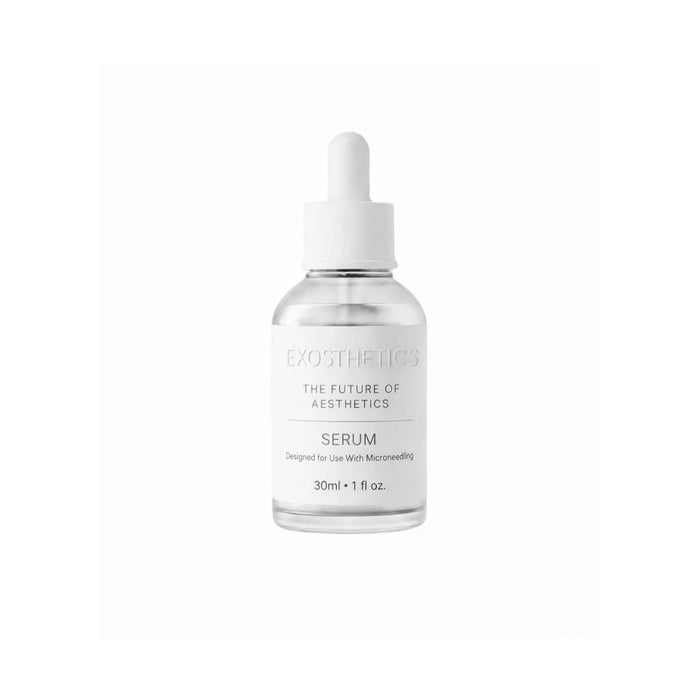
Exosome Serum for the night of. 72-Hour+ Cream from day three. $99 together, ships from the US — arrives before it gets bad.
See the Kit — $99