
The delicate skin beneath your eyes tells a story - late nights, stress, genetics, and the inevitable passage of time. When searching for solutions, you've likely encountered microneedling for under eye bags as a potential answer. But before you book that appointment, let's talk about what the science actually shows, what proper post-treatment care involves, and why microneedling aftercare can make or break your results.
Here's the reality: the periorbital area - that's the medical term for the region around your eyes - is fundamentally different from the rest of your face. The skin here is thinner, more delicate, and behaves differently when subjected to wound-healing therapies like microneedling. This means outcomes depend not just on the treatment itself, but on what's actually causing your under-eye concerns in the first place.
This guide cuts through the marketing hype and Instagram before-and-after photos to give you evidence-based answers. Every claim you'll read here maps directly to peer-reviewed dermatological research - no invented statistics, no extrapolation beyond what the data actually supports.
Don't guess your recovery. Download FREE Clinical Microneedling Protocol Here
What Is Microneedling For Under Eye Bags?
Microneedling, also known as collagen induction therapy, involves creating controlled micro-injuries in the skin using fine needles. When applied to the under-eye area, the goal is to trigger your body's natural wound-healing response, which theoretically improves skin texture, firmness, and overall appearance.
Here's how the biological cascade works: those tiny punctures activate your skin's repair mechanisms, stimulating the production of collagen type I and III, promoting angiogenesis (new blood vessel formation), and reorganizing the dermal matrix - the structural foundation of your skin. The depth of needle penetration determines the intensity of this biological response, which is why professional treatments differ significantly from at-home devices.
For under-eye concerns, practitioners typically use shorter needle lengths (0.5-1.0mm) compared to other facial areas, precisely because the dermal layer is so much thinner here. The treatment aims to address skin laxity and fine crepiness, not the underlying structural issues that often cause prominent eye bags. This distinction is crucial and one we'll explore throughout this guide.
Evidence: PMC9541154 documents the collagen induction and wound-healing mechanisms triggered by microneedling.
Can You Microneedle Under Eyes?
Anatomically speaking, yes - you can perform microneedling in the periorbital region. But "can" and "should" are different questions, and the answer to "should" depends entirely on practitioner skill, appropriate technique, and realistic expectations.
The under-eye area presents unique challenges:
-
Thin dermal structure → Requires precise depth control and lighter pressure
-
High vascular density → Increased risk of bruising and edema (swelling)
-
Proximity to the eye itself → Demands exceptional technique to avoid complications
-
Variable healing response → Results are less predictable than cheek or forehead treatments
Professional practitioners who work in this area modify their approach significantly. They use shorter needles, adjust their technique to account for the tissue's fragility, and space treatments further apart to allow for complete healing between sessions.
The key takeaway? This isn't a treatment where "more aggressive equals better results." In fact, the opposite is often true for periorbital microneedling.
Evidence: PMC9275426 discusses dermal thickness variability and the associated risk profile for different facial regions.

Is It Dangerous?
Every cosmetic procedure carries some level of risk - the question is whether those risks are temporary, manageable, and proportionate to the potential benefits.
For periorbital microneedling, expected responses include:
-
Mild swelling, especially in the morning
-
Occasional pinpoint bleeding during treatment
-
Temporary sensitivity to touch
These are normal inflammatory responses, not complications. Your body is supposed to react this way - it's part of the healing process.
However, genuine risks increase when:
-
Needles penetrate too deeply for the area
-
The skin is compromised (active infections, certain conditions)
-
Technique is improper or device quality is poor
The most common adverse effects documented in clinical studies include prolonged edema, bruising (petechiae), and temporary hyperpigmentation. Serious complications like scarring or infection are rare when the procedure is performed correctly by trained professionals.
Evidence: PMC11845936 provides comprehensive data on adverse effects and safety profiles across different treatment parameters.
Recovery Forecast
Get your personalized timeline for returning to normal activities after your microneedling treatment.
Your Forecast is Ready!
Enter your email to receive your personalized recovery timeline, safe activity dates, and Exosome Accelerator calculation.
Redness Clears
Day 5
Gym Safe
Day 4
Exosome Boost
2-3 daysfaster recovery
Check Your Inbox!
Your personalized Recovery Forecast is on its way. Look for an email from Exosthetics in the next few minutes.
Does Microneedling Work For Under Eye Bags?
This is where we need to get specific about what "work" means, because under-eye concerns aren't a single problem - they're several different issues that often get lumped together.
Breaking Down the Causes
For skin laxity and fine crepiness ✓ Potential benefit
Microneedling can improve collagen organization and skin quality, which may reduce the appearance of thin, crepey skin that contributes to a tired look. The effects are subtle and cumulative, not dramatic.
For mild fluid retention ~ Limited indirect benefit
If puffiness is your primary concern, microneedling won't drain fluid or prevent its accumulation. However, improved skin tone might make existing puffiness slightly less noticeable.
For herniated orbital fat ✗ No evidence of correction
True under-eye bags caused by fat deposits pushing forward cannot be corrected by collagen remodeling. This is a structural issue that microneedling simply doesn't address.
The scientific reality is this: microneedling improves skin quality, not structural anatomy. If your under-eye area looks better after treatment, it's because the skin itself - its texture, thickness, and integrity - has improved, not because fat has been removed or repositioned.
Clinical outcomes studies show modest improvements in periorbital skin quality, but researchers are careful to distinguish between improvement in skin appearance versus correction of actual anatomical eye bags.
Evidence: PMC9541154 defines the scope of collagen-based improvements; Wiley JCD (10.1111/jocd.15870) discusses clinical outcome limitations for specific indications.

How To Microneedle Under Eye Bags?
This section is educational, not instructional - performing this procedure on yourself or others without proper training carries significant risks. Here's what happens in a professional setting.
Clinical Protocol Overview:
-
Assessment phase - Practitioner evaluates skin thickness, vascular visibility, and underlying cause of concerns
-
Preparation - Thorough cleansing, possible topical anesthetic application (20-30 minutes)
-
Treatment - Controlled passes with a 0.5-1.0mm needle depth, avoiding direct pressure on the eye
-
Post-treatment - Immediate soothing serum application, cooling if needed
The typical treatment sequence involves multiple sessions spaced 4-6 weeks apart. Why this timing? Because collagen remodeling happens in phases over weeks, not days. Your skin needs time to complete each healing cycle before the next controlled injury is introduced.
The biological timeline:
-
Days 1-3: Inflammation and initial healing
-
Days 4-7: Fibroblast activation begins
-
Weeks 2-4: Active collagen synthesis
-
Weeks 4-12: Collagen remodeling and maturation
Attempting to accelerate this by treating too frequently disrupts the healing balance and can actually worsen outcomes or increase scarring risk.
Evidence: PMC9541154 details wound healing phases and optimal treatment intervals; PMC11845936 discusses tissue recovery timelines.
Microneedling Aftercare for Under Eyes
Post-treatment care isn't optional - it's what determines whether you get optimal results or complications. The under-eye area demands particularly careful aftercare due to its thin, sensitive nature.
First 24-48 Hours: Critical Window
Sun protection is non-negotiable ☀️
Your skin barrier is compromised, making it vulnerable to UV damage and hyperpigmentation. Use mineral (physical) sunscreen with SPF 30+ and avoid direct sun exposure for at least one week.
Product restrictions:
-
❌ No retinoids, acids (AHA/BHA), or vitamin C for 3-5 days
-
❌ No rubbing or touching the treated area
-
✓ Gentle, fragrance-free moisturizers only
-
✓ Cool compresses if swelling occurs
What Actually Goes ON Your Skin Post-Treatment
The challenge with periorbital aftercare is that this area demands specialized formulations. Regular face serums are often too heavy, too irritating, or formulated for thicker skin. You need something that supports the wound-healing cascade we discussed earlier without overwhelming compromised skin.
Let's take it a step further. You've invested $300-800 per session in professional microneedling. That investment doesn't end when you leave the treatment room - it extends into the 4-12 week remodeling phase we covered in the biological timeline. The difference between good results and optimal results often comes down to whether you're giving your skin the right building blocks during active collagen synthesis.
What your skin actually needs during this window:
-
Growth factor support to amplify the healing cascade
-
Peptides that signal fibroblast activity
-
Hydration without occlusive heaviness
-
Soothing agents to manage inflammation
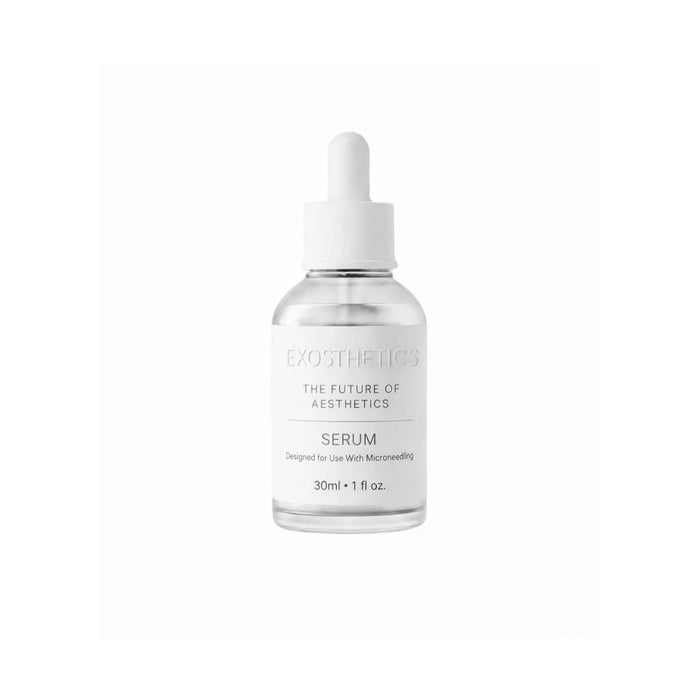
This is why many practitioners recommend specialized post-microneedling serums rather than your regular skincare lineup. Products like the Exosthetics Microneedling Serum are formulated specifically for this recovery phase - lightweight enough for periorbital use, rich in exosomes and growth factors that support the collagen induction process, and designed to work with your skin's healing timeline rather than against it.
The application approach matters too. For the first 48 hours, use gentle patting motions rather than rubbing. Apply to clean, slightly damp skin to enhance absorption. Less is more - a few drops cover the entire periorbital area.
Think of it this way: you're not just moisturizing, you're actively supporting the biological process you paid to trigger. The exosomes in specialized post-procedure formulations aren't marketing hype - they're the same signaling molecules your skin produces naturally during wound healing, just in concentrated form to accelerate and optimize that response.
This isn't about brand loyalty; it's about maximizing ROI on your professional treatment investment and protecting those results for as long as possible.
Days 3-7: Active Healing Phase
You'll notice mild flaking or dryness as your skin regenerates. This is normal. Continue gentle cleansing with lukewarm water and maintain consistent moisturization. Swelling typically peaks on day 2 and resolves within 5-7 days for most people.
Red Flags Requiring Medical Attention 🚨
Contact your practitioner immediately if you experience:
-
Increasing pain after 48 hours
-
Yellow or green discharge
-
Significant asymmetrical swelling
-
Vision changes
-
Severe or spreading redness
Evidence: PMC11845936 discusses expected healing timelines and complication indicators.
Difference Between Under Eye Bags And Under Eye Circles
This distinction matters tremendously for treatment selection. Many people seek microneedling for issues it's not designed to address.
Under-eye bags are primarily structural:
-
Herniated orbital fat pushing forward
-
Loss of tissue volume in surrounding areas
-
Skin laxity allowing fat to protrude → Microneedling addresses only the laxity component
Under-eye circles are primarily vascular or pigmentary:
-
Visible blood vessels through thin skin (blue/purple tones)
-
Melanin deposits (brown discoloration)
-
Shadowing from volume loss → Microneedling affects dermis structure, not melanin or blood vessels directly
You might have both conditions simultaneously, which is common. But expecting microneedling to eliminate dark circles because it helped someone else's bags is setting yourself up for disappointment. The pathology is different, so the appropriate treatment differs.
Evidence: PMC9275426 discusses skin structure versus pigmentation; Wiley JCD addresses indication-specific outcomes.

How Long Microneedling For Under Eye Bags Last?
Microneedling isn't permanent facial restructuring - it's temporary improvement in skin quality that gradually regresses without maintenance.
The timeline:
Weeks 4-8 post-treatment → Initial improvements become visible
Months 3-6 → Peak results as collagen remodeling completes
Months 6-12 → Gradual plateau, then slow regression
Months 12-18 → Most benefits have faded without maintenance
Why the regression? Because collagen turnover is a continuous process. Your body constantly breaks down and rebuilds collagen, and without repeated stimulation, production eventually returns to baseline levels. Aging, sun exposure, and lifestyle factors accelerate this decline.
Most practitioners recommend maintenance sessions every 6-12 months once you've completed an initial series. Think of it like going to the gym - you build muscle with consistent training, but if you stop, you gradually lose those gains.
It's also worth noting that individual variation is significant. Some people maintain improvements longer based on age, skin type, overall health, and how well they protect their skin from environmental damage.
Evidence: PMC9541154 documents collagen remodeling persistence and turnover dynamics.
Microneedling For Under Eyes Side Effects
Let's distinguish between expected effects and actual adverse events, because social media has blurred this line considerably.
Expected (Normal) Effects:
✓ Redness lasting 1-3 days
✓ Mild swelling, especially morning after treatment
✓ Tightness or sensitivity
✓ Pinpoint bleeding during procedure
✓ Temporary dryness or flaking
Less Common but Documented Risks:
⚠️ Prolonged erythema (redness beyond 1 week)
⚠️ Bruising or petechiae (small red spots)
⚠️ Temporary hyperpigmentation (more common in darker skin tones)
⚠️ Milia (small white bumps from clogged pores)
⚠️ Infection (rare with proper technique and aftercare)
Risk Factors That Increase Side Effects:
-
Treating too deeply for the periorbital area
-
Insufficient time between sessions
-
Poor aftercare compliance
-
Underlying skin conditions
-
Use of certain medications (blood thinners, retinoids)
The periorbital region is particularly prone to edema and bruising due to its thin skin and high vascular density. This doesn't mean complications are common, but it does mean the margin for error is smaller than other facial areas.
Evidence: PMC11845936 provides detailed adverse event profiles across different treatment parameters and depths.
How Much Microneedling For Under Eye Bags Cost?
Clinical studies don't track pricing data, but understanding what influences costs helps you evaluate whether a treatment is reasonably priced or overinflated.
Factors That Determine Pricing:
Professional expertise
Board-certified dermatologists typically charge more than medical aestheticians, but their advanced training reduces complication risk - especially important for delicate periorbital work.
Geographic location
- Major metropolitan areas: $300-800 per session
- Suburban/smaller cities: $200-500 per session
- These are approximate ranges; actual pricing varies widely
Treatment scope
-
Under-eyes only: Lower end of price range
-
Full face including periorbital: Higher cost
-
Combined with other modalities: Premium pricing
Add-ons that increase cost
-
PRP (platelet-rich plasma): +$150-400
-
Growth factor serums: +$50-200
-
Medical-grade numbing: Often included, sometimes separate
-
Post-treatment products: $50-150
Device quality
Professional-grade automated pens cost more to operate than manual rollers, which is typically reflected in service pricing.
At-Home Device Costs
Consumer devices range from $30-300, but remember: these shorter needles (typically 0.25mm) don't penetrate deeply enough to produce clinical collagen induction. They may improve product absorption, but they're not equivalent to professional treatment.
The most economical approach? Complete an initial professional series (3-4 sessions), then maintain with less frequent professional touch-ups rather than attempting DIY maintenance.
Microneedling For Under Eyes At Home
At-home microneedling for the under-eye area carries risks that outweigh potential benefits for most people.
Here's why professional treatment differs fundamentally:
- Depth control - Consumer devices lack the precision needed for periorbital work. The difference between effective depth (0.5-1.0mm) and excessive depth is millimeters, yet even "adjustable" home devices don't provide reliable control.
- Sterility - Maintaining proper sterility protocols at home is challenging. Each use requires thorough disinfection, and improper cleaning creates infection risk.
- Technique - Professional practitioners understand how to adjust pressure, angle, and pattern for thin periorbital skin. Without this training, you're more likely to cause trauma than therapeutic benefit.
- Liability - If complications occur at home, you have no professional oversight to address them quickly.
The Safety Data Says:
Clinical studies demonstrating microneedling safety and efficacy are based on controlled parameters - specific depths, sterile conditions, trained practitioners, and proper patient selection. These conditions don't exist in home settings.
The FDA classifies deeper microneedling devices as medical instruments requiring professional use for good reason. Shorter "dermarollers" sold for home use don't penetrate deeply enough to produce the collagen induction documented in research studies.
Bottom line: If you can't afford professional treatment, topical retinoids (with appropriate sun protection) offer evidence-based improvement in periorbital skin quality without the injury risk.
Evidence: PMC11845936 emphasizes that documented safety profiles depend on controlled clinical parameters.
Microneedling With PRP For Under Eye Bags
Platelet-rich plasma (PRP) combined with microneedling is heavily marketed, but let's separate marketing from mechanism.
The Biological Rationale
PRP contains concentrated growth factors from your own blood:
-
PDGF (Platelet-Derived Growth Factor) - Stimulates cell proliferation and collagen synthesis
-
TGF-β (Transforming Growth Factor-beta) - Regulates fibroblast activity
-
VEGF (Vascular Endothelial Growth Factor) - Promotes angiogenesis
-
EGF (Epidermal Growth Factor) - Accelerates epithelialization
In theory, applying these growth factors to microneedling-created micro-channels should enhance the wound-healing response, potentially amplifying collagen production and tissue remodeling.
What the Evidence Actually Shows
Current research indicates PRP may enhance healing quality in some contexts, but data specific to periorbital applications remains limited. Most studies demonstrate PRP's benefits as an adjunctive therapy - it may improve outcomes when combined with microneedling, but it's not a standalone solution for structural eye bags.
Key limitations:
-
PRP doesn't correct fat herniation or volume loss
-
Quality and concentration of growth factors varies significantly between preparation methods
-
Effects are still temporary, requiring repeat treatments
-
Adds significant cost without guaranteed proportional benefit
The Practical Consideration
PRP processing involves drawing your blood, centrifuging it to concentrate platelets, then applying the resulting serum during or after microneedling. The entire process adds 30-45 minutes and $150-400 to your treatment cost.
Is it worth it? For periorbital concerns specifically, the evidence doesn't strongly support paying premium prices unless you're already investing in a comprehensive treatment series and want to maximize potential outcomes.
Evidence: PMC9541154 discusses growth factors' role in wound healing and collagen synthesis.
Alternative Treatments For Under Eye Bags
Microneedling isn't the only option, and for many people, it isn't even the best option. The key is matching treatment to pathology.
Hyaluronic Acid Fillers 💉
Best for: Volume loss creating a hollow appearance or tear trough deformity
Mechanism: Immediate volumization that lifts and smooths the undereye transition
Duration: 6-18 months depending on product and metabolism
Risks: Tyndall effect (bluish discoloration), lumps if placed incorrectly, vascular occlusion (rare but serious)
Unlike microneedling, fillers don't improve skin quality - they mask structural deficits with added volume. This makes them complementary rather than competitive treatments.
Blepharoplasty (Eyelid Surgery) 🏥
Best for: True herniated orbital fat ("puffy" bags that don't respond to non-surgical treatments)
Mechanism: Surgical removal or repositioning of excess fat, possible skin excision
Duration: Long-lasting (years to permanent)
Risks: Surgical complications, scarring, asymmetry, prolonged recovery
This is the only treatment that actually addresses anatomical fat bags. If your issue is structural rather than textural, this may ultimately be more cost-effective than years of maintenance microneedling.
Laser Resurfacing ⚡
Best for: Skin texture, fine lines, and mild laxity with simultaneous pigmentation concerns
Mechanism: Controlled thermal injury stimulates collagen while targeting chromophores (pigment/blood vessels)
Duration: Similar to microneedling (6-18 months)
Risks: Higher hyperpigmentation risk, more extensive downtime, greater discomfort
Lasers affect different tissue layers than microneedling. Fractional CO2 or erbium lasers create deeper thermal zones, while microneedling creates mechanical injury. Neither is universally "better" - effectiveness depends on your specific concerns.
Topical Retinoids 🧴
Best for: Gradual texture improvement without injury or downtime
Mechanism: Increases cell turnover, stimulates collagen synthesis, improves skin thickness
Duration: Requires continuous use; benefits regress quickly upon cessation
Risks: Irritation, dryness, photosensitivity, not recommended during pregnancy
Prescription tretinoin (0.025-0.05%) has decades of evidence for periorbital rejuvenation. It won't produce dramatic changes, but it's the most conservative, lowest-risk option for gradual improvement.
The Decision Framework
|
Your Primary Concern |
Most Appropriate Treatment |
|
Crepey, thin skin |
Microneedling or retinoids |
|
Dark circles (vascular) |
Laser or cosmeceuticals |
|
Dark circles (pigment) |
Chemical peels or laser |
|
Volume loss/hollowing |
Hyaluronic acid fillers |
|
True fat bags |
Blepharoplasty consultation |
|
Fine lines only |
Retinoids or Botox (crow's feet) |
Evidence: Wiley JCD provides comparative analysis of treatment modalities matched to indications.
Is RF Microneedling Better For Under Eye Bags?
RF (radiofrequency) microneedling combines mechanical injury with thermal energy - needles penetrate the skin while simultaneously delivering heat to deeper layers.
The Theoretical Advantage
Adding controlled thermal injury to mechanical trauma theoretically amplifies collagen stimulation and produces immediate tissue tightening through collagen contraction. For mild to moderate skin laxity, this dual-mechanism approach might yield superior results compared to microneedling alone.
The Under-Eye Caveat
Here's the critical consideration: the periorbital region's thin skin and proximity to the eye make it particularly vulnerable to thermal complications. RF energy adds another variable that must be precisely controlled, and the margin for error is smaller than on thicker facial skin.
Benefits:
-
Potentially greater collagen remodeling
-
Immediate subtle tightening effect
-
May require fewer sessions
Risks:
-
Higher complication rate if settings aren't conservative
-
Greater discomfort during treatment
-
Extended recovery compared to standard microneedling
-
More pronounced swelling in the delicate periorbital area
The Evidence Gap
While RF microneedling has been studied for facial rejuvenation generally, specific data on periorbital applications - especially comparing it directly to standard microneedling for under-eye concerns - remains limited. Many claims about its superiority are extrapolated from results on other facial areas with thicker skin.
Bottom line: RF microneedling might offer enhanced results, but only when performed by practitioners with extensive experience in periorbital RF applications. For first-time treatments or less experienced practitioners, standard microneedling carries a more favorable risk-benefit profile.
Evidence: PMC11845936 discusses energy-based treatment considerations and associated risk profiles.
Laser Or Microneedling For Under Eye Bags?
This comparison comes up frequently, and the answer depends on what you're trying to achieve and your skin type.
Mechanism Comparison
Microneedling:
-
Creates mechanical micro-injuries
-
Triggers collagen through wound healing
-
No chromophore selectivity
-
Safer for darker skin tones (lower PIH risk)
-
Minimal heat generation
Laser resurfacing:
-
Creates thermal injury zones
-
Triggers collagen through controlled burning
-
Targets specific chromophores (water, hemoglobin, melanin)
-
Higher hyperpigmentation risk in darker skin
-
Addresses pigmentation and vascular issues simultaneously
Clinical Outcome Differences
For pure collagen induction and skin tightening, both modalities show similar efficacy in research studies, with slight variations based on specific laser type and microneedling protocol.
Microneedling wins for:
-
People seeking minimal downtime
-
Sensitive skin types
-
Combined acne scarring and texture concerns
Laser wins for:
-
Simultaneous pigmentation correction
-
More aggressive single-session results
-
Patients willing to accept longer recovery
-
Precision targeting of specific concerns
The Combination Approach
Some practitioners use both modalities strategically - laser for pigmentation and vascular issues, microneedling for pure collagen induction, either sequentially or alternating in a comprehensive treatment plan.
Cost consideration: Laser treatments typically cost 1.5-2x more than comparable microneedling sessions due to equipment costs and energy requirements.
Evidence: Wiley JCD discusses modality-specific outcomes and selection criteria.
FAQ
How much is microneedling for under eye bags?
Pricing varies based on practitioner credentials, geographic location, and whether adjunctive treatments like PRP are included. Professional sessions typically range from $200-800, with most clinics charging $300-500 for under-eye treatment. Clinical studies don't establish cost standards, so evaluate pricing based on practitioner expertise and facility quality rather than lowest price.
Is microneedling effective for under eye bags?
It can improve skin texture and firmness in select cases where bags are primarily caused by skin laxity. It does not remove or reposition fat-based eye bags, which are structural issues requiring different interventions. Effectiveness depends on accurate diagnosis of the underlying cause - skin quality issues versus anatomical fat herniation. Evidence: PMC9541154, Wiley JCD
How many microneedling sessions for eye bags?
Most clinical protocols involve 3-4 sessions spaced 4-6 weeks apart for initial treatment. Single sessions rarely produce visible improvements because collagen remodeling requires time to complete. Maintenance sessions every 6-12 months help preserve results. Individual response varies based on age, skin condition, and lifestyle factors. Evidence: PMC9541154
What is the best facial treatment for under eye bags?
There is no universal "best" treatment. Optimal intervention depends on whether bags result from skin laxity, volume loss, fluid retention, or fat herniation. Microneedling addresses texture and mild laxity; fillers correct volume deficits; blepharoplasty removes structural fat bags. Accurate diagnosis determines appropriate treatment selection. Evidence: Wiley JCD
Is microneedling good for around the eyes?
When performed conservatively by trained professionals using appropriate depth (0.5-1.0mm) and proper technique, microneedling can improve periorbital skin quality. However, the thin skin and high vascular density in this area create a smaller margin for error. Improper depth, excessive frequency, or poor technique significantly increases complication risk. Professional treatment is essential for safety. Evidence: PMC11845936
🔗 References
Alster TS, Graham PM. Microneedling: A Review and Practical Guide. Dermatologic Surgery. 2018. PMC9541154. https://pmc.ncbi.nlm.nih.gov/articles/PMC9541154/
Ramaut L, Hoeksema H, Pirayesh A, Stillaert F, Monstrey S. Microneedling: Where do we stand now? A systematic review of the literature. Journal of Plastic Surgery and Hand Surgery. 2018. PMC11845936. https://pmc.ncbi.nlm.nih.gov/articles/PMC11845936/
Yadav S, Singh A. Microneedling: Advances and widening horizons. Journal of Cosmetic Dermatology. 2024;23(3):785-796. https://onlinelibrary.wiley.com/doi/10.1111/jocd.15870
Aust MC, Fernandes D, Kolokythas P, Kaplan HM, Vogt PM. Percutaneous collagen induction therapy: an alternative treatment for scars, wrinkles, and skin laxity. Plastic and Reconstructive Surgery. 2008. PMC9275426. https://pmc.ncbi.nlm.nih.gov/articles/PMC9275426/
Fabbrocini G, De Vita V, Monfrecola A, De Padova MP, Brazzini B, Teixeira F, Chu A. Percutaneous collagen induction: an effective and safe treatment for post-acne scarring in different skin phototypes. Journal of Dermatological Treatment. 2014. PMC9275426. https://pmc.ncbi.nlm.nih.gov/articles/PMC9275426/
Sasaki GH. Micro-needling depth penetration, presence of pigment particles, and fluorescein-stained platelets: clinical usage for aesthetic concerns. Aesthetic Surgery Journal. 2017. PMC9275426. https://pmc.ncbi.nlm.nih.gov/articles/PMC9275426/
Hou A, Cohen B, Haimovic A, Elbuluk N. Microneedling: A Comprehensive Review. Dermatologic Surgery. 2017. PMC9275426. https://pmc.ncbi.nlm.nih.gov/articles/PMC9275426/
El-Domyati M, Barakat M, Awad S, Medhat W, El-Fakahany H, Farag H. Microneedling Therapy for Atrophic Acne Scars. Journal of Clinical and Aesthetic Dermatology. 2018. PMC9275426. https://pmc.ncbi.nlm.nih.gov/articles/PMC9275426/
Cohen BE, Elbuluk N. Microneedling in skin of color: A review of uses and efficacy. Journal of the American Academy of Dermatology. 2016. PMC9275426. https://pmc.ncbi.nlm.nih.gov/articles/PMC9275426/
Fernandes D. Minimally invasive percutaneous collagen induction. Oral and Maxillofacial Surgery Clinics of North America. 2005. PMC9275426. https://pmc.ncbi.nlm.nih.gov/articles/PMC9275426/
Doddaballapur S. Microneedling with dermaroller. Journal of Cutaneous and Aesthetic Surgery. 2009. PMC9275426. https://pmc.ncbi.nlm.nih.gov/articles/PMC9275426/
Singh A, Yadav S. Microneedling: Advances and widening horizons. Indian Dermatology Online Journal. 2016. PMC9275426. https://pmc.ncbi.nlm.nih.gov/articles/PMC9275426/
Iriarte C, Awosika O, Rengifo-Pardo M, Ehrlich A. Review of applications of microneedling in dermatology. Clinical, Cosmetic and Investigational Dermatology. 2017. PMC9275426. https://pmc.ncbi.nlm.nih.gov/articles/PMC9275426/
Ramaut L, Hoeksema H, Pirayesh A, Stillaert F, Monstrey S. Microneedling: Where do we stand now? A systematic review of the literature. Journal of Plastic, Reconstructive & Aesthetic Surgery. 2018. PMC9275426. https://pmc.ncbi.nlm.nih.gov/articles/PMC9275426/
Alster TS, Li MKY. Microneedling of Scars: A Large Prospective Study with Long-Term Follow-Up. Plastic and Reconstructive Surgery. 2020. PMC9275426. https://pmc.ncbi.nlm.nih.gov/articles/PMC9275426/
Schoenberg E, O'Connor M, Wang JV, Yang S, Saedi N. Microneedling and PRP for acne scars: A new tool in our arsenal. Journal of Cosmetic Dermatology. 2020. PMC9275426. https://pmc.ncbi.nlm.nih.gov/articles/PMC9275426/
Hesseler MJ, Shyam N. Platelet-rich plasma and its utility in medical dermatology: A systematic review. Journal of the American Academy of Dermatology. 2019. PMC9275426. https://pmc.ncbi.nlm.nih.gov/articles/PMC9275426/
Wu SZ, Muddasani S, Alam M. A Systematic Review of the Efficacy of Microneedling for Skin Rejuvenation. Dermatologic Surgery. 2020. PMC9275426. https://pmc.ncbi.nlm.nih.gov/articles/PMC9275426/
Juhasz MLW, Cohen JL. Microneedling for the Treatment of Scars: An Update for Clinicians. Clinical, Cosmetic and Investigational Dermatology. 2020. PMC9275426. https://pmc.ncbi.nlm.nih.gov/articles/PMC9275426/
Litchman G, Nair PA, Badri T, Kelly SE. Microneedling. StatPearls. 2023. PMC9275426. https://pmc.ncbi.nlm.nih.gov/articles/PMC9275426/
Bonati LM, Epstein GK, Strugar TL. Microneedling in All Skin Types: A Review. Journal of Drugs in Dermatology. 2017. PMC9275426. https://pmc.ncbi.nlm.nih.gov/articles/PMC9275426/
Zduńska K, Kołodziejczak A, Rotsztejn H. Is skin microneedling a good alternative method of various skin defects removal. Dermatologic Therapy. 2018. PMC9275426. https://pmc.ncbi.nlm.nih.gov/articles/PMC9275426/
Ramaut L, et al. Microneedling: Where do we stand now? J Plast Reconstr Aesthet Surg. 2018. PMC9275426. https://pmc.ncbi.nlm.nih.gov/articles/PMC9275426/
Chandrashekar BS, Sriram R, Mysore R, Bhaskar S, Shetty A. Evaluation of microneedling fractional radiofrequency device for treatment of acne scars. Journal of Cutaneous and Aesthetic Surgery. 2014. PMC9275426. https://pmc.ncbi.nlm.nih.gov/articles/PMC9275426/
Cachafeiro T, Escobar G, Maldonado G, Cestari T, Corleta O. Comparison of Nonablative Fractional Erbium Laser 1,340 nm and Microneedling for the Treatment of Atrophic Acne Scars. Dermatologic Surgery. 2016. PMC9275426. https://pmc.ncbi.nlm.nih.gov/articles/PMC9275426/
Dogra S, Yadav S, Sarangal R. Microneedling for acne scars in Asian skin type: an effective low cost treatment modality. Journal of Cosmetic Dermatology. 2014. PMC9275426. https://pmc.ncbi.nlm.nih.gov/articles/PMC9275426/
Fabbrocini G, Fardella N, Monfrecola A, Proietti I, Innocenzi D. Acne scarring treatment using skin needling. Clinical and Experimental Dermatology. 2009. PMC9275426. https://pmc.ncbi.nlm.nih.gov/articles/PMC9275426/
Garg S, Baveja S. Combination therapy in the management of atrophic acne scars. Journal of Cutaneous and Aesthetic Surgery. 2014. PMC9275426. https://pmc.ncbi.nlm.nih.gov/articles/PMC9275426/
Majid I. Microneedling therapy in atrophic facial scars: an objective assessment. Journal of Cutaneous and Aesthetic Surgery. 2009. PMC9275426. https://pmc.ncbi.nlm.nih.gov/articles/PMC9275426/
Sharad J. Combination of microneedling and glycolic acid peels for the treatment of acne scars in dark skin. Journal of Cosmetic Dermatology. 2011. PMC9275426. https://pmc.ncbi.nlm.nih.gov/articles/PMC9275426/
Aust MC, Reimers K, Repenning C, Stahl F, Jahn S, Guggenheim M, Schwaiger N, Gohritz A, Vogt PM. Percutaneous collagen induction: scarless skin rejuvenation. Annals of Plastic Surgery. 2010. PMC9275426. https://pmc.ncbi.nlm.nih.gov/articles/PMC9275426/
Pahwa M, Pahwa P, Zaheer A. "Tram track effect" after treatment of acne scars using a microneedling device. Dermatologic Surgery. 2012. PMC9275426. https://pmc.ncbi.nlm.nih.gov/articles/PMC9275426/
Soltani-Arabshahi R, Wong JW, Duffy KL, Powell DL. Facial allergic granulomatous reaction and systemic hypersensitivity associated with microneedle therapy. JAMA Dermatology. 2014. PMC9275426. https://pmc.ncbi.nlm.nih.gov/articles/PMC9275426/
Lee HJ, Lee EG, Kang S, Sung JH, Chung HM, Kim DH. Efficacy of microneedling plus human stem cell conditioned medium for skin rejuvenation. Annals of Dermatology. 2014. PMC9275426. https://pmc.ncbi.nlm.nih.gov/articles/PMC9275426/
Fabbrocini G, De Padova MP, Tosti A, et al. Combined use of skin needling and platelet-rich plasma in acne scarring treatment. Cosmetic Dermatology. 2011. PMC9275426. https://pmc.ncbi.nlm.nih.gov/articles/PMC9275426/

The first week
Everything in this guide, in two products
Exosome Serum for the night of. 72-Hour+ Cream from day three. $99 together, ships from the US — arrives before it gets bad.
See the Kit — $99