
You have blocked out your afternoon, rearranged your calendar, and now you are staring at the clock wondering - how long does microneedling take, really? Whether you are still researching or you just walked out of the clinic with a face that feels like a warm sunburn, understanding the full time commitment is the key to setting the right expectations. Proper post-treatment care and a solid microneedling aftercare routine are just as important as the procedure itself, and the timeline extends well beyond what happens on the treatment table.
The truth is, there is no single answer. The time microneedling takes depends on which phase you are asking about. Think of it in four distinct time buckets:
⏱️ Appointment time - from the moment you check in to the moment you walk out the door.
🔴 Acute recovery window (0-72 hours) - the critical period when your skin is most vulnerable and most receptive to recovery products.
🪞 Social downtime - when visible redness, flaking, and texture changes resolve enough that you feel comfortable in public.
✨ Results timeline - weeks to months of gradual improvement, often across multiple sessions.
Whether you are researching microneedling before booking your first appointment or you just left the clinic and want to know what comes next, this guide covers every phase of your microneedling recovery time in detail.
📋 How We Use Research in This Article: The clinical insights in this guide are drawn from peer-reviewed research, including studies on platelet-rich plasma applications in plastic surgery (Chamata et al., 2021), hyperpigmentation management (Nautiyal & Wairkar, 2021), and radiofrequency microneedling for rosacea (Hasan et al., 2024). Where we discuss commonly reported appointment times or recovery experiences, we note that these reflect widely described clinical protocols rather than specific findings from these studies. Our goal is transparency - you deserve to know where the information comes from.
Don't guess your recovery. Download FREE Clinical Microneedling Protocol Here
Your Microneedling Time Commitment at a Glance
Before we dive into the details, here is the big-picture view of what your microneedling time commitment actually looks like. Most people only think about how long they will be in the treatment chair. But the full picture includes everything from the moment you arrive to the weeks and months of gradual transformation that follow.
Part A - Appointment Day Timeline
| Step | What Happens | What You Will Feel | Time-Saving Tip |
|---|---|---|---|
| Check-in & consultation | Paperwork, skin assessment, treatment plan review | Nothing yet - just anticipation | Complete intake forms online before arriving |
| Cleansing | All makeup, sunscreen, and oils are removed | Cool, refreshing | Arrive with a clean, bare face to skip this step |
| Numbing cream application | Topical anesthetic applied to treatment area | Gradual tingling, then numbness | This wait time is non-negotiable - bring something to read |
| Numbing wait period | Cream absorbs and takes effect | Progressive numbing of the skin | Some clinics apply numbing before your appointment slot |
| Treatment passes | Microneedling device moved across treatment zones | Pressure, vibration, mild scratching sensation | Communicate with your provider about comfort level |
| Add-on application (if applicable) | PRP, hyaluronic acid, or recovery serums applied | Cool serum on warm skin | Discuss add-ons before treatment day so products are prepped |
| Calming products & discharge | Soothing mask or serum, aftercare instructions reviewed | Relief, slight warmth | Take a photo of your aftercare sheet for quick reference |
Research supports the idea that add-on steps like PRP application can meaningfully extend your appointment time but may also support the biological repair process. Chamata et al. (2021) describe PRP as an evolving regenerative adjunct in procedures where tissue repair and collagen stimulation are the goal, which is exactly what microneedling aims to achieve.
Part B - Recovery and Results Timeline
| Phase | Timeframe | What to Expect | What Matters Most |
|---|---|---|---|
| 🔴 Acute inflammation | Day 0-1 | Redness like a moderate sunburn, warmth, tightness | ⬅️ Your aftercare matters most here. What you apply in this window can support healing. |
| 🟠 Active healing | Days 2-5 | Dryness, flaking, mild peeling, skin feels tight | Gentle cleansing only - no exfoliants or actives |
| 🟡 Resolution | Week 1-2 | Visible redness fades, texture normalizes | Most people feel comfortable without makeup coverage by day 5-7 |
| 🟢 Early results | Weeks 4-6 | Subtle improvements in tone, texture, and smoothness | This is NOT your final result |
| ✨ Cumulative results | 3-6 months | Progressive collagen remodeling, visible transformation | Multiple sessions compound the improvements |
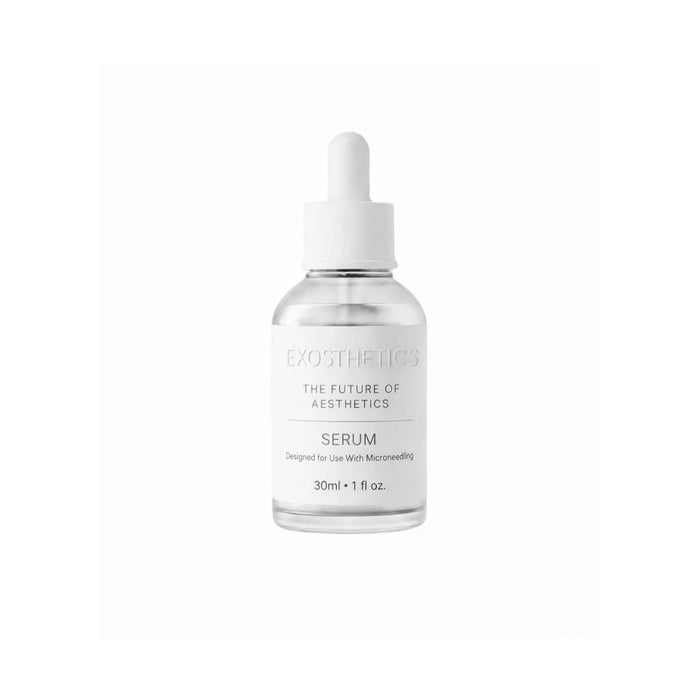
The 0-72 hour acute window deserves special attention. Research on hyperpigmentation management demonstrates that inflammation during the healing process can trigger pigmentary changes, particularly in darker skin tones (Nautiyal & Wairkar, 2021). This underscores why what you apply to your skin during the acute recovery phase - and what you avoid - can directly influence your outcome. Recovery serums, including emerging options like exosome-based microneedling serums, are designed to be used during exactly this window when skin permeability is temporarily increased and the healing cascade is actively underway.
What Microneedling Is - and Why Recovery Time Is the Real Answer
Microneedling, also known as collagen induction therapy, is a minimally invasive procedure that uses fine needles to create thousands of microscopic channels in the skin. These controlled micro-injuries trigger your body's natural wound-healing response, ultimately leading to increased collagen and elastin production. It sounds straightforward, and the procedure itself is. But the biology that follows is where the real transformation happens.
Phase 1 - Controlled Injury: The needles create precise, uniform micro-channels in the skin. This is the procedure itself and takes only minutes.
Phase 2 - Inflammation: Your body responds immediately. Blood flow increases to the area, delivering growth factors and signaling molecules. This is why your face looks red and feels warm. It is not damage - it is your repair system activating.
Phase 3 - Repair: Over the following days, your skin produces new tissue to fill those micro-channels. New collagen fibers begin forming. Your skin may feel tight, dry, or flaky during this phase as the surface layer turns over.
Phase 4 - Remodeling: This is the long game. Over weeks and months, the new collagen fibers mature, organize, and strengthen. Skin texture refines. Scars soften. Tone evens out. This phase can continue for three to six months after a single session.
The procedure takes minutes. The biology takes weeks. That reframe is essential for understanding why "how long does microneedling take" is really a question about recovery and results - not just appointment length.
Chamata et al. (2021) discuss how regenerative adjuncts like PRP work by amplifying this natural repair cascade, concentrating growth factors at the treatment site to support the proliferative and remodeling phases. This principle - that biological repair takes time and can be supported but not rushed - applies to every microneedling patient.
⚠️ Reality Check: Microneedling is not a one-session transformation for most concerns. The controlled injury-repair-remodel cycle needs repetition to produce meaningful, lasting change. If someone promises you dramatic results from a single treatment, that is a red flag, not a green one.

What Concerns Affect How Long Microneedling Results Take?
Not all skin concerns respond to microneedling on the same timeline. The nature of what you are treating - its depth, its biological mechanism, and whether it is a structural or pigmentary issue - fundamentally shapes how many sessions you will need and how long you will wait for visible improvement.
Hyperpigmentation
Hyperpigmentation is one of the trickiest concerns to treat with microneedling because the very inflammation that drives healing can also trigger new pigment production - especially in darker skin tones. This is not a "set it and forget it" concern. It requires ongoing management, often involving multiple modalities beyond microneedling alone.
Nautiyal and Wairkar (2021) provide a comprehensive review of hyperpigmentation management, noting that current treatments range from topical depigmenting agents to procedural interventions, and that combination approaches tend to produce better outcomes than any single modality. For microneedling patients with pigmentary concerns, this means the timeline is longer, the protocol is more conservative, and the aftercare - particularly sun protection and anti-inflammatory products - is non-negotiable. Recurrence is a real risk, and your provider should discuss this before the first session.
Rosacea and Inflammatory Conditions
Rosacea presents unique challenges because the skin is already in a state of chronic inflammation. Traditional microneedling can potentially aggravate rosacea if the approach is not carefully tailored, which is why RF (radiofrequency) microneedling has emerged as a particularly relevant option for this population.
Hasan et al. (2024) conducted a comparative study examining fractional microneedling radiofrequency combined with systemic isotretinoin versus fractional microneedling alone in rosacea patients. Their findings suggest that the combination approach produced improvements, highlighting that rosacea treatment through microneedling often requires device-specific protocols and adjunctive therapies rather than standard-depth needling. The timeline for rosacea patients is inherently more individualized, and the number of sessions needed varies significantly based on subtype and severity.
Acne Scars
Acne scarring is arguably the most common reason people seek microneedling, and for good reason - the collagen remodeling process is directly relevant to scar improvement. However, the type of scar matters enormously. Rolling scars with their broad, undulating texture tend to respond well over three to six sessions. Boxcar scars with defined edges may need more sessions and often benefit from combination approaches. Icepick scars - deep, narrow, and pitted - are generally the least responsive to microneedling alone and may require other modalities first.
Chamata et al. (2021) discuss PRP as a regenerative adjunct that can support healing in tissue repair contexts, which is relevant to acne scar treatment where the goal is to stimulate collagen production within scar tissue. Adding PRP or other biologics to microneedling sessions for scarring is increasingly common in clinical practice, though optimal protocols are still being refined.
Fine Lines, Texture, and Aging
Fine lines and general skin texture concerns often have the most satisfying timeline because the improvements, while gradual, tend to be consistent and cumulative. The controlled injury-collagen remodeling mechanism that microneedling relies on is precisely what aging skin needs - a signal to produce new, organized collagen in areas where existing collagen has degraded or thinned. Most patients notice textural improvements within four to six weeks of their first session, with progressive refinement over subsequent treatments. This is not about erasing wrinkles overnight. It is about gradually rebuilding the structural integrity of your skin over months.
How Long Does Microneedling Normally Appointment Take?
This is the question most people start with, and it deserves a straightforward answer. Most clinics report that a complete microneedling appointment - from check-in to walking out the door - takes approximately 60 to 90 minutes. The actual needling portion typically accounts for only 15 to 30 minutes of that total, depending on the size of the treatment area and the number of passes your provider performs. The rest of the time is consumed by preparation, numbing, and post-treatment protocols.
Note: These time ranges reflect commonly described clinical protocols and are not derived from the specific research studies cited in this article. Your actual appointment length will depend on your clinic's workflow, treatment area, and add-on selections.
Here is where that time actually goes:
| Appointment Step | What Happens | What You Will Feel | Time-Saving Tip |
|---|---|---|---|
| Check-in and prep (5-10 min) | Intake forms, skin assessment, treatment plan confirmation | Anticipation | Complete digital forms ahead of time |
| Cleansing (5 min) | Thorough removal of all products from the skin | Cool, clean | Arrive bare-faced to save 5 minutes |
| Numbing (20-30 min) | Topical anesthetic applied and allowed to take effect | Gradual tingling to numbness | Ask if your clinic offers pre-appointment numbing |
| Microneedling treatment (15-30 min) | Device passed across treatment zones at specified depths | Pressure, vibration, mild scratching | Communicate discomfort - depth can often be adjusted |
| Add-ons like PRP (10-15 min) | Growth factor serums, PRP, or recovery products applied | Cool serum on warm, treated skin | Discuss add-ons in advance so they are ready |
| Post-treatment and discharge (5-10 min) | Calming products applied, aftercare instructions reviewed | Soothing relief | Photograph your aftercare instructions |
If you opt for add-on treatments like PRP, expect your appointment to extend by 15 to 30 minutes. Chamata et al. (2021) note that PRP preparation involves drawing blood and processing it via centrifugation to concentrate the platelet-rich fraction, which adds a procedural step before or during the microneedling itself. This extra time is not filler - it is a deliberate addition to the treatment protocol designed to deliver concentrated growth factors directly into the micro-channels while they are still open.
What to Bring and What to Expect on Treatment Day
A little preparation goes a long way toward making your appointment smoother and your recovery easier. Here is your treatment-day checklist:
➡️ Arrive with completely clean skin - no makeup, no sunscreen, no moisturizer. This saves your provider time and ensures the treatment surface is uncontaminated.
➡️ Bring a mineral sunscreen and a wide-brimmed hat for the walk or drive home. Your skin will be freshly treated and extremely vulnerable to UV exposure.
➡️ Expect to look like you have a moderate sunburn when you leave. Redness is normal. Swelling is possible. This is not a "grab lunch on the way home with friends" situation.
➡️ Have your aftercare products ready at home before your appointment. You do not want to be shopping for recovery serums with a bright red face. Your provider should give you a specific aftercare protocol - follow it.
➡️ Clear your social calendar for at least 24 to 48 hours. Most people prefer 48 to 72 hours before they feel comfortable being seen without some form of coverage.
How Long Should Microneedling Take?
This question sounds similar to the last one, but it is actually asking something fundamentally different. "How long does it take?" is about logistics. "How long should it take?" is about quality. And the answer matters because a rushed microneedling session is not just less effective - it can be unsafe.
The "should" here is not about hitting a specific minute count. It is about ensuring that every phase of the treatment receives the attention it requires. Numbing should be given adequate time to take full effect. The provider should make enough passes at appropriate depths for your specific concern. Add-on products should be applied while channels are still open. And aftercare instructions should be reviewed thoroughly, not handed to you on a wrinkled sheet as you walk out the door.
How to Tell If Your Session Was Done Right
Since you probably cannot evaluate needle depth or pass count yourself, here are the signals to look for:
🟢 Green Flags - Signs of a Quality Session:
➡️ Your provider explains each step before and as they perform it.
➡️ Numbing time is respected - you are not rushed onto the table before the anesthetic has fully taken effect.
➡️ You receive written aftercare instructions, not just verbal advice you will forget by the time you reach your car.
➡️ Post-procedure products are medical-grade or clinically appropriate - not generic moisturizer.
➡️ Your provider asks about your medications, skin history, recent sun exposure, and active breakouts before beginning.
➡️ The treatment feels thorough - you can hear or feel the device working across every zone of your treatment area.
🔴 Red Flags - Signs of a Rushed or Unsafe Session:
➡️ No aftercare guidance is provided.
➡️ Cartridges appear to be reusable or repackaged (they should always be single-use and opened in front of you).
➡️ Treatment is performed over active breakouts, open wounds, or visibly irritated skin.
➡️ No intake questions are asked about your medications, allergies, or skin conditions.
➡️ The entire appointment - including numbing - takes less than 30 minutes. That is a strong indicator that corners are being cut.
Hasan et al. (2024) demonstrate in their rosacea study that treatment protocols need to be individualized based on the patient's specific condition, reinforcing that a one-size-fits-all, assembly-line approach to microneedling is not just suboptimal - it can cause harm. Nautiyal and Wairkar (2021) similarly emphasize that procedures involving pigment-prone skin require careful assessment and tailored protocols, particularly because poorly calibrated treatments can worsen the very concerns they aim to treat.
The quality of your post-procedure products also matters. What is applied to your skin immediately after microneedling - when those thousands of micro-channels are still open - has direct access to deeper skin layers. This is the reason providers use medical-grade serums, PRP, or exosome-based recovery products during this window rather than standard over-the-counter moisturizers. The distinction between a thorough session and a bare-minimum one often comes down to what happens in the last ten minutes of your appointment and the first 72 hours afterward.

How Long Does RF Microneedling Session Last?
Radiofrequency microneedling is not simply "regular microneedling with heat." It is a distinct modality with different mechanisms, different sensations, and different recovery considerations. Before we compare the two, it helps to understand why patients choose RF microneedling in the first place.
Why Patients Choose RF Microneedling
Most patients gravitate toward RF microneedling for concerns that involve deeper tissue - skin laxity, deeper acne scarring, enlarged pores, and certain inflammatory conditions like rosacea. The radiofrequency energy delivered through the needles heats the deeper dermis in a controlled way, causing immediate collagen contraction and stimulating longer-term collagen remodeling at depths that traditional microneedling may not effectively reach.
The appointment itself tends to run similarly to traditional microneedling in total duration, but there are meaningful differences in the treatment experience and recovery. RF devices typically require slightly more time per pass because the energy delivery at each needle insertion point is precisely timed, and providers often work more slowly to ensure accurate energy distribution.
| Feature | Traditional Microneedling | RF Microneedling |
|---|---|---|
| Primary goal | Texture, superficial scarring, product absorption | Tightening, deeper remodeling, specific conditions |
| Sensation during treatment | Vibration and pressure | Heat and pressure |
| Typical recovery experience | Redness 24-48 hours | Redness plus potential swelling 48-72 hours |
| Aftercare differences | Standard gentle protocol | May need additional anti-inflammatory support |
| Who might avoid | Those with active infection or inflammation | Those with certain implants, pacemakers, or metallic devices |
| Scheduling considerations | Often 4-6 week intervals | Provider-determined, condition-specific |
Hasan et al. (2024) provide direct evidence for RF microneedling's clinical relevance. Their comparative study on rosacea treatment found that fractional microneedling radiofrequency combined with systemic isotretinoin was compared against fractional microneedling alone, with the combination approach showing clinical improvements. This study is particularly important because it demonstrates that RF microneedling is being actively studied as a treatment modality for inflammatory conditions - not just cosmetic concerns - and that the treatment protocol (including adjunctive therapies) significantly affects outcomes.
RF microneedling recovery time tends to be slightly longer than traditional microneedling. The deeper energy delivery can produce more pronounced swelling, particularly around the jawline and cheeks. Most patients report that visible signs resolve within three to five days, compared to two to three days for traditional microneedling. The aftercare protocol may also differ - some providers recommend additional anti-inflammatory serums or cooling protocols to manage the thermal component of the recovery.
How Long Does Microneedling Take For Acne Scars?
If you are reading this section, there is a good chance you have already tried other treatments for your acne scars and are wondering whether microneedling is worth the time investment. The honest answer: it depends entirely on your scar type, and understanding the difference is the single most important factor in setting realistic expectations.
Scar Types and Their Response to Microneedling
| Scar Type | Appearance | Response to Microneedling | Typical Timeline Expectation |
|---|---|---|---|
| Rolling | Broad, undulating depressions with sloping edges | Often the most responsive - collagen remodeling can gradually lift the depressed areas | Gradual improvement over 3-6 sessions |
| Boxcar | Broad depressions with sharply defined vertical edges | Moderate response - the defined edges may soften but often benefit from combination approaches | 4-6 or more sessions, often with adjuncts |
| Icepick | Deep, narrow, pitted scars extending into the dermis | Least responsive to microneedling alone - the narrow depth makes it difficult for new collagen to fill | Often requires other modalities (subcision, TCA cross) before or alongside microneedling |
Note: These descriptions reflect commonly observed clinical patterns in scar treatment and are shared as general educational information rather than specific findings from the cited research studies.
The reality of acne scar treatment is that most patients have a mix of scar types, and most benefit from a combination approach rather than microneedling alone. This is where the treatment timeline conversation gets more complex - and more honest.
Combination Approaches Patients Ask About
Microneedling for acne scars is increasingly used alongside other modalities to address different scar characteristics simultaneously. Here are the combinations that come up most frequently in clinical discussions:
➡️ Microneedling plus PRP: Chamata et al. (2021) describe platelet-rich plasma as a concentrated source of growth factors that can support tissue repair and regeneration. When applied immediately after microneedling, PRP delivers these growth factors directly into the open micro-channels, theoretically amplifying the collagen stimulation response at the scar site. This combination is one of the most widely studied adjuncts in the microneedling literature.
➡️ Microneedling plus exosome-based recovery serums: Exosome-based products are an emerging area of interest in post-procedure recovery. These products contain cell-derived signaling molecules that may support the skin's natural repair processes. While robust randomized controlled trials specific to exosomes in microneedling are still developing, the clinical discussion around their potential - particularly during the acute 0-72 hour recovery window - is growing. If your provider offers exosome-based serums as part of your post-treatment protocol, it is worth asking about the rationale and the evidence.
➡️ Subcision plus microneedling: For tethered scars where fibrous bands pull the skin downward, subcision (breaking those bands) before microneedling can significantly improve outcomes. Microneedling alone cannot address the tethering.
➡️ TCA cross plus microneedling: For deep icepick scars, trichloroacetic acid (TCA) applied focally to individual scars can stimulate collagen from the bottom up, complementing microneedling's surface-level remodeling.
What the Research Shows vs. What Clinics Report
There is an important gap worth acknowledging here. Clinical research on microneedling for acne scars, while growing, often uses variable protocols - different needle depths, different numbers of sessions, different adjuncts, different measurement tools. This makes it difficult to give a single, evidence-based answer to "how many sessions will I need?"
What clinics consistently report, based on cumulative clinical experience, is that most patients with moderate acne scarring see meaningful improvement after three to six sessions spaced four to six weeks apart, with results continuing to develop for months after the final session. Severe scarring, deep icepick scars, or long-standing scars may require more sessions and combination approaches. The expectation should be improvement, not perfection - and that improvement is gradual, cumulative, and sometimes subtle between individual sessions.
How Long Does Microneedling Take For Face?
Full-face microneedling is the most common treatment configuration, and it is also the one where the recovery experience is most visible and most emotionally relevant. You cannot hide your face. So the question of how long microneedling takes for the face is really a question about how long it takes until you feel like yourself again.
Zone-by-Zone Recovery Differences
Not every part of your face recovers at the same rate. Understanding these differences helps you plan your downtime more accurately:
➡️ Forehead: Generally tolerates treatment well. Moderate redness that typically resolves within 24-48 hours. The skin here is thicker and less prone to prolonged irritation.
➡️ Cheeks: The most common and largest treatment zone. Standard recovery - redness for one to two days, possible flaking on days three through five. This is where most people notice results first because the surface area allows the most visible textural change.
➡️ Nose: More sensitive due to thinner skin and more prominent vasculature. May stay red slightly longer than surrounding areas. Providers often use lighter pressure or shallower depth settings here.
➡️ Under-eyes: The most delicate zone. Treated at the lightest settings, if treated at all. May bruise if approached too aggressively. Recovery is typically mild if conservative settings are used, but any bruising can take a week to fully resolve.
➡️ Upper lip: Surprisingly sensitive. Temporary swelling is possible, particularly in the first 12-24 hours. The skin here is thin and the area is vascular, so it tends to react more dramatically than you might expect.
Your Day-by-Day Microneedling Face Recovery Guide
This is the section you will want to bookmark. If you are reading this with a freshly microneedled face, here is exactly what to expect and when:
Day 0 (Treatment Day): Your face will look and feel like a moderate to significant sunburn. Redness is uniform across treated areas. Warmth and tightness are normal. Your skin is at maximum permeability right now - this is when recovery serums and post-procedure products have the greatest opportunity to absorb deeply. Apply only what your provider has approved. Nothing else.
Day 1: Redness persists and may even look slightly more intense in the morning. Mild swelling is possible, especially around the eyes and upper lip. Gentle cleansing with lukewarm water only - no scrubbing, no foaming cleansers. Apply your recommended recovery serum as directed. Sleep on a clean pillowcase, preferably silk or satin to minimize friction.
Day 2-3: Redness begins fading from bright red to pinkish. Dryness and tightness become the dominant sensations. Some flaking may begin, particularly around the nose and mouth. Your skin may feel rough to the touch. Continue your gentle cleansing and recovery product protocol. Do not use any active ingredients - no retinol, no vitamin C, no AHAs, no BHAs.
Day 4-5: Most visible redness has resolved for lighter skin tones. Flaking may peak during this window. You will be tempted to pick at the flaking skin. Do not. Premature removal of peeling skin can cause scarring, pigmentation changes, or infection. Let it shed naturally. Continue hydrating and protecting.
Day 7: Most patients feel comfortable without makeup coverage at this point. The skin may still look slightly pink in bright lighting, but the texture is smoothing out. If your provider approves, you may cautiously reintroduce gentle active ingredients. Sunscreen is mandatory and non-negotiable from this point forward - and frankly, it should have been from day one.
Week 2-4: Skin texture begins to refine noticeably. You may catch yourself touching your face because it feels smoother. Pores may appear slightly smaller. Tone starts evening out. Remember - this is still early. The collagen remodeling process is just getting started.
Week 6 and Beyond: This is when you evaluate your results and determine whether to book your next session. If you are part of a multi-session treatment series, your provider will assess your progress and adjust the protocol for your next appointment. The cumulative nature of microneedling means that each session builds on the last, and the most significant transformations are visible after the full series is complete.
Nautiyal and Wairkar (2021) emphasize that post-procedure inflammation can trigger pigmentary changes - a particularly relevant concern during the acute healing window for patients with medium to deeper skin tones. This is why microneedling face recovery requires more than just patience. It requires intentional, evidence-informed aftercare that minimizes unnecessary inflammation while supporting the repair process your skin is working so hard to complete.
The Acute Recovery Window: Why 0-72 Hours Changes Everything
We have touched on this throughout the article, but it deserves its own dedicated section because it is arguably the most important piece of the entire microneedling timeline - and the most frequently overlooked.
During the first 72 hours after microneedling, your skin is in a unique physiological state. The micro-channels created by the needles are still partially open. The inflammatory cascade is actively recruiting growth factors, cytokines, and repair cells to the treatment area. Your skin's barrier function is temporarily compromised, which means it is simultaneously more vulnerable to irritants and more receptive to beneficial compounds.
This is the window where your aftercare choices have outsized impact on your results. The science supports this principle on multiple fronts:
➡️ Chamata et al. (2021) describe how PRP concentrates growth factors including PDGF, TGF-beta, and VEGF at the treatment site - factors that are most effective when delivered during the early inflammatory and proliferative phases of wound healing.
➡️ Nautiyal and Wairkar (2021) document how uncontrolled or excessive inflammation can lead to post-inflammatory hyperpigmentation, making anti-inflammatory aftercare during this window a protective measure, not just a comfort measure.
What does this mean practically? It means the serum or recovery product you apply in the first 24-72 hours is not a luxury add-on. It is a functional component of your treatment. Whether your provider recommends hyaluronic acid, PRP, exosome-based serums, or a specific medical-grade recovery protocol, the timing of application matters as much as the product itself. This is the biological rationale behind why high-quality post-procedure products exist and why they are applied immediately - not days later when the channels have closed and the acute signaling window has passed.
Frequently Asked Questions
How long does microneedling take to show results?
Most patients notice initial improvements in skin texture and tone within four to six weeks of their first session, as early collagen remodeling begins. However, the most significant and visible results typically develop over three to six months and across multiple treatment sessions, since the collagen maturation process is gradual and cumulative.
How long does microneedling redness last?
Visible redness from microneedling typically resembles a moderate sunburn and lasts 24 to 72 hours for most patients. By day five to seven, the majority of patients feel comfortable without makeup coverage, though subtle pinkness may persist slightly longer for those with fair or sensitive skin.
Can I wear makeup after microneedling?
Most providers recommend avoiding makeup for at least 24 to 48 hours after microneedling to prevent irritation and potential infection while the micro-channels are still open. When you do resume makeup, use clean brushes and mineral-based products to minimize the risk of clogging or irritating healing skin.
How long does microneedling recovery take?
The acute recovery phase - redness, swelling, dryness, and flaking - typically resolves within five to seven days. Full biological recovery, including the deeper collagen remodeling that produces your visible results, continues for weeks to months beneath the surface even after your skin looks and feels normal.
Is microneedling painful?
Most patients describe the sensation as mild pressure or vibration thanks to the topical numbing cream applied before treatment. The numbing period (typically 20 to 30 minutes) is a critical part of a quality session, and areas like the upper lip, nose, and forehead may be slightly more sensitive despite anesthesia.
How many microneedling sessions do I need?
The number of sessions depends on your specific concern. General texture and tone improvements may require three to four sessions, while acne scarring or hyperpigmentation often benefits from four to six or more sessions spaced four to six weeks apart, with results evaluated cumulatively.
Can I use exosome products after microneedling?
Exosome-based recovery serums are an emerging category of post-procedure products that some providers incorporate into their aftercare protocols. Because the micro-channels are most open in the first 0-72 hours, this window is when such products are typically applied. Discuss exosome options with your provider to determine if they are appropriate for your treatment plan.
How long after microneedling can I exercise?
Most providers recommend avoiding strenuous exercise, heavy sweating, saunas, and hot showers for at least 48 to 72 hours after treatment. Sweat can irritate the open micro-channels and introduce bacteria, while increased blood flow may prolong redness and swelling during the acute healing phase.
Does RF microneedling take longer to heal than regular microneedling?
RF microneedling recovery tends to be slightly longer due to the deeper thermal energy delivery. While traditional microneedling redness typically resolves in one to two days, RF microneedling may produce redness plus swelling lasting two to four days, with complete resolution within five to seven days for most patients.
References
Chamata ES, Bartlett EL, Weir D, Rohrich RJ. Platelet-Rich Plasma: Evolving Role in Plastic Surgery. Plastic and Reconstructive Surgery. 2021;147(1):219-230. doi:10.1097/PRS.0000000000007509
Nautiyal A, Wairkar S. Management of hyperpigmentation: Current treatments and emerging therapies. Pigment Cell & Melanoma Research. 2021;34(6):1000-1014. doi:10.1111/pcmr.12986
Hasan AI, Ali KA, Latif TM. A comparative study between fractional microneedling radiofrequency with systemic isotretinoin and fractional microneedling alone in the treatment of rosacea. Postepy Dermatologii i Alergologii. 2024;41(5):495-499. doi:10.5114/ada.2024.142597

The first week
Everything in this guide, in two products
Exosome Serum for the night of. 72-Hour+ Cream from day three. $99 together, ships from the US — arrives before it gets bad.
See the Kit — $99