
If you are dealing with dark spots, uneven patches, or stubborn discoloration that refuses to fade, you are not alone. Hyperpigmentation is one of the most common skin concerns people face - and one of the most frustrating to treat. Finding the best ingredients for hyperpigmentation requires understanding not just what works on paper, but what works for your specific situation, skin type, and recovery stage. Whether you are managing post-inflammatory marks from a recent procedure, battling melasma that flares with every season change, or simply trying to even out years of accumulated sun damage, this guide will walk you through the science, the timelines, and the realistic expectations you need to finally see results.
Here is what makes hyperpigmentation so stubborn: it is not just a surface-level cosmetic issue. It is a biological response involving melanocytes, inflammatory signaling, and environmental triggers that can reactivate pigment production even after you have made progress. For patients recovering from cosmetic procedures like microneedling, chemical peels, or laser treatments, the stakes are even higher. A compromised skin barrier combined with post-inflammatory responses can trigger new pigmentation or worsen existing concerns, turning a treatment meant to help into a source of new frustration.
In this guide, we break down what actually works, what is realistic to expect, how to support your results with proper post-treatment care and microneedling aftercare, and how advanced recovery biologics like exosomes fit into the pigment-prevention picture. We will flag where evidence is strong, where it is emerging, and where you need to proceed with caution.
Why Post-Procedure Skin Is Uniquely Vulnerable to Hyperpigmentation
If you have recently had a cosmetic procedure and are noticing new dark spots appearing, take a breath. This is not uncommon, and understanding why it happens is the first step to addressing it properly.
Procedures like microneedling, laser treatments, and chemical peels work by creating controlled injury to the skin. This controlled damage is intentional - it triggers your body's healing response, stimulating collagen production and cellular renewal. However, that same inflammatory cascade can activate melanocytes, the cells responsible for producing melanin. When melanocytes get triggered by inflammation, they can go into overdrive, producing excess pigment that deposits in the surrounding tissue. This is the fundamental mechanism behind post-inflammatory hyperpigmentation, and it is especially pronounced in Fitzpatrick skin types III through VI (Duval et al., 2026).
Your skin barrier - the outermost protective layer that normally shields you from UV penetration, irritants, and environmental aggressors - is temporarily compromised after procedures. Think of it like removing the roof from a house during a rainstorm. Without that intact barrier, UV radiation penetrates more deeply, irritants trigger inflammatory responses more easily, and the entire pigment-production pathway becomes more reactive (Duval et al., 2026; Rageh et al., 2026).
The window between your procedure and full barrier recovery represents the highest-risk period for developing new hyperpigmentation. This is exactly why your provider emphasized sun avoidance and gentle care. During this vulnerable phase, even brief unprotected sun exposure or premature use of active ingredients can trigger a pigment response that takes months to resolve.
🔑 If you just had a procedure and are seeing new dark spots: Do not panic, and do not immediately reach for strong brightening serums. The priority right now is calming inflammation, protecting the barrier, and giving your skin the support it needs to heal without triggering further melanin production. Keep reading for the exact timeline and product approach.
What Are the Best Ingredients for Hyperpigmentation
The best ingredients for hyperpigmentation are not a single magic bullet - they are a strategic combination of actives that address different points in the pigment-production pathway, selected based on your specific type of hyperpigmentation, your skin's current condition, and where you are in your recovery journey.
Before we dive into specific ingredients, you need to understand what type of hyperpigmentation you are dealing with, because the answer shapes everything that follows.
Types of Hyperpigmentation and Their Relevance
Post-Inflammatory Hyperpigmentation (PIH) →
Triggered by inflammation from acne, procedures, or injury →
Highest relevance for post-procedure patients and the most common type seen after cosmetic treatments.
Melasma →
Driven by hormonal factors, UV exposure, and visible light →
Moderate relevance for post-procedure patients because certain procedures can worsen melasma if not carefully managed.
Solar Lentigines and Uneven Tone →
Result of cumulative UV damage over years →
Moderate relevance as procedures often target these, but improper aftercare can create rebound darkening.
The key insight from recent dermatologic consensus research is that ingredient selection must be scenario-appropriate. What works beautifully for someone with intact, healthy skin may be entirely wrong for someone in the early days of post-procedure recovery (Rageh et al., 2026). The "best" ingredient is the right ingredient at the right time.

How These Ingredients Work to Fade Hyperpigmentation
Understanding how pigment-fading ingredients work makes every product choice feel logical rather than random. Here is how hyperpigmentation develops and where different ingredients intervene along that pathway.
The Pigmentation Pathway: Trigger (UV, inflammation, hormones) → Melanocyte activation → Tyrosinase enzyme activity increases → Melanin production ramps up → Melanin transfers to surrounding skin cells (keratinocytes) → Visible dark spot appears on skin surface.
Where Ingredients Intervene
Tyrosinase Inhibitors - These block the key enzyme that drives melanin production. Examples include vitamin C, arbutin, kojic acid, and azelaic acid. They work at the production stage, reducing how much new pigment is being made.
Melanin Transfer Blockers - Ingredients like niacinamide prevent melanosomes (melanin packages) from being delivered to surrounding keratinocytes, so even if melanin is produced, less of it ends up visible on the skin surface.
Cell Turnover Accelerators - Retinoids, AHAs, and PHAs speed up the shedding of pigmented skin cells, bringing fresh, less-pigmented cells to the surface faster. This is the "removal" strategy.
Anti-Inflammatory Agents - Since inflammation initiates and maintains post-inflammatory hyperpigmentation, calming inflammatory signaling can prevent new pigment from forming and reduce the severity of existing marks. This is critical in the post-procedure context (Duval et al., 2026).
Photoprotection - Sunscreens and visible-light blockers prevent the primary external trigger from reactivating the entire cascade. Without this step, every other ingredient is working against a constant re-triggering force.
Barrier Recovery and Cellular Repair - This is where recovery biologics like exosomes enter the picture. By supporting faster barrier restoration and modulating inflammatory signaling, they shorten the vulnerable window where new pigmentation can develop.
Research into plant-derived compounds has also identified antioxidant and enzyme-inhibitory activities that may support pigment reduction through multiple pathways simultaneously, though their potency as standalone treatments requires further clinical validation (Medini et al., 2025).
The Role of Exosomes in Post-Procedure Pigment Control
If you are recovering from a cosmetic procedure, there is a category of recovery biologics that deserves your attention - not as a traditional "brightening ingredient" but as something fundamentally different in how it supports your skin during the critical healing window.
Exosomes are extracellular vesicles - tiny communication packages released by cells that carry signaling molecules including growth factors, cytokines, and microRNAs. When applied to recovering skin, they deliver cellular instructions that can modulate inflammatory responses and support tissue repair processes.
Their relevance to pigmentation is mechanistic rather than direct: since inflammation drives post-procedure melanogenesis, and since barrier compromise extends the vulnerable window for new pigment formation, interventions that reduce inflammation and accelerate barrier recovery logically reduce the conditions that allow hyperpigmentation to develop (Duval et al., 2026). Exosomes address root conditions - inflammation and barrier compromise - rather than targeting melanin production directly.
The timing matters: exosome-based recovery products are positioned in the immediate post-procedure phase (days one through fourteen) when your skin cannot tolerate traditional brightening actives but desperately needs anti-inflammatory and barrier support. Think of them as preparing the terrain so that when you do introduce pigment-targeting ingredients later, your skin responds better and does not react with more inflammation.
Transparency note: Direct clinical trials specifically examining exosomes for post-procedure hyperpigmentation prevention are still emerging. The mechanistic case is sound based on the inflammation-melanogenesis connection, and clinical practitioners report favorable observations, but this is an area where evidence continues to build.
Best Active Ingredients for Reducing Hyperpigmentation
Now we get into specifics. The following active ingredients have demonstrated efficacy for reducing hyperpigmentation, organized by the recovery phase in which they are appropriate. This phased approach is essential - introducing potent actives too early on compromised skin can trigger the very inflammation that causes more pigmentation.
Phase 1: Days 1-14 Post-Procedure (Barrier Compromised)
During this phase, your skin cannot handle aggressive actives. Focus is exclusively on calming, protecting, and supporting recovery.
Exosome-based recovery serums - Anti-inflammatory signaling support, barrier repair acceleration. Use immediately post-procedure as directed by your provider.
Centella Asiatica (Cica) - Wound healing support, anti-inflammatory. Gentle enough for compromised skin and helps reduce the inflammatory load that triggers pigment production.
Mineral Sunscreen (Zinc Oxide/Titanium Dioxide) - Physical UV and visible light protection without chemical filters that might irritate raw skin. Non-negotiable from day one.
Hyaluronic Acid - Hydration support for barrier recovery. A hydrated barrier recovers faster, shortening the vulnerable window.
Phase 2: Weeks 2-6 (Barrier Stabilizing)
Once your skin is no longer raw or peeling and feels less reactive, you can begin introducing gentle pigment modulators one at a time.
Niacinamide (Vitamin B3) at 4-5% - Inhibits melanosome transfer, anti-inflammatory, barrier-supporting. One of the gentlest effective actives for pigmentation and well-tolerated by most recovering skin.
Vitamin C (L-Ascorbic Acid) at 10-15% - Tyrosinase inhibitor, antioxidant, photoprotection booster. Start with lower concentrations and increase as tolerated. If irritation occurs, drop back to Phase 1 care.
Azelaic Acid at 10-15% - Tyrosinase inhibitor with anti-inflammatory properties. Particularly effective for PIH and generally well-tolerated even by sensitive and darker skin tones (Duval et al., 2026).
Tranexamic Acid (topical) - Reduces plasmin activity that triggers melanocyte stimulation. Growing evidence for melasma and PIH with a favorable tolerability profile.
Phase 3: 6+ Weeks (Full Recovery)
With your barrier fully restored, you can employ the full arsenal of proven pigment-targeting actives.
Retinoids (Retinol, Tretinoin) - Accelerate cell turnover, reduce melanin accumulation, improve overall texture. Start low frequency (two to three nights per week) and build tolerance.
Hydroquinone (2-4%, short-term use) - The most extensively studied depigmenting agent. Best used in targeted courses of eight to twelve weeks under provider guidance rather than indefinitely.
Alpha Hydroxy Acids (Glycolic, Lactic, Mandelic) - Chemical exfoliation speeds removal of pigmented cells. Mandelic acid is preferred for darker skin tones due to larger molecular size and reduced irritation risk.
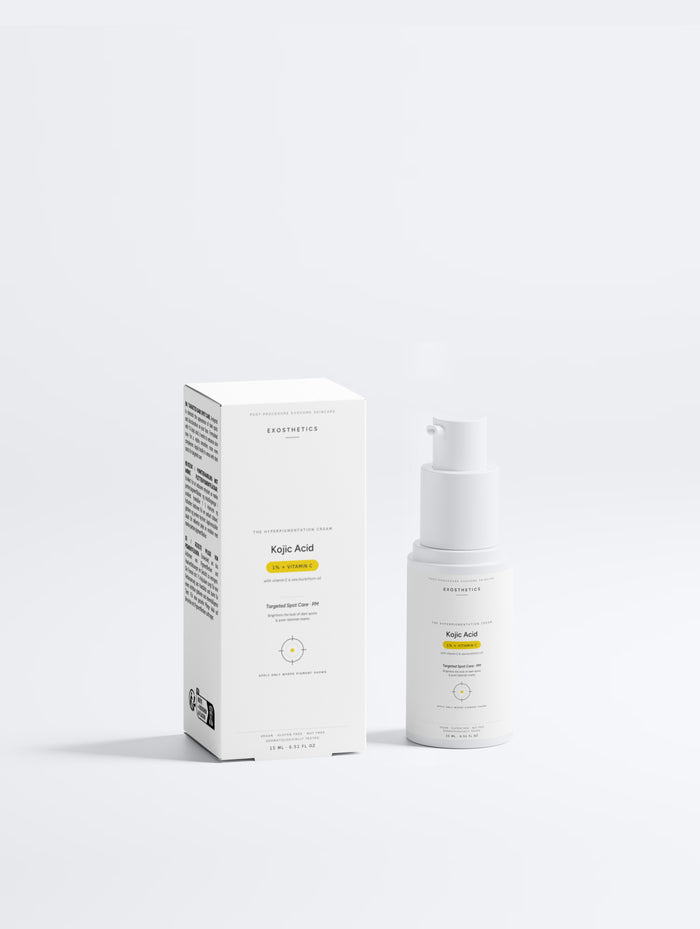
Kojic Acid - Tyrosinase inhibitor often combined with other actives for enhanced results. Can be sensitizing, so monitor for redness.
Arbutin (Alpha-Arbutin) - A gentler alternative to hydroquinone that slowly releases hydroquinone at the melanocyte level with less irritation potential.

Built for this
We built exactly this. The 5% Toner is a 5% glycolic acid formula at pH 3.5 — designed specifically for hyperpigmentation, dark spots, and uneven tone. COSMOS Natural, Allergen Label Free, gentle enough for sensitive skin.
Shop The 5% Toner →Most Effective Ingredients for Stubborn and Severe Hyperpigmentation
When dark spots refuse to budge despite months of consistent treatment, the approach needs to shift. Stubborn hyperpigmentation often involves deeper melanin deposition (dermal pigmentation), mixed etiology (both epidermal and dermal components), or ongoing triggers that have not been adequately addressed.
For severe cases, a multimodal strategy combining multiple actives with strict photoprotection and inflammation control offers the best outcomes. The dermatologic consensus supports layering mechanisms - a tyrosinase inhibitor plus a cell turnover agent plus rigorous sun protection - rather than relying on any single active at higher concentrations (Duval et al., 2026; Rageh et al., 2026).
When a Procedure Made It Worse
This happens more often than people discuss, and if it happened to you, your experience is valid. Here is what occurred: the procedure triggered an inflammatory response that activated your melanocytes, producing post-inflammatory hyperpigmentation in the treatment area. This is more common in deeper skin tones, with more aggressive treatment settings, and when post-procedure care was inadequate.
The path forward follows a specific sequence: First, calm (reduce all inflammation with anti-inflammatory support and exosome-based recovery if available). Second, protect (rigorous broad-spectrum and visible-light protection every single day). Third, slowly treat (introduce one pigment-modulating active at lowest effective concentration, increase gradually). This process requires patience - often three to six months minimum before meaningful improvement in procedure-induced PIH.
What Is Realistic
Significant improvement in pigmentation is achievable for most people. Complete erasure of all traces, particularly with dermal melasma, may not be realistic. Maintenance is required for relapse-prone patterns - think of it like managing a tendency rather than curing a disease. Ongoing low-dose actives plus consistent sunscreen become a permanent lifestyle adjustment rather than a temporary treatment course.
Best Brightening Ingredients to Lighten Dark Spots
"Brightening" and "depigmenting" are often used interchangeably, but they represent different intensities of the same goal. Brightening focuses on overall radiance and gentle tone evening, while depigmenting targets specific stubborn patches with more potent actives.
For brightening - the gentler, maintenance-oriented approach - these ingredients deliver visible results with lower irritation risk:
Vitamin C (multiple forms) - L-Ascorbic Acid offers the strongest evidence but the highest irritation potential. Sodium Ascorbyl Phosphate and Ascorbyl Glucoside provide gentler alternatives with more stability. All forms provide antioxidant protection plus tyrosinase inhibition.
Niacinamide at 5-10% - Reduces melanosome transfer by up to 68% in studies. Also strengthens barrier function, making it dual-purpose for recovering skin.
Licorice Root Extract (Glabridin) - Inhibits tyrosinase and provides anti-inflammatory benefits. Well-suited for maintenance routines and sensitive skin types.
Fermented Filtrates - Galactomyces and Saccharomyces ferment filtrates provide gentle brightening through antioxidant activity and improved cellular turnover. These are well-tolerated and suitable even during later recovery phases.
Safe during recovery? Niacinamide and licorice root - yes, from Phase 2 onward. Vitamin C - Phase 2 at low concentrations, full strength in Phase 3. Fermented filtrates - generally Phase 2 onward.
Best Natural Ingredients for Hyperpigmentation
The desire for natural solutions is understandable, and some botanical compounds do show genuine anti-melanogenic potential. However, post-procedure patients need to approach natural ingredients with extra caution - "natural" does not automatically mean "safe for compromised skin."
Recent research on jaboticaba peel extract (Plinia peruviana) has demonstrated anti-melanogenic potential when formulated into emulsions, showing promise as a plant-derived approach to pigment modulation (Goelzer Neto et al., 2026). Similarly, essential oils from Cupressus sempervirens (Mediterranean cypress) have demonstrated antioxidant capacity and enzyme-inhibitory potential that could theoretically support pigment reduction pathways (Medini et al., 2025).
Other evidence-supported botanicals include mulberry extract (contains arbutin naturally), turmeric-derived compounds (curcumin as anti-inflammatory), green tea polyphenols (EGCG for antioxidant and anti-tyrosinase activity), and soy isoflavones (reduce melanosome transfer).
The Post-Procedure Caveat for Natural Ingredients
Post-procedure skin is more reactive than healthy skin. Essential oils, while showing interesting enzyme-inhibitory properties in laboratory settings, carry meaningful sensitization risk when applied to a compromised barrier. Botanical extracts with high phenolic content can trigger contact reactions. The irritation-PIH cycle means any irritant reaction on recovering skin can create NEW pigmentation - exactly what you are trying to prevent (Duval et al., 2026; Rageh et al., 2026).
Practical guidance: If you want to use natural ingredients, wait until Phase 3 (full recovery) and patch test on a small area for at least 48 hours before broader application. Avoid essential oils directly on post-procedure skin. Choose standardized botanical extracts in formulated products rather than raw plant materials.
Best Korean Skincare Ingredients for Hyperpigmentation
Korean skincare philosophy offers a unique perspective on hyperpigmentation: rather than aggressive single-ingredient targeting, K-beauty emphasizes layered hydration, barrier support, and gentle daily brightening that accumulates results over time. This approach actually aligns well with post-procedure recovery principles.
Standout K-beauty ingredients for pigmentation include rice ferment filtrate (gentle brightening through amino acids and kojic acid derivatives), snail mucin (barrier repair, mild growth factor activity, anti-inflammatory properties), propolis extract (antibacterial, anti-inflammatory, antioxidant for PIH-prone acne skin), and galactomyces ferment filtrate (cellular turnover support with minimal irritation).
The K-beauty "essence and ampoule" layering approach can work well during Phase 2 recovery because products tend to be lighter, more hydrating, and less concentrated than Western treatment serums. The emphasis on hydration-first actually supports barrier recovery while delivering gentle brightening actives.
One caution: some K-beauty products contain fragrance, essential oils, or alcohol that may irritate post-procedure skin. Always check ingredient lists rather than assuming all K-beauty is gentle by default.

Best Ingredients for Hyperpigmentation on Sensitive Skin
Here is the truth that post-procedure patients need to hear: right now, regardless of what your skin was like before your treatment, your skin IS sensitive. A procedure resets your tolerance baseline, and rebuilding that tolerance takes time. The principles for sensitive skin and post-procedure skin are essentially identical.
Ingredient selection for sensitive and recovering skin must balance efficacy with barrier tolerance. The dermatologic consensus emphasizes that overly aggressive regimens are counterproductive - inflammation perpetuates pigment production, creating a vicious cycle where the treatment becomes the trigger (Duval et al., 2026; Rageh et al., 2026).
The Sensitive Skin Approach
Do: Introduce one new active at a time and wait three to five days before adding another. This allows you to identify exactly what causes any reaction.
Do: Use exosome-based recovery serums to support barrier integrity while carefully introducing pigment-modulating actives. The barrier support reduces the likelihood of irritation reactions.
Do: Choose inherently gentle forms of effective actives - azelaic acid over glycolic acid, sodium ascorbyl phosphate over L-ascorbic acid, bakuchiol over retinol initially.
Do not: Stack multiple potent actives simultaneously. Your pre-procedure routine with vitamin C, retinol, and AHA in the same evening is not appropriate right now.
Do not: Resume your full routine immediately after a procedure. Your skin tolerance has changed - respect that.
Do not: Assume your old favorite products are still tolerated. Patch test even products you have used before, because barrier compromise changes reactivity.
Top gentle actives for sensitive and recovering skin: Azelaic acid 10% (anti-inflammatory plus anti-pigment), tranexamic acid (non-irritating pigment modulator), niacinamide 4-5% (barrier support plus melanosome transfer inhibition), centella asiatica extract (calming plus healing), and alpha-arbutin (slow-release pigment reduction with minimal irritation).
Best Ingredients for Hyperpigmentation in Dark and Brown Skin
This section addresses something critically important: patients with Fitzpatrick skin types IV through VI (medium brown to deeply pigmented skin) face significantly higher risk of post-inflammatory hyperpigmentation from cosmetic procedures. Melanocytes in darker skin are larger, more active, and more responsive to inflammatory stimuli. This is not a flaw - it is biology. But it means the margin for error in post-procedure care is narrower.
The inflammatory pathway that connects procedures to PIH is more easily triggered and produces more visible results in darker skin tones. Even minor irritation from a "gentle" active can trigger a pigment response that takes six to twelve months to resolve (Duval et al., 2026).
The Gentle Ladder Framework for Darker Skin
Phase timelines should be extended for darker skin. Where lighter-skinned patients might move from Phase 1 to Phase 2 at two weeks, patients with deeper skin tones benefit from waiting three to four weeks minimum, or until all signs of inflammation have completely resolved.
Priority actives: Azelaic acid (excellent safety profile across skin tones, anti-inflammatory), tranexamic acid (minimal irritation risk, growing evidence specifically in darker skin), niacinamide (barrier support critical for PIH-prone skin), and vitamin C (antioxidant protection, start very low concentration).
Actives requiring extra caution: Hydroquinone (paradoxical darkening reported in darker skin at high concentrations or prolonged use - always provider-supervised), glycolic acid (higher irritation risk, prefer mandelic or lactic acid), retinoids (start at lowest available concentration, buffer with moisturizer).
Sunscreen is non-negotiable even in deeply pigmented skin. While melanin provides some baseline UV protection, it is not sufficient to prevent procedure-triggered PIH or melasma exacerbation. Tinted mineral sunscreens offer visible-light protection that untinted formulas do not. However, patients should be aware that some tinted sunscreens contain potential allergens and make unregulated marketing claims - choose products with transparent ingredient lists from reputable brands (Gawey et al., 2025).
Best Ingredients for Post-Inflammatory Hyperpigmentation
PIH is the most relevant category for anyone recovering from cosmetic procedures, and it deserves proportional attention. This is the dark mark left behind after inflammation - whether from acne, a burn, a procedure, or any skin injury that triggered melanocyte activity.
The core principle: PIH is inflammation-linked from start to finish. Calming inflammation is both treatment and prevention. If you address only the melanin and ignore the ongoing inflammatory component, results will be slower and relapse more likely (Duval et al., 2026).
Post-Procedure PIH Protocol
Immediate Phase (Days 1-3): Barrier protection only. Apply exosome-based recovery serums for anti-inflammatory support. Use mineral sunscreen or physical barriers (hat, staying indoors during peak UV). No active ingredients whatsoever. Your only job is to not make things worse.
Early Recovery (Days 4-14): Continue barrier support with gentle hydrating products. Introduce niacinamide if tolerated - it is one of the few actives gentle enough for this phase while also addressing pigment transfer. Maintain strict sun avoidance. If you must be outdoors, reapply mineral sunscreen every two hours.
Active Treatment Phase (Weeks 3-8): Introduce one pigment-modulating active at low frequency - perhaps azelaic acid three nights per week, or vitamin C every morning. Monitor for irritation for three to five days before increasing frequency. Continue rigorous photoprotection. If redness or stinging occurs, pull back immediately.
Maintenance (Ongoing): Consistent low-dose actives plus daily sunscreen become your permanent baseline. Periodic exosome-based recovery support if available, particularly before and after any future procedures. This is a marathon, not a sprint.
Signs Your PIH Is Improving vs Signs to See Your Provider
Improving: Spots gradually lightening at the edges first. Color shifting from dark brown/purple to lighter brown/pink. Overall blending with surrounding skin tone. This typically begins around weeks four to eight of consistent active treatment.
See your provider: Spots darkening despite treatment. New spots appearing in untreated areas. Spreading or changing borders. Raised or textured changes within dark patches. Any reaction that feels like burning rather than mild tingling.
Microneedling Aftercare for Pigment Prevention
Since microneedling is one of the most common procedures that can trigger PIH when aftercare is inadequate, here is your specific first-72-hours guide:
Hours 0-24: Skin will be red, possibly pinpoint bleeding. Apply only what your provider recommended - typically a recovery serum (exosome-based products are increasingly used here), sterile hyaluronic acid, or nothing at all. No tap water on the face for 12 hours minimum. No makeup. No active ingredients.
Hours 24-48: Redness decreasing but skin still sensitive and vulnerable. Continue gentle hydration and recovery serums. Mineral sunscreen if going outdoors. Avoid touching your face unnecessarily. Sleep on a clean pillowcase.
Hours 48-72: Skin may feel tight or begin light flaking. Continue hydrating and protecting. No exfoliation (physical or chemical). If you are prone to PIH, this is when preventive niacinamide can cautiously be introduced - but only if your provider approves and no signs of irritation are present.
Best Ingredients for Acne Hyperpigmentation and Acne Scars
Acne-related hyperpigmentation sits at the intersection of inflammation, skin injury, and often ongoing breakout activity. The challenge is treating existing dark marks while preventing new ones from active acne - without irritating already-inflamed skin into producing more pigment.
Azelaic acid is the standout ingredient here because it addresses both active acne (antibacterial, anti-inflammatory) and the PIH it leaves behind (tyrosinase inhibition). This dual action makes it the most efficient choice when both concerns coexist.
Niacinamide addresses acne marks while regulating sebum production, making it another dual-purpose ingredient for this situation. Combined with gentle retinoid use (adapalene or low-dose retinol), you get cellular turnover that fades existing marks while preventing new comedones.
For textured scarring (not just flat discoloration), ingredients alone have limited impact. This is where procedures like microneedling actually help - but the aftercare protocol described above becomes essential to prevent trading one form of scarring for PIH.
Best Ingredients for Red Hyperpigmentation
Red or pink post-inflammatory marks (post-inflammatory erythema, or PIE) differ from brown PIH. They are caused by damaged or dilated blood vessels beneath the skin rather than excess melanin, and they require a different approach.
Niacinamide helps by strengthening the skin barrier and reducing inflammation that perpetuates vascular changes. Azelaic acid's anti-inflammatory properties support resolution. Vitamin C provides antioxidant protection and supports collagen integrity around damaged vessels.
Centella asiatica and arnica are traditionally used to support vascular healing. Time is actually the most effective treatment for PIE - most red marks resolve within three to twelve months as blood vessels naturally repair.
Sunscreen remains important because UV exposure can convert PIE into true PIH - essentially, unprotected red marks can develop melanin deposits that turn them brown and much more stubborn to treat.
Best Ingredients for Hyperpigmentation and Melasma
Melasma deserves its own discussion because it behaves differently from other types of hyperpigmentation. It is hormonally driven, worsened by both UV and visible light, and notoriously relapse-prone. Procedures can worsen melasma if post-care is inadequate, making this a high-stakes situation for post-procedure patients.
The gold-standard approach combines a tyrosinase inhibitor (hydroquinone in short courses, or non-hydroquinone alternatives like tranexamic acid for longer use), a cell turnover agent (retinoid), anti-inflammatory support, and broad-spectrum plus visible-light sunscreen (tinted formulas containing iron oxides provide visible-light protection that clear sunscreens do not).
Tranexamic acid has emerged as particularly valuable for melasma due to its ability to interrupt the hormonal-pigment pathway with minimal irritation. It can be used orally (under medical supervision) or topically as part of a multimodal regimen.
For post-procedure patients with melasma: your recovery timeline should be more conservative. Extend Phase 1 and Phase 2 durations. Prioritize exosome-based anti-inflammatory support during early recovery. Do not rush to reintroduce potent actives. One flare triggered by premature active use can undo months of progress.
Best Ingredients for Hyperpigmentation and Uneven Skin Tone
Uneven skin tone - the general patchiness and inconsistency that accumulates from years of sun exposure, inflammation episodes, and aging - responds well to consistent, moderate-strength brightening routines rather than aggressive targeted treatments.
A daily regimen combining vitamin C in the morning (antioxidant protection plus gradual brightening), niacinamide (melanosome transfer inhibition), and a gentle chemical exfoliant two to three times weekly (lactic acid or PHA for sensitive skin, glycolic for resilient skin) produces visible evening of tone within eight to twelve weeks.
The key differentiator for overall tone versus specific spots is consistency over intensity. Lower concentrations used daily outperform high-potency treatments used sporadically for this broad concern.
Best Ingredients for Hyperpigmentation on the Face
Facial skin is thinner, more vascular, and more exposed to UV than body skin, making it both more susceptible to hyperpigmentation and more reactive to treatment. The face is also where most cosmetic procedures occur, making post-procedure pigment management primarily a facial concern.
Ingredient selection for the face should prioritize elegant textures that encourage daily compliance (you will not use a greasy, unpleasant product consistently enough to see results), broad-spectrum photoprotection as the foundation of any facial pigment strategy, and layering compatibility so your brightening actives work alongside your moisturizer and sunscreen without pilling or irritation.
A well-structured facial routine for pigmentation: Morning consists of gentle cleanser, vitamin C serum, moisturizer, and SPF 30+ (tinted for visible-light protection). Evening consists of gentle cleanser, pigment-modulating active (azelaic acid, retinoid, or tranexamic acid - rotating), and barrier-supporting moisturizer. During post-procedure recovery, replace the active steps with exosome recovery serum and extra hydration until Phase 2 or 3 is reached.
Best Ingredients for Hyperpigmentation Around the Mouth
Perioral hyperpigmentation - darkening around the lips and mouth area - has multiple potential causes including hormonal factors (melasma pattern), friction from lip licking or products, post-inflammatory changes from perioral dermatitis, and cumulative UV damage to this often-neglected area.
This area is particularly sensitive, so ingredient selection leans toward the gentler end: azelaic acid (effective without excessive irritation), tranexamic acid (non-irritating), niacinamide (barrier supportive), and careful sunscreen application extending fully over the perioral area.
Avoid: aggressive exfoliants directly around the lip border, hydroquinone on this thin-skinned area without provider guidance, and occlusive lip products that migrate onto surrounding skin and trap irritants.
Best Ingredients for Under-Eye Pigmentation
Under-eye darkness is often multifactorial - thin skin revealing underlying vasculature (appears blue/purple), true melanin hyperpigmentation (appears brown), volume loss creating shadows, and sometimes a combination of all three.
For true melanin-based under-eye pigmentation: vitamin C at lower concentrations (sensitive area tolerates 5-10% better than 15-20%), vitamin K (supports vascular integrity for the vascular component), caffeine (reduces fluid retention and provides antioxidant support), and niacinamide (all-purpose brightening without irritation).
For post-procedure under-eye concerns (common after under-eye filler, PRP, or laser): follow the same phased recovery approach but with extra gentleness. This skin is the thinnest on the face and recovers more slowly. Exosome-based products applied during early recovery may support faster resolution of procedure-induced inflammation in this delicate area.
Best Ingredients for Lip Pigmentation
Lip hyperpigmentation - darkening of the lip color or development of uneven patches on the lips - requires special consideration because lip skin lacks the stratum corneum thickness of facial skin and has minimal melanin protection naturally.
Effective approaches include vitamin C-infused lip treatments (antioxidant protection for this exposed area), licorice root extract in lip balm formulations (gentle tyrosinase inhibition), and rigorous SPF lip protection (UV-induced lip darkening is extremely common and entirely preventable).
Avoid harsh exfoliants on lips. Physical lip scrubs can trigger inflammation-driven darkening. Chemical exfoliants designed for facial skin are typically too strong for lip application. Gentle approaches consistently outperform aggressive ones for this delicate tissue.
Best Ingredients for Underarm and Intimate Pigmentation
Pigmentation in underarm and intimate areas is primarily friction-driven and inflammation-related, sometimes compounded by hormonal factors and the use of irritating products (deodorants, razors, depilatory creams).
Effective ingredients for these areas: niacinamide (gentle depigmenting plus barrier support), alpha-arbutin (gradual pigment reduction without irritation), lactic acid at low concentrations (gentle exfoliation suited to fold areas), and tranexamic acid (non-irritating pigment modulation).
The primary intervention is often reducing the trigger rather than just treating the result. Switching from shaving to less irritating hair removal, using fragrance-free products in fold areas, and wearing breathable fabrics reduces the ongoing inflammatory stimulus that drives pigmentation in these locations.
Best Ingredients for Body Hyperpigmentation
Body pigmentation - whether on legs, arms, back, or chest - follows the same mechanistic principles as facial pigmentation but with practical differences. Body skin is thicker and can generally tolerate higher concentrations of actives. However, body surface area is larger, making consistent application more challenging and product costs higher.
Effective body-specific strategies: AHA body lotions (glycolic or lactic acid at 10-12% for regular exfoliation of pigmented cells), vitamin C body serums or lotions, and retinol body products for accelerated turnover.
The most commonly neglected factor in body pigmentation is sunscreen application. Most people protect their face but leave arms, legs, and chest exposed. Broad-spectrum body sunscreen on all exposed areas, daily, is the single most impactful intervention for preventing body hyperpigmentation from worsening.
How to Build a Routine With These Ingredients
Knowing which ingredients work is only half the battle. Combining them correctly - in the right order, at compatible concentrations, separated appropriately when needed - determines whether you get results or irritation.
Morning Routine (Focused on Protection and Prevention)
Step 1: Gentle cleanser (non-stripping, pH-balanced).
Step 2: Vitamin C serum (antioxidant shield plus brightening - use water-based formulas).
Step 3: Niacinamide moisturizer or separate serum (melanosome transfer inhibition).
Step 4: Sunscreen SPF 30 or higher, broad-spectrum (tinted for visible-light protection if melasma is a concern).
During post-procedure recovery, replace Step 2 with exosome recovery serum and ensure Step 4 is mineral-only.
Evening Routine (Focused on Treatment and Repair)
Step 1: Double cleanse if wearing sunscreen (oil cleanser followed by gentle water cleanser).
Step 2: Active treatment - rotate between your chosen pigment-modulating actives. Example rotation: azelaic acid Monday/Wednesday/Friday, retinoid Tuesday/Thursday, rest on weekends.
Step 3: Barrier-supporting moisturizer.
During post-procedure recovery, replace Step 2 entirely with hydrating and recovery-focused products until your timeline permits active introduction.
Pairing Rules
Pair well together: Vitamin C + Sunscreen (morning). Niacinamide + almost everything. Azelaic acid + Niacinamide.
Separate to different times of day: Vitamin C (morning) and Retinoid (evening). AHA/BHA (evening) and Retinoid (alternate evenings).
Avoid combining: Multiple strong exfoliants simultaneously. Vitamin C at high concentrations with AHAs in the same application. Hydroquinone with benzoyl peroxide (causes temporary staining).
If you're building a glycolic-acid-led routine for hyperpigmentation, The 5% Toner is the one we built for exactly this purpose — 5% at pH 3.5, allergen-label-free, supported by cranberry and lingonberry antioxidants.
If you're ready to start seeing the smoother, brighter skin glycolic acid delivers, The 5% Toner is the one we built for hyperpigmentation-prone customers →
What Product Is Best for Hyperpigmentation
No single product is "the best" for everyone because the ideal choice depends on your specific type of hyperpigmentation, your skin tone and sensitivity, your current recovery status, and what other products are already in your routine.
However, if you are choosing one category of product to start with, here is a decision framework:
Just had a procedure and in early recovery → Exosome-based recovery serum plus mineral sunscreen. Nothing else until your provider clears you for actives.
Recovering well and ready for first active → Azelaic acid 10% (most versatile - anti-pigment, anti-inflammatory, well-tolerated across skin tones).
Fully recovered and want maximum brightening → Vitamin C serum (morning) combined with retinoid (evening) and consistent SPF.
Melasma-specific → Tranexamic acid serum plus tinted mineral sunscreen as your non-negotiable foundation, with additional actives layered based on tolerance.
Sensitive or dark skin and concerned about irritation → Niacinamide serum as your starting point (impossible to go wrong here), adding azelaic acid once established.
When evaluating specific products, look for concentrations within the evidence-supported range, minimal fragrance and essential oils (especially for post-procedure use), stable packaging (airless pumps for vitamin C), and formulations designed for your specific area of concern (eye-specific for periorbital, body-specific for larger areas).
How Long Do These Ingredients Take to Work
This is where managing expectations becomes essential. Hyperpigmentation did not appear overnight, and it will not disappear overnight. Here are realistic timelines based on consistent, daily use:
Niacinamide: Initial improvement in 4-8 weeks. Significant results by 12 weeks. Ongoing use for maintenance.
Vitamin C: Subtle brightening by 4-6 weeks. Meaningful pigment reduction by 8-12 weeks. Best results at 16+ weeks of consistent use.
Azelaic Acid: Noticeable lightening of PIH by 4-8 weeks. Significant improvement by 12-16 weeks. Excellent long-term safety for extended use.
Retinoids: Cell turnover effects visible by 4-6 weeks. Pigment improvement by 8-12 weeks. Full collagen and texture benefits by 24+ weeks.
Hydroquinone: Fastest visible results - often 4-6 weeks. Use limited to 8-12 week courses to avoid complications.
Tranexamic Acid: Gradual improvement beginning 6-8 weeks. Best results at 12-16 weeks. Safe for long-term maintenance use.
Alpha Hydroxy Acids: Surface pigment improvement by 4-6 weeks. Deeper pigmentation requires 12+ weeks.
Exosome-based recovery products: These work on a different timeline because their goal is different - barrier recovery and inflammation reduction occur within the first one to two weeks, setting the stage for faster results when actives are introduced later.
Critical reminder: These timelines assume consistent daily use PLUS daily sunscreen. Without sun protection, you are attempting to bail water from a boat with a hole in it. UV exposure reactivates melanocytes daily, undoing your active ingredients' work. Sunscreen is not optional - it is the foundation that makes everything else effective.
When to Reassess
If you have been consistent with an ingredient for 12 weeks with no improvement whatsoever, consider whether your sunscreen protection is truly adequate (reapplication matters), whether irritation from your routine might be perpetuating inflammation, whether the pigmentation type has been correctly identified (dermal pigmentation responds poorly to topicals alone), and whether it is time to consult a dermatologist about combination approaches or in-office treatments.

Recommended for you
The 5% Toner
The glycolic acid toner we built for hyperpigmentation-prone customers. 5% concentration at pH 3.5, supported by organic cranberry and lingonberry antioxidants. Allergen Label Free, COSMOS Natural certified.
Shop The 5% Toner →Frequently Asked Questions
How soon after microneedling can I use vitamin C for hyperpigmentation?
Wait a minimum of 14 days after microneedling before introducing vitamin C, and start with a lower concentration than your pre-procedure product. Your barrier needs to fully stabilize before acidic actives are reintroduced, and premature use can trigger inflammation that causes new pigmentation.
Can exosomes help with hyperpigmentation after cosmetic procedures?
Exosomes support pigment prevention by reducing the post-procedure inflammation that triggers melanocyte activity and by accelerating barrier recovery. They are not direct brightening agents but address the root conditions that allow post-inflammatory hyperpigmentation to develop during the vulnerable recovery window.
What is normal versus concerning after a procedure that caused new dark spots?
Mild, gradually fading discoloration in treated areas is common and typically resolves with proper care over weeks to months. See your provider if dark spots are spreading beyond the treated area, deepening in color despite sun protection, or accompanied by texture changes or persistent redness after four weeks.
Is niacinamide or vitamin C better for post-inflammatory hyperpigmentation?
Niacinamide is better during early recovery because it supports barrier function while inhibiting pigment transfer without irritation risk. Vitamin C is more potent as a tyrosinase inhibitor but requires intact barrier tolerance. Ideally, use both - niacinamide first during recovery, add vitamin C once skin is stable.
Do I need sunscreen indoors if I have hyperpigmentation?
Yes, particularly for melasma. Visible light from windows and screens can trigger melanocyte activity in melasma-prone skin. A tinted mineral sunscreen with iron oxides provides protection against both UV and visible light wavelengths even in indoor settings.
Why did my hyperpigmentation get worse after a chemical peel?
Chemical peels create controlled inflammation that can activate melanocytes, especially in darker skin tones or if post-peel sun exposure occurred. This is post-inflammatory hyperpigmentation triggered by the procedure itself. Follow the phased recovery protocol - calm inflammation first, protect strictly, then slowly introduce pigment-fading actives after full healing.
Can I use multiple brightening ingredients at the same time?
Yes, but introduce them sequentially rather than simultaneously, especially on recovering skin. Start with the gentlest option, establish tolerance for one to two weeks, then add a second ingredient at a different time of day. Combining complementary mechanisms (like niacinamide morning plus azelaic acid evening) is more effective than doubling up on the same mechanism.
References
Duval, C., Qiu, J., Warrick, E., Sextius, P., Castiel-Higounenc, I., Xiang, L., Bernerd, F., & Passeron, T. (2026). Decoding hyperpigmentation from biological mechanisms to actives with clinically proven topical efficacy: A narrative review. Dermatology and Therapy. https://doi.org/10.1007/s13555-026-01807-w
Rageh, M. A., Seoudy, W. M., Abozeid, M. F., Elkholy, A. M., Moubasher, A. E. A., Abdel-Latif, A. M., Attallah, D. A. A., Mohamed, E. M., Assaf, H. A., Sabry, H., Nasr, M. M., Hegazy, M. S., Hunter, N., Zuelfakkar, N., Bedair, N. I., Mohammed, N. E., Abdelkodous, S. F., Gohary, Y. M., & Mohy, S. M. (2026). Egyptian national consensus on dermocosmetic ingredient selection across common dermatology scenarios: A RAND/UCLA appropriateness study. Dermatology and Therapy, 16(2), 1273-1290. https://doi.org/10.1007/s13555-025-01650-5
Gawey, L., Joshi, A., Rahman, M., Gottsegen, A., Nguyen, S., Ghanshani, R., Tran, K. A., Hsiao, J. L., Maier, L., & Shi, V. Y. (2025). Allergenicity and unregulated marketing claims in tinted sunscreens. Dermatitis. https://doi.org/10.1177/17103568251382236
Goelzer Neto, C. F., da Silveira, V. C., Bernardi, L. S., Matte, B. F., Tramontina, D., Rodrigues, N. S., Alba, G. L., & Bertol, C. D. (2026). Anti-melanogenic potential of emulsions containing jaboticaba peel extract (Plinia peruviana (Poir.) Govaerts). Current Pharmaceutical Design. https://doi.org/10.2174/0113816128423981251208075251
Medini, H., Khouja, M., Khouja, M. L., Banfi, S., & Elaissi, A. (2025). Chemotaxonomy and bioactivity of Cupressus sempervirens varieties essential oils: Insights into their antioxidant and enzyme inhibitory potential. Chemistry & Biodiversity, 22(12), e01650. https://doi.org/10.1002/cbdv.202501650

The first week
Everything in this guide, in two products
Exosome Serum for the night of. 72-Hour+ Cream from day three. $99 together, ships from the US — arrives before it gets bad.
See the Kit — $99Table of Contents

Glycolic Acid for Hyperpigmentation