

Acne leaves receipts. The breakout itself might last a week or two, but the dark mark it stamps into your skin? That can hang around for months - sometimes years - like an uninvited guest who doesn't read social cues. Hyperpigmentation for acne scars is one of the most common skin concerns people bring to dermatologists, aestheticians, and late-night Google searches alike. And here's the frustrating part: hyperpigmentation and actual scarring are two completely different problems that require completely different solutions, yet they're constantly conflated in skincare advice. Getting this distinction right isn't just academic - it changes your entire treatment trajectory, your product choices, and whether the procedure you're considering will help or potentially make things worse.
The real unlock isn't a single miracle product. It's understanding what you're actually looking at on your skin, matching the right intervention to the right problem, and - critically for anyone considering professional treatments - nailing the aftercare protocol that protects your results. Recent head-to-head clinical trials comparing popular procedures like RF microneedling and fractional CO₂ laser have revealed significant differences not just in efficacy, but in pigmentary safety and recovery profiles. That data changes the conversation entirely for anyone with deeper skin tones or a history of post-procedure darkening.
What Is Hyperpigmentation From Acne Scars?
Here's the one-sentence definition: Hyperpigmentation from acne is a flat, dark or discolored mark left behind after a breakout heals - not a dent or pit, but a stain. It's a pigmentary change triggered by inflammation, not a structural change in your skin's collagen architecture.
This distinction matters more than most people realize. When researchers study acne scar treatments, they're typically targeting atrophic scars - the indentations, rolling depressions, and ice-pick marks that represent actual tissue loss. Pigmentary changes, by contrast, are often tracked as safety endpoints or adverse events in these trials rather than primary treatment targets. A prospective randomized split-face trial by Li et al. (2026) comparing RF microneedling versus fractional CO₂ laser for facial atrophic acne scars explicitly included "pigmentary safety" as a measured outcome - acknowledging that procedures designed for texture can affect color, for better or worse.
The practical implication: If your primary concern is dark marks rather than textural pits, the procedure that's "best for acne scars" might not be the best choice for your specific situation. It might even carry pigmentary risks that outweigh the benefits for a color-only concern.
Acne Scars vs Hyperpigmentation: The Difference
This is the fork in the road that determines everything downstream. Acne scars and hyperpigmentation can coexist on the same face - and they often do - but they represent fundamentally different skin problems requiring different treatment approaches.
Hyperpigmentation (pigment change): What you see are flat dark, red, or purple marks. What's happening is excess melanin deposition or residual vascular inflammation. If you run your finger across the mark, it feels smooth - level with surrounding skin. In clinical trials, pigmentary outcomes are typically safety endpoints, not primary efficacy measures.
Acne scars (texture change): What you see are indentations - rolling, boxcar, or ice-pick depressions. What's happened is collagen loss or abnormal fibrosis during wound healing. You can feel the unevenness when you touch it. These are the primary targets in procedural trials like Li et al. (2026) and the comprehensive systematic review by Batool et al. (2026), which compared fractional CO₂ laser against needling-based modalities specifically for facial acne scar treatment.
The touch test: Close your eyes and run a fingertip across the area. If you feel nothing - just see something - that's pigment. If you feel a dip, a ridge, or an uneven surface - that's scarring. Many people have both, and the treatment strategy needs to account for each layer separately.

Is Hyperpigmentation The Same As Acne Scars?
No. Hyperpigmentation is a color change (flat, dark marks). Acne scars are a texture change (pits, indentations). You can have both at the same time, but they require different treatment approaches - and a procedure optimized for one may not address the other.
This is precisely why studies like Li et al. (2026) track pigmentary safety as a distinct outcome when testing scar procedures. The researchers understood that a treatment could successfully flatten a scar while simultaneously triggering new dark marks - a net negative for patients whose primary complaint was discoloration in the first place. Batool et al. (2026) reinforced this in their meta-analysis, showing that different procedural modalities carry different adverse event profiles, including pigmentation-related complications.
Can Procedures Make Hyperpigmentation Worse?
Yes - and this is one of the most important questions nobody asks until it's too late. Post-procedure hyperpigmentation is a recognized risk with energy-based devices and needling procedures, which is exactly why it's measured as a safety endpoint in well-designed trials.
The split-face RCT by Li et al. (2026) directly compared the pigmentary safety profiles of RF microneedling versus fractional CO₂ laser. The fact that this was an explicit outcome measure tells you something important: researchers and clinicians know these procedures can provoke pigmentary changes. The question isn't whether it can happen - it's which modalities carry lower risk and what aftercare minimizes the likelihood.
⚠️ Key risk factors for post-procedure darkening:
→ Deeper skin tones (Fitzpatrick IV-VI)
→ Aggressive device settings or inadequate provider experience
→ Sun exposure during the recovery window
→ Inadequate post-procedure barrier protection
→ History of post-inflammatory hyperpigmentation
Here's what this means for you: What you do in the 72 hours after treatment has an outsized impact on whether pigment heals cleanly or darkens further. This is where deliberate aftercare - gentle barrier support, zero sun exposure, and recovery-focused products like a dedicated post-treatment cream designed for that critical initial window - becomes non-negotiable rather than optional.
Types Of Acne Scar Hyperpigmentation
Not all dark marks are created equal. The color of your post-acne mark tells you something about what's happening beneath the surface, and it influences which treatments respond best.
Post-Inflammatory Hyperpigmentation (Brown/Dark Marks)
These appear as brown, dark brown, or grayish patches. They represent excess melanin deposited during the inflammatory healing process. They're more common and more persistent in deeper skin tones. These are the marks most people mean when they say "hyperpigmentation from acne."
Post-Inflammatory Erythema (Red/Pink/Purple Marks)
These appear as flat red, pink, or purple spots - especially visible on lighter skin tones. They represent residual vascular dilation or damage from inflammation. Recovery data in comparative trials like Li et al. (2026) captures how procedural redness resolves post-treatment, which is relevant to understanding erythema timelines.
Why this matters for treatment: Brown marks and red marks may respond differently to both topical interventions and procedures. A treatment that accelerates melanin clearance won't necessarily resolve vascular redness, and vice versa.

What Causes Hyperpigmentation From Acne Scars?
The short version: Inflammation triggers melanocytes (your pigment-producing cells) to go into overdrive. When a breakout creates inflammation in the skin, melanocytes respond by producing excess melanin as part of the healing cascade. That excess pigment gets deposited in the epidermis or dermis - and it stays long after the inflammation resolves.
But here's what post-procedure patients need to understand: Dark marks can also form after treatment, not just after acne. Any intervention that creates controlled inflammation in the skin - laser, microneedling, chemical peels - carries the theoretical risk of triggering the same melanocyte overreaction. This is precisely why Li et al. (2026) measured pigmentary safety as a distinct endpoint, and why Batool et al. (2026) synthesized adverse events across modalities in their systematic review.
The factors that increase post-procedure pigmentation risk:
→ Higher Fitzpatrick skin types
→ More aggressive treatment parameters
→ Inadequate sun protection during healing
→ Compromised skin barrier during recovery
→ Skipping or rushing aftercare protocols
This is why your aftercare protocol matters as much as the procedure itself - and why recovery-focused products with barrier-supporting ingredients deserve attention during that vulnerable post-treatment window.

Hyperpigmentation Acne Scars On Black Skin
The stakes are higher, and the margin for error is smaller. Darker skin tones produce more melanin by default, which means melanocytes are more reactive to inflammation - both from acne itself and from treatments intended to resolve it. This isn't a reason to avoid treatment. It's a reason to be more strategic about it.
The pigmentary safety data in Li et al. (2026) is particularly relevant here. When a head-to-head trial explicitly compares how two popular procedures perform on pigmentation outcomes, that data disproportionately benefits patients with deeper skin tones who face the highest risk of post-procedure darkening.
⚠️ Higher-stakes decision framework for darker skin tones:
→ Provider selection: Insist on a practitioner with documented experience treating Fitzpatrick V-VI skin. Ask to see before-and-afters of patients with similar skin tones.
→ Conservative parameters: Lower energy settings with more sessions often outperform aggressive single treatments in darker skin.
→ Test patch consideration: A test area before full treatment can reveal individual pigmentary reactivity.
→ Strict aftercare: Barrier protection, sun avoidance, and recovery-focused topicals are essential - not optional. A ceramide barrier cream can support skin integrity during the critical healing phase.
→ The bottom line: The best procedure is the one performed by someone who understands YOUR skin's specific response pattern.

Hyperpigmentation Acne Scars On The Face And Forehead
Facial hyperpigmentation carries a unique psychological weight because you can't hide it, you see it every time you look in a mirror, and other people's eyes go straight to it. The good news: the procedural evidence base is strongest for facial skin specifically. Both Li et al. (2026) and Batool et al. (2026) studied facial atrophic acne scars, meaning their recovery and safety data applies directly to the area you're most likely concerned about.
Forehead-specific considerations: Forehead skin tends to be slightly thicker and oilier than cheeks, which can affect both how marks form and how they respond to treatment. The area is also highly sun-exposed unless you're diligent about hat-wearing and SPF application - making it particularly vulnerable to pigment darkening during recovery.
🕐 Work-week planning tip: Based on recovery comparisons in head-to-head trials, some modalities allow faster return to normal appearance than others. If visible downtime on your face is a limiting factor, ask your provider specifically about comparative recovery profiles between RF microneedling and fractional CO₂ laser - the data from Li et al. (2026) suggests these differ meaningfully.
Hyperpigmentation Acne Scars On The Back
An honest note: The clinical research cited throughout this article was conducted on facial skin. Back skin is structurally different - thicker, with more sebaceous glands, subject to friction from clothing and pressure from sleeping, and generally slower to heal than facial skin.
What this means practically: While the same procedural principles may apply (microneedling, laser, chemical peels), equivalent outcomes cannot be assumed based on facial data alone. Back skin may require different parameters, more sessions, and adjusted expectations.
→ Clothing friction can irritate healing skin and worsen inflammation
→ Consistent product application is harder on the back (consider enlisting help)
→ Sweating from exercise can compromise recovery - plan workout schedules accordingly
→ Recommendation: Consult a provider experienced in treating truncal scars specifically, and ask about their approach to back-specific challenges.
Does Hyperpigmentation From Acne Scars Go Away On Its Own?
Sometimes yes, but with enormous variability. Post-inflammatory hyperpigmentation can fade without intervention - your skin naturally turns over and gradually moves excess pigment outward. However, how long this takes depends on your skin tone, the depth of pigment deposition, your sun exposure habits, and whether ongoing inflammation keeps triggering new melanin production.
The honest framing: The clinical studies referenced throughout this article focus on what happens when you actively intervene with specific procedures - not on natural history. They compare procedural outcomes, not "doing nothing" outcomes. So while mild marks in lighter skin tones may resolve within several months, deeper pigment in darker skin tones can persist for years without intervention.
The practical threshold: If marks haven't noticeably faded after 6-12 months of consistent sun protection and gentle brightening ingredients, a professional consultation can help determine whether intervention would meaningfully accelerate the timeline.
How Long Does It Take For Hyperpigmentation Acne Scars To Fade?
This depends entirely on which question you're actually asking:
How long is recovery after a procedure? This is what clinical trials can answer. Li et al. (2026) compared recovery profiles between RF microneedling and fractional CO₂ laser, finding meaningful differences in downtime duration. Batool et al. (2026) synthesized recovery information across multiple modalities in their systematic review.
How long until pigment fully resolves? This is harder to pin down from procedural trials, which typically measure scar improvement scores at set follow-up intervals rather than tracking pigment resolution to completion.
How many sessions for visible improvement? Protocol details in studies like Li et al. (2026) and Chen et al. (2026) specify treatment schedules, but individual variation means your timeline may differ from study averages.
General expectations for natural fading (without procedures):
→ Mild PIH in lighter skin tones: 3-6 months with sun protection
→ Moderate PIH: 6-12 months
→ Deep PIH in darker skin tones: 12-24+ months, sometimes indefinite without intervention
→ Post-inflammatory erythema (red marks): often faster than brown marks, typically 3-6 months

How To Get Rid Of Hyperpigmentation From Acne Scars
The strategic framework has three layers - and the order matters:
Step 1: Stop creating new marks. If you still have active acne, every new breakout is potentially a new dark mark. Get the acne under control first. Innovations in acne therapy continue to evolve - Wang et al. (2026) demonstrated a novel nanoparticle-based delivery system enhancing doxycycline efficacy for acne treatment, representing the kind of targeted approach that may reduce inflammation more effectively and thereby reduce PIH risk from active lesions.
Step 2: Match your intervention to your actual problem.
→ If your primary concern is texture (pits, indentations): procedural options with strong scar evidence apply (Li et al. 2026; Batool et al. 2026; Chen et al. 2026)
→ If your primary concern is color (flat dark marks): topical strategies plus sun protection are first-line, with procedures as escalation
→ If you have both: prioritize the texture procedure but choose one with a documented favorable pigmentary safety profile (Li et al. 2026)
Step 3: Protect your results. Whatever intervention you choose - topical or procedural - the aftercare determines whether results stick or regress. Sun protection is non-negotiable. Barrier support during recovery phases prevents inflammation that triggers new pigment. This is where consistent, deliberate post-treatment skincare earns its keep.
Home Remedies For Hyperpigmentation Acne Scars
Let's be direct: Most "home remedies" circulating on social media - lemon juice, baking soda, toothpaste, raw apple cider vinegar - range from ineffective to actively harmful. They can disrupt your skin's pH, cause chemical burns, and trigger MORE hyperpigmentation from the resulting inflammation.
What actually helps at home (evidence-informed approaches):
→ Consistent SPF 30+ daily: The single highest-impact habit. UV exposure reactivates melanocytes and darkens existing marks.
→ Gentle exfoliation: AHAs at appropriate concentrations support cell turnover without triggering inflammation.
→ Niacinamide: Inhibits melanosome transfer at accessible over-the-counter concentrations.
→ Vitamin C: Antioxidant protection and tyrosinase inhibition.
→ Not picking or squeezing: Every time you manipulate a breakout, you extend inflammation and deepen potential pigment deposition.
The reality check: Home-based approaches work best for mild, superficial PIH. For deeper or more stubborn marks, professional intervention moves the needle faster.
Best Skincare Routine For Acne Scars And Hyperpigmentation
The framework that works is boring - but effective:
Morning Routine
→ Gentle cleanser (non-stripping, pH-balanced)
→ Vitamin C serum (L-ascorbic acid 10-20% or stable derivative)
→ Hydrating moisturizer
→ SPF 30-50 broad-spectrum (reapply every 2 hours if outdoors)
Evening Routine
→ Double cleanse (oil-based first, then water-based)
→ Active treatment (alternate nights): retinol OR AHA/BHA
→ Niacinamide serum (can layer with most actives)
→ Barrier-supporting moisturizer
Post-Procedure Routine (Modified)
→ Strip back to bare essentials: gentle cleanser, recovery serum, barrier cream, SPF
→ No actives (vitamin C, retinol, acids) until provider clears you
→ Focus on hydration and barrier integrity
→ A dedicated post-microneedling exosome serum can support the recovery cascade during this sensitive window
Best Ingredients For Acne Scars And Hyperpigmentation
The ingredient toolkit for pigmentation has clear tiers:
Tier 1 - Strong evidence, widely available:
→ Vitamin C (tyrosinase inhibition + antioxidant)
→ Retinoids (accelerated cell turnover + collagen stimulation)
→ Niacinamide (melanosome transfer inhibition)
→ Alpha arbutin (gentle tyrosinase inhibition)
→ Azelaic acid (anti-inflammatory + mild brightening)
Tier 2 - Supportive/complementary:
→ Tranexamic acid (targets pigment pathways from a different angle)
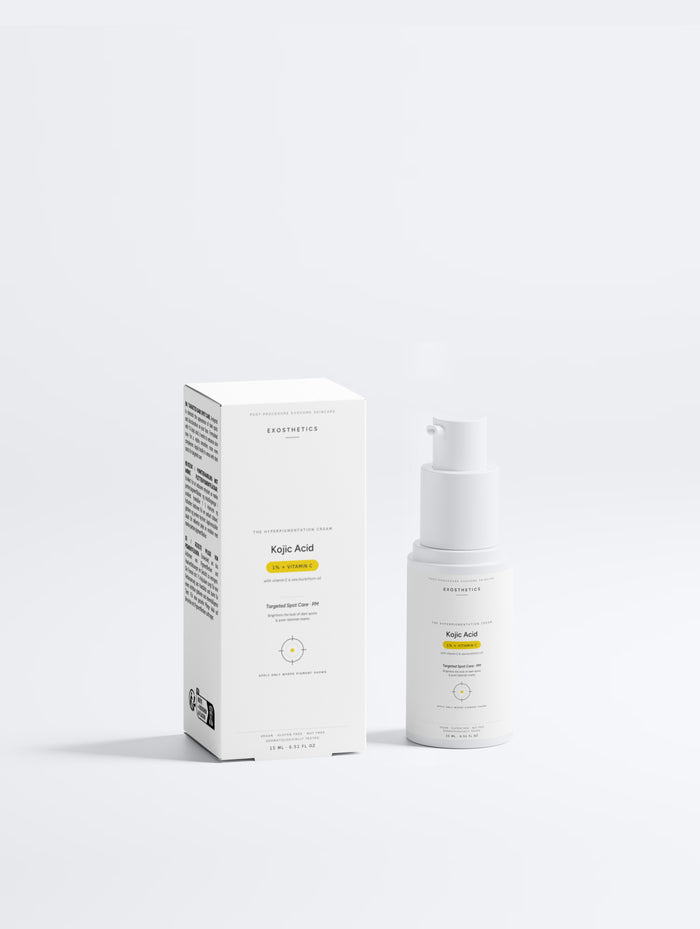
→ Kojic acid (tyrosinase inhibitor, can be sensitizing)
→ Licorice root extract (anti-inflammatory brightening)
Tier 3 - Prescription-level:
→ Hydroquinone (potent depigmenting agent, time-limited use)
→ Tretinoin (prescription retinoid)
→ Combination formulas (often include multiple mechanisms)
Vitamin C For Hyperpigmentation Acne Scars
Vitamin C is the workhorse ingredient for pigmentation because it operates on multiple levels: it inhibits tyrosinase (the enzyme that produces melanin), provides antioxidant protection against UV-triggered pigment production, and supports collagen synthesis for overall skin quality.
Formulation matters enormously:
→ L-ascorbic acid (10-20%): Most studied form. Requires low pH, unstable in light/air. Most effective but most finicky.
→ Ascorbyl glucoside, sodium ascorbyl phosphate: More stable derivatives. Gentler but potentially less potent.
→ Tetrahexyldecyl ascorbate: Oil-soluble form. Better penetration, good stability.
Pro tip: If your vitamin C serum has turned brown or orange, it's oxidized and potentially counterproductive. Replace it. Store in a cool, dark place and use within the timeframe specified on the packaging.
Retinol For Acne Scars And Hyperpigmentation
Retinoids accelerate the exit strategy for pigmented cells. By increasing epidermal turnover, they push melanin-laden keratinocytes to the surface faster, essentially speeding up your skin's natural pigment-clearing process. They also stimulate collagen production - which helps with textural scars simultaneously.
The gradual approach wins:
→ Start with 0.25-0.3% retinol, 2-3 nights per week
→ Build to nightly use over 4-6 weeks as tolerance allows
→ Expect initial purging or mild flaking - this is adaptation, not damage
→ Always pair with robust SPF - retinoids increase photosensitivity
Critical warning: Do NOT use retinol immediately after procedures. Wait until your provider clears you - typically 5-14 days depending on the intervention. Using actives on compromised skin post-procedure can trigger the exact inflammation and pigmentation you're trying to prevent.
Best Serum For Hyperpigmentation Acne Scars
The best serum depends on where you are in your treatment journey:
For daily brightening (no recent procedures): Look for vitamin C combined with vitamin E and ferulic acid (the gold-standard antioxidant combination), or niacinamide at 5-10% combined with tranexamic acid.
For post-procedure recovery: Skip all actives. Your serum should focus on recovery support - hydrating, anti-inflammatory, barrier-supportive. An exosome-based serum designed for skin renewal can support the healing cascade without irritating compromised post-treatment skin.
What to avoid in serums if you have active PIH:
→ Fragrance (unnecessary inflammation trigger)
→ Essential oils (potential sensitizers)
→ Very high-concentration acids without proper formulation pH
Best Cream For Hyperpigmentation Acne Scars
Your cream serves two purposes: delivering active brightening ingredients and protecting the skin barrier that keeps inflammation (and therefore new pigment production) in check.
For daily use: Look for creams containing niacinamide, arbutin, or azelaic acid in a moisturizing base. The vehicle matters - a well-formulated cream delivers ingredients while reinforcing the moisture barrier.
For post-procedure use: The requirements shift entirely. You need pure barrier protection - ceramides, cholesterol, fatty acids, and soothing agents. A 72-hour post-treatment cream specifically formulated for the immediate recovery window provides the concentrated barrier support your skin needs when it's most vulnerable to pigmentary complications.
Best Moisturizer For Acne Scars And Hyperpigmentation
Moisturizer isn't glamorous, but it's foundational. A compromised moisture barrier equals chronic low-grade inflammation, which equals ongoing melanocyte stimulation, which equals marks that never fade. Breaking that cycle starts with keeping your barrier intact.
Key features to prioritize:
→ Ceramides (barrier repair)
→ Hyaluronic acid (hydration without heaviness)
→ Non-comedogenic formula (won't trigger new breakouts that create new marks)
→ Fragrance-free (minimizes irritation potential)
For nighttime barrier repair: A ceramide barrier night cream supports overnight recovery and maintains the skin integrity that prevents inflammation-driven pigment production.
Best Toner For Acne Scars And Hyperpigmentation
Modern toners aren't the astringent alcohol splashes of the past. When chosen well, they deliver a first layer of hydration and active ingredients on freshly cleansed skin where absorption is optimized.
Ingredients to look for in a pigment-targeting toner:
→ Niacinamide (inhibits pigment transfer)
→ Tranexamic acid (emerging brightening ingredient)
→ Centella asiatica (anti-inflammatory, supports healing)
→ Low-concentration AHA (very gentle exfoliation, improves subsequent product penetration)
What to avoid: Alcohol-heavy formulas that strip the barrier, witch hazel in high concentrations, and anything that leaves skin feeling tight or stinging. If your toner hurts, it's hurting your pigmentation goals too.
Best Oils For Acne Scars And Hyperpigmentation
Oils are a nuanced topic for acne-prone skin. The wrong oil can trigger breakouts that create new marks. The right oil can support barrier function and deliver certain antioxidants.
Oils with potential benefits for PIH-prone skin:
→ Rosehip seed oil (contains natural vitamin A derivatives and essential fatty acids)
→ Squalane (lightweight, non-comedogenic barrier support)
→ Tamanu oil (traditionally used for scarring, some anti-inflammatory properties)
Oils to approach with caution if acne-prone:
→ Coconut oil (highly comedogenic for many people)
→ Wheat germ oil (heavy, can clog pores)
Reality check: Oils alone won't resolve hyperpigmentation. They're a supporting player in a routine - not a treatment in themselves. Think of them as barrier maintenance, not brightening actives.
The Ordinary For Hyperpigmentation And Acne Scars
The Ordinary makes pigment-targeting ingredients accessible at price points that allow experimentation. Key products frequently recommended for hyperpigmentation include their alpha arbutin serum, niacinamide 10% + zinc, ascorbyl glucoside solution, and azelaic acid suspension.
A practical The Ordinary routine for PIH:
→ AM: Niacinamide 10% + Zinc → Ascorbyl Glucoside 12% → SPF (from another brand)
→ PM: Alpha Arbutin 2% + HA → Azelaic Acid Suspension 10%
The limitation: The Ordinary excels at single-ingredient formulations at budget prices. What they don't provide is the kind of comprehensive post-procedure recovery support that more specialized brands formulate for. For daily maintenance and brightening, they're excellent value. For post-treatment recovery, you need formulations designed specifically for compromised skin states.
Korean Skincare For Acne Scars And Hyperpigmentation
Korean skincare philosophy aligns well with pigmentation management because it emphasizes hydration, gentle barrier support, and consistent layering over aggressive single-product approaches. The multi-step routine, when done thoughtfully, creates an environment where pigment can fade without constant inflammatory disruption.
K-beauty ingredients particularly relevant to PIH:
→ Snail mucin (hydration + mild wound healing support)
→ Rice extract/rice water (traditional brightening, gentle)
→ Centella asiatica / cica (anti-inflammatory hero)
→ Licorice root (glabridin - tyrosinase inhibitor)
→ Propolis (anti-inflammatory, healing support)
The K-beauty principle most relevant to hyperpigmentation: "Treat the barrier first, and pigment issues become easier to resolve." When your skin isn't constantly inflamed from a damaged barrier, melanocytes calm down, and marks fade more readily.
Best Treatment For Red Hyperpigmentation Acne Scars
Red marks (post-inflammatory erythema) respond to a different set of approaches than brown marks. Because the underlying issue is vascular rather than melanin-based, the strategy shifts.
What helps red/pink marks:
→ Azelaic acid (anti-inflammatory, reduces redness)
→ Niacinamide (strengthens barrier, reduces inflammation)
→ Centella asiatica (calming, supports healing)
→ SPF (UV worsens vascular inflammation too)
→ A calming daily defense moisturizer designed for sensitive, reactive skin can reduce the ongoing inflammatory signals that maintain redness
Professional options for persistent erythema: Vascular lasers (pulsed dye laser, KTP) target the red pigment in dilated blood vessels directly. These are distinct from the resurfacing lasers studied for atrophic scars in the literature above.
Best Treatment For Hyperpigmentation Acne Scars On The Back
Treating back hyperpigmentation requires adapting facial protocols to a fundamentally different skin environment. Back skin is thicker, produces more sebum, is subject to occlusion from clothing, and is physically harder to treat consistently.
Practical modifications for back treatment:
→ Body-specific formulations in spray or lotion form (easier application)
→ AHA body washes or leave-on lotions (glycolic or lactic acid)
→ Non-comedogenic SPF sticks for easy reapplication
→ Breathable, non-friction clothing during active treatment
→ Shower immediately after sweating
Professional treatments may require adjusted parameters for thicker trunk skin. As noted earlier, the procedural evidence base is primarily facial, so consultation with a provider experienced in truncal treatment is important for realistic expectation-setting.
Professional Procedures For Acne Scars And Hyperpigmentation
When topicals aren't moving the needle fast enough, procedural interventions can accelerate results significantly - but the choice between modalities matters more than many patients realize, particularly regarding pigmentary safety.
The Evidence Base
A comprehensive systematic review and meta-analysis by Batool et al. (2026) compared fractional CO₂ laser against needling-based modalities for facial acne scar treatment, providing the broadest comparative overview. Li et al. (2026) then offered direct head-to-head data from a prospective randomized split-face trial comparing RF microneedling versus fractional CO₂ laser specifically, with explicit outcomes for efficacy, recovery, and pigmentary safety.
Key procedural options supported by current evidence:
RF Microneedling: Combines radiofrequency energy with microneedling. Targets texture through collagen remodeling. Li et al. (2026) found it offered a favorable recovery profile and pigmentary safety compared to fractional CO₂ - making it a strong consideration for patients concerned about post-procedure darkening.
Fractional CO₂ Laser: Ablative resurfacing that creates micro-columns of thermal damage to stimulate collagen remodeling. Highly effective for atrophic scars but carries higher pigmentary risk and longer downtime per Li et al. (2026) and the meta-analysis by Batool et al. (2026).
CaHA + CO₂ Ablative Fractional Laser: Chen et al. (2026) demonstrated a combination approach using calcium hydroxylapatite with CO₂ ablative fractional laser for atrophic acne scars in a randomized controlled study - representing the trend toward multi-modal treatment protocols.
Microneedling with Adjuncts: Albazee et al. (2026) conducted a systematic review and meta-analysis comparing microneedling with topical insulin versus microneedling with platelet-rich plasma (PRP) for post-acne scars, exploring how different topical adjuncts can enhance microneedling outcomes.

Chemical Peels For Acne Scars And Hyperpigmentation
Chemical peels accelerate cell turnover by controlled exfoliation, bringing pigmented cells to the surface faster and stimulating fresh, evenly-pigmented skin beneath. They range from superficial (lunchtime peels with minimal downtime) to deep (significant recovery required).
Peels commonly used for PIH:
→ Glycolic acid (20-70%): AHA that targets surface pigment. Multiple sessions needed.
→ Salicylic acid (20-30%): BHA that's particularly useful for acne-prone skin with PIH.
→ Mandelic acid: Larger molecule AHA, gentler on darker skin tones.
→ Jessner's solution: Combination peel targeting both pigment and acne.
→ TCA (trichloroacetic acid): Medium-depth; higher efficacy but higher risk, especially for darker skin.
Critical consideration: Deeper peels carry greater PIH risk. For darker skin tones, superficial peels in a series typically outperform aggressive single-session deep peels from a pigmentary safety standpoint.
Microneedling For Acne Scars And Hyperpigmentation
Microneedling creates controlled micro-injuries that trigger collagen remodeling - primarily targeting texture improvement. Its relevance to hyperpigmentation is twofold: it can improve the appearance of scarred tissue (making shadows and color irregularities less apparent), and the channels it creates can enhance penetration of topical brightening or recovery agents.
Batool et al. (2026) included needling-based modalities in their comprehensive comparison against fractional CO₂ laser, while Li et al. (2026) specifically tested RF microneedling (which adds radiofrequency energy to the needling mechanism) and found favorable pigmentary safety outcomes. Albazee et al. (2026) compared different topical adjuncts applied during microneedling - topical insulin versus PRP - demonstrating that what you apply during and after needling matters for outcomes.
Post-microneedling care is where results are won or lost. The micro-channels created during treatment make skin exceptionally receptive to topical products - for better or worse. This is precisely when a purpose-formulated microneedling recovery serum delivers maximum value: the channels are open, the skin is primed for repair-supporting ingredients, and what you apply in those first hours can influence the quality of your healing response.
Laser Treatment For Hyperpigmentation Acne Scars
Laser treatments represent the highest-intensity tier of hyperpigmentation and scar treatment - and also the highest-stakes in terms of potential pigmentary complications.
The head-to-head comparison by Li et al. (2026) is landmark precisely because it gives patients and providers direct comparative data: fractional CO₂ laser versus RF microneedling, measured on the same faces, with pigmentary safety as an explicit outcome. This kind of evidence is what enables truly informed decision-making rather than "my provider has this device, so that's what we'll use."
Types of laser relevant to pigmentation and scarring:
→ Fractional CO₂ (ablative): Most aggressive. Best scar remodeling evidence. Highest pigmentary risk and longest recovery.
→ Fractional erbium (ablative): Slightly less aggressive than CO₂, potentially shorter recovery.
→ Non-ablative fractional lasers: Less downtime, less dramatic results per session, lower pigment risk.
→ Picosecond lasers: Increasingly used for pigment-specific treatment with lower thermal injury.
The bottom line for laser: More powerful ≠ automatically better, especially if pigmentation is your primary concern. The risk-benefit calculation must account for your skin tone, pigment history, and tolerance for potential darkening during recovery.
Best Facial For Acne Scars And Hyperpigmentation
Professional facials occupy the middle ground between daily home care and medical-grade procedures. They won't produce the dramatic remodeling of laser or RF microneedling, but they can maintain results, gently accelerate turnover, and address pigment without significant risk or downtime.
Facial types most relevant to hyperpigmentation:
→ Enzyme facials: Gentle biological exfoliation appropriate for sensitized skin
→ LED light therapy facials: Anti-inflammatory, supports healing without chemical irritation
→ Brightening facials: Typically incorporate vitamin C, kojic acid, or arbutin in professional-grade concentrations
→ HydraFacial: Combines cleansing, exfoliation, and serum infusion with minimal irritation
Timing consideration: Professional facials can serve as maintenance between more intensive procedures, or as standalone treatments for patients who aren't candidates for (or don't want) medical-grade interventions.
What To Expect Week By Week After Treatment
The post-procedure timeline matters as much as the procedure itself. Knowing what's normal - and what's not - prevents unnecessary panic and ensures you don't sabotage your results with premature return to aggressive products.
Days 1-3 (The Critical Window):
→ Redness, swelling, heat sensation - all normal
→ Skin feels tight and sensitive
→ ONLY gentle cleanser + recovery serum + barrier cream + SPF
→ No makeup, no actives, no exfoliation
Days 4-7:
→ Peeling or flaking may begin (do NOT pick or peel manually)
→ Redness begins fading
→ Skin may look temporarily worse before it looks better
→ Continue simplified routine
Weeks 2-4:
→ New skin emerging, often pinker than surrounding area
→ Provider may clear gradual reintroduction of gentle actives
→ Sun protection remains absolutely critical - new skin is extremely photosensitive
Weeks 4-12:
→ Collagen remodeling continues invisibly
→ Results continue improving even without additional treatment
→ Follow-up sessions typically scheduled in this window

When Can I Wear Makeup After Microneedling Or Laser?
This is one of the most-searched questions after any procedure - and the answer varies by treatment intensity:
→ After superficial microneedling (0.5mm): Usually 24 hours minimum. Many providers recommend 48 hours.
→ After deeper microneedling or RF microneedling: Typically 48-72 hours. Your provider's specific guidance supersedes general rules.
→ After fractional CO₂ laser: Often 5-7 days or until peeling completes and skin has re-epithelialized.
Why this matters for pigmentation specifically: Makeup products - even mineral formulas - can contain pigments, preservatives, and potential irritants. Applying them to compromised, channel-riddled skin introduces particles into layers they're not designed to reach. This can trigger inflammation, which triggers melanocyte activation, which triggers new pigment deposition. The exact outcome you paid to prevent.
When you DO return to makeup: Use mineral-based, fragrance-free formulas. Clean brushes/sponges thoroughly. Remove gently at day's end. If any product stings on application, your skin isn't ready yet.
Sun Exposure And Hyperpigmentation After Treatment
If there is one non-negotiable rule in the entire pigmentation-treatment universe, it's this: protect from UV. Every other effort - every serum, every procedure, every dollar spent - can be undermined by inadequate sun protection, especially during active treatment and recovery.
Why sun exposure is particularly dangerous post-procedure:
→ Fresh skin has less natural melanin defense (barrier reset)
→ Inflammatory signals from healing sensitize melanocytes to UV stimulation
→ Pigment-producing cells are already "primed" - UV pushes them over the edge
→ This is a primary mechanism behind post-procedure hyperpigmentation as documented in studies like Li et al. (2026)
Practical sun protection protocol during recovery:
→ SPF 50 broad-spectrum, applied generously and reapplied every 2 hours
→ Physical sunscreens (zinc oxide, titanium dioxide) may be better tolerated on sensitive post-procedure skin
→ Hat, sunglasses, shade-seeking behavior
→ Avoid direct sun during peak hours (10am-4pm)
→ Continue heightened vigilance for minimum 4-6 weeks post-procedure
How To Choose A Provider For Pigmentation Treatment
The right device in the wrong hands can cause more damage than no treatment at all. Choosing your provider is arguably the most important treatment decision you'll make.
Questions to ask before committing:
→ What is your experience treating patients with my skin tone specifically?
→ Can I see before-and-after photos of patients with similar concerns and skin types?
→ What pigmentary complications have you seen, and how do you manage them?
→ What specific settings will you use, and why?
→ What's your recommended aftercare protocol?
→ How many sessions do you anticipate, and what's the total expected cost?
Red flags:
→ One-size-fits-all approach regardless of skin tone
→ Unwilling to discuss pigmentary risks
→ No before-and-after documentation
→ Pressure to commit to expensive packages before seeing how your skin responds to a single session
→ No clear aftercare instructions provided in writing
Cost And Number Of Sessions: Setting Realistic Expectations
Transparency about cost prevents frustration and treatment abandonment. Most procedural approaches for scars and pigmentation require multiple sessions - a single treatment is rarely sufficient for meaningful, lasting results.
General session ranges (varies significantly by location and provider):
→ Microneedling: 3-6 sessions, spaced 4-6 weeks apart
→ RF Microneedling: 3-4 sessions, spaced 4-6 weeks apart
→ Fractional CO₂ Laser: 1-3 sessions, spaced 6-12 weeks apart (longer recovery between)
→ Chemical Peels: 4-6 sessions for superficial, fewer for medium-depth
What to factor into total cost:
→ The procedure itself (multiply by number of sessions)
→ Pre-treatment skincare prep (some providers require weeks of prep products)
→ Post-procedure products and recovery support
→ SPF (ongoing, non-negotiable)
→ Potential touch-up sessions
→ Consultation fees
Exosomes And Post-Procedure Recovery
The emerging science of exosome-based recovery represents a conceptual shift in post-procedure care - from passive healing (just waiting) to actively supporting the skin's recovery cascade with targeted biological signals.
Exosomes are nanoscale vesicles that carry growth factors, cytokines, and signaling molecules. When applied to skin in a recovery state - particularly after microneedling when channels are open - they deliver regenerative signals directly to cells involved in the healing response.
Why this matters for pigmentation outcomes: The quality of your healing response influences whether pigment resolves cleanly or complicates. Supporting faster, cleaner wound resolution with fewer inflammatory signals theoretically reduces the window during which melanocytes are being stimulated to overproduce pigment.
Where exosomes fit in a treatment protocol:
→ Applied immediately post-procedure when channels are open (in-clinic or immediately at home)
→ Continued during the critical first 72 hours of recovery
→ Paired with barrier protection to seal in benefits and shield from environmental triggers
The practical application: A purpose-formulated exosome recovery serum paired with a dedicated post-treatment barrier cream creates a two-step recovery protocol designed for the specific needs of post-procedure skin.
Frequently Asked Questions
Is hyperpigmentation from acne scars permanent?
No - hyperpigmentation (flat dark marks) is not permanent, though it can take months to years to resolve on its own. Professional treatments can accelerate fading significantly. True atrophic scars (pits and indentations) are more permanent without procedural intervention.
Does microneedling hurt for hyperpigmentation treatment?
Most providers apply topical numbing cream 30-60 minutes before treatment, reducing sensation to mild pressure or light scratching. Discomfort varies by needle depth and individual tolerance but is generally well-tolerated during the procedure itself.
Can I wear makeup after microneedling for acne scars?
Wait at minimum 24-48 hours after superficial microneedling and 48-72 hours after deeper or RF microneedling. Applying makeup to open channels risks introducing irritants that can trigger inflammation and new pigmentation. When you resume, use clean mineral-based formulas.
Will sun exposure darken my hyperpigmentation after treatment?
Yes - UV exposure is the single most common reason post-procedure pigmentation worsens. Post-treatment skin is more photosensitive, and melanocytes are primed to react. Strict SPF 50 application and sun avoidance for at minimum 4-6 weeks after procedures is essential.
Can laser treatment make my dark spots worse?
It can, particularly in darker skin tones or with overly aggressive settings. Li et al. (2026) explicitly measured pigmentary safety for this reason, finding differences between modalities. Choosing a provider experienced with your skin tone and following aftercare protocols minimizes this risk.
What's the difference between RF microneedling and fractional CO₂ laser for pigmentation?
A split-face trial by Li et al. (2026) compared both directly, finding RF microneedling offered a favorable pigmentary safety profile and shorter recovery. Fractional CO₂ laser may offer stronger textural remodeling but carries higher pigmentation risk, especially for darker skin tones.
How many microneedling sessions do I need to see results on hyperpigmentation?
Most protocols involve 3-6 sessions spaced 4-6 weeks apart. Visible improvement often begins after the second or third session, with continued collagen remodeling occurring for months between and after treatments. Individual response varies based on skin tone, mark depth, and aftercare quality.
Is PRP or topical insulin better with microneedling for acne scars?
Albazee et al. (2026) conducted a systematic review and meta-analysis comparing microneedling with topical insulin versus microneedling with PRP for post-acne scars. Both approaches show benefits as microneedling adjuncts - discuss with your provider which option suits your specific situation.
References
Li W, Zheng C, Yuan X, Wu Z, Li C, Li C, Hu Z, Nie B, Shi Y, Yu Q. Comparative efficacy, recovery, and pigmentary safety of radiofrequency microneedling and fractional carbon dioxide laser for facial atrophic acne scars: a prospective randomized split-face trial. The Journal of Dermatological Treatment. 2026;37(1):2687842. doi:10.1080/09546634.2026.2687842
Batool A, Abbas MS, Mahin FE, Nawaz J, Jafri SM, Ahmed A, Nawaz HS, Qazi TI, Khalid MS, Shah SMG, Hussain SMA, Murtaza M, Talha M, Aminpoor H. Comparing fractional CO₂ laser and needling-based modalities in facial acne scar treatment: a comprehensive systematic review and meta-analysis. Lasers in Medical Science. 2026;41(1). doi:10.1007/s10103-026-04905-5
Albazee E, AlOtaibi A, Alsaffar H, Alraqum FF, Alkhatlan S, Almutawaa BN, Aziz HM. Microneedling with topical insulin versus microneedling with platelet-rich plasma for post-acne scars: a systematic review and meta-analysis with trial sequential analysis. Aesthetic Plastic Surgery. 2026. doi:10.1007/s00266-026-06038-0
Wang L, Song J, Wang H, Wang T, Li J, Cao N, Li Y, Gu Z, Jiang X. Polyphenol-based nanoparticles enhancing doxycycline efficacy for acne therapy. Journal of Materials Chemistry B. 2026. doi:10.1039/d5tb02875b
Chen W, Zhang L, Luo X, Zhou C, Li K, Qin X. Calcium hydroxylapatite combined with CO₂ ablative fractional laser for atrophic acne scars: a randomized controlled study. Aesthetic Plastic Surgery. 2026. doi:10.1007/s00266-026-06142-1

The first week
Everything in this guide, in two products
Exosome Serum for the night of. 72-Hour+ Cream from day three. $99 together, ships from the US — arrives before it gets bad.
See the Kit — $99Table of Contents

Glycolic Acid for Hyperpigmentation


