
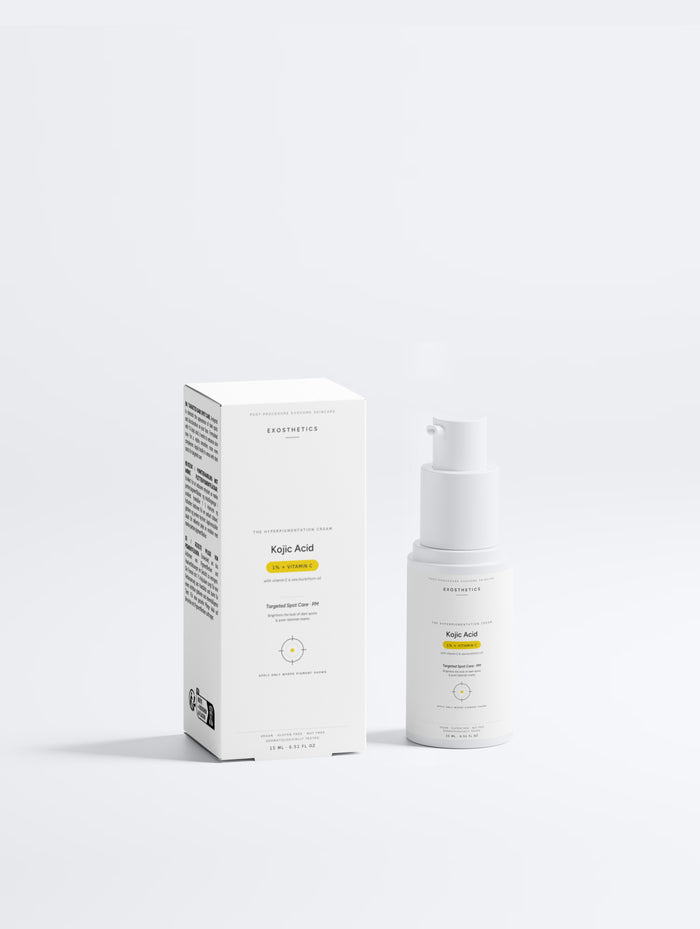

Here's the paradox nobody explains before you book the appointment: the same laser that can erase years of sun damage can also leave dark patches behind. CO2 laser hyperpigmentation is one of the most searched - and most misunderstood - topics in aesthetic dermatology, because the treatment sits on both sides of the equation. It can fade stubborn hyperpigmentation, and in the wrong circumstances, it can trigger it. If you're weighing this procedure against your specific skin concerns, or you're a few weeks post-treatment staring at new dark spots in the mirror, understanding both sides of that equation is what separates a great result from months of frustration.
The good news up front: when hyperpigmentation appears after a CO2 laser, it's almost always temporary and treatable. And when a CO2 laser is used for pigmentation, in the right skin type with the right settings, it can be genuinely transformative. Let's walk through the science, the risks, the timelines, and the recovery playbook - without the hype.
What Is CO2 Laser Treatment for Hyperpigmentation?
The basics: a CO2 (carbon dioxide) laser is an ablative resurfacing device that emits light at a 10,600 nm wavelength. That wavelength is absorbed by water in your skin cells, which means the laser essentially vaporizes microscopic columns or layers of skin tissue in a highly controlled way. As the treated skin heals, it's replaced by fresh, remodeled tissue with new collagen - and, ideally, more even pigment distribution.
Why it matters for pigment: hyperpigmented cells living in the upper layers of the skin - sun spots, some types of post-acne marks, uneven photodamaged tone - are physically removed along with the damaged tissue. The skin that regenerates in its place hasn't accumulated that same pigment load. CO2 lasers remain among the most powerful resurfacing tools available in modern aesthetic practice, used for everything from photoaging and texture to scarring and dyschromia (Lam et al., 2026).
The key distinction to hold onto: CO2 lasers don't target melanin directly the way pigment-specific lasers (like Q-switched or picosecond devices) do. They target water. Pigment improvement is a byproduct of resurfacing - which is exactly why the results can be dramatic, and also why the inflammation involved can occasionally push pigment in the wrong direction.
How CO2 Laser Works on Pigmentation
The mechanism in plain language: when the laser energy hits the skin, water inside the cells absorbs it and instantly heats up, vaporizing the tissue. Surrounding areas receive controlled thermal stimulation. This does three things at once:
→ Physical removal: pigmented epidermal cells are ablated and shed during the healing process.
→ Accelerated turnover: the wound-healing response speeds up cell renewal, pushing residual pigment toward the surface where it flakes away.
→ Dermal remodeling: heat stimulates fibroblasts to produce new collagen, improving texture and light reflection - which makes remaining discoloration look less noticeable even before it fully fades.
The trade-off: all of that controlled injury generates inflammation. Inflammation is the engine of healing, but it's also the single biggest trigger for melanocytes (your pigment-producing cells) to overproduce melanin. Keep that in mind - it explains nearly everything else in this article.

CO2 Fractional Laser for Hyperpigmentation
The modern standard: fractional CO2 lasers deliver energy in a grid of microscopic treatment zones, leaving islands of untreated skin between them. Those intact islands act as healing reservoirs, dramatically shortening downtime and lowering complication risk compared to older full-field approaches.
Why fractional is usually preferred for pigment concerns: less total thermal injury means less inflammation, which means a lower chance of triggering post-inflammatory hyperpigmentation (PIH) - especially relevant for medium and deeper skin tones. The evidence base for fractional CO2 is robust; a 2026 systematic review and meta-analysis confirmed its strong efficacy profile in facial resurfacing for acne scarring, where pigmentary change is a closely tracked outcome (Batool et al., 2026). Most patients treating hyperpigmentation today will be offered a fractional device, often in a series of 2-4 sessions.
CO2 Ablative Laser for Hyperpigmentation
The heavy artillery: fully ablative CO2 resurfacing removes the entire surface layer of the treatment area rather than fractions of it. Results for severe photodamage and deep textural change can be remarkable in a single session - but recovery stretches to 2-3 weeks of open healing, redness can persist for months, and the pigmentary risk profile is significantly higher.
Who it suits: typically lighter skin types (Fitzpatrick I-II) with extensive sun damage, treated by highly experienced providers. For anyone with a medium to deep complexion, or anyone whose primary complaint is pigment rather than deep wrinkles or scars, fully ablative treatment is rarely the first recommendation - the inflammation-to-benefit ratio simply doesn't favor it.
Is CO2 Laser Good for Hyperpigmentation?
The honest answer: it depends on the type of pigment and the type of skin. CO2 lasers excel at sun-induced discoloration, mottled photodamage, and pigment tied to textural problems like acne scarring. They are a riskier, more debatable choice for melasma (which is inflammation-sensitive and notorious for rebounding after heat-based treatments) and for isolated PIH in darker skin tones, where gentler options often win.
A quick decision framework:
→ Sun spots + texture concerns + lighter skin: CO2 is often an excellent choice.
→ Acne scars with post-acne discoloration: strong candidate, with proper aftercare.
→ Melasma: proceed with great caution - heat can worsen it.
→ PIH alone, no texture issues: topicals and gentler modalities usually come first.
CO2 Laser for Post-Inflammatory Hyperpigmentation
Here's the nuance: PIH is pigment caused by inflammation - and CO2 lasers cause inflammation. Using one to treat the other is like fighting fire with fire: possible, but it requires precision. For established, stubborn PIH that hasn't responded to topicals, conservative fractional settings combined with rigorous pre-treatment priming (often hydroquinone or retinoids) and disciplined sun protection can improve results. But most dermatologists will exhaust topical therapy first, because a poorly planned laser session can trade old PIH for new PIH.
CO2 Laser for Acne Hyperpigmentation
Where the evidence is strongest: acne-related concerns are among the best-studied applications of fractional CO2. The 2026 meta-analysis comparing fractional CO2 laser against needling-based modalities for facial acne scars found both approaches effective, with the choice often coming down to skin type, downtime tolerance, and side-effect profile (Batool et al., 2026). For patients whose acne left both texture change and dark marks, the laser addresses both simultaneously - the resurfacing smooths scars while accelerated turnover lifts pigment.
Combination approaches are gaining ground too: a randomized controlled study found that pairing calcium hydroxylapatite with CO2 ablative fractional laser improved outcomes for atrophic acne scars compared to laser alone (Chen et al., 2026). The takeaway for you as a patient: modern acne scar treatment is increasingly a layered strategy, not a single-device story.

CO2 Laser Under Eye Hyperpigmentation
A special case: under-eye darkness is rarely just pigment. It's often a blend of thin skin, visible blood vessels, hollowing, and shadowing - and a laser only helps with the pigment and skin-quality components. Low-density, low-energy fractional CO2 can thicken and tighten the delicate periorbital skin and lighten true pigment deposits, but expectations need calibrating: if your darkness is structural (hollows and shadows), no laser will fix it. A skilled provider will examine you in different lighting and stretch the skin gently to determine what's actually causing the darkness before recommending treatment.
Can CO2 Laser Remove Hyperpigmentation?
Remove is a strong word - improve is the accurate one. CO2 resurfacing can dramatically reduce superficial pigmentation, sometimes to the point where it's no longer visible in normal lighting. But melanocytes remain in your skin, your genetics remain your genetics, and UV exposure remains the master switch. Pigment that is "removed" can be re-created by your own biology if you skip sun protection afterward. Think of the laser as a reset button, not a delete key.
Can CO2 Laser Treat Hyperpigmentation?
Yes - as part of a plan, not as a standalone magic wand. The best outcomes consistently come from a protocol: pre-treatment skin preparation (often 2-6 weeks of pigment-suppressing topicals), the laser sessions themselves, meticulous aftercare during the healing window, and a maintenance routine featuring daily SPF and pigment-regulating ingredients. Patients who treat the laser as one chapter in a longer story get results that last. Patients who treat it as a one-and-done event tend to watch their pigment return within a year or two.
Does CO2 Laser Reduce Hyperpigmentation?
For the right candidates, meaningfully. Superficial epidermal pigment responds best - many patients see substantial lightening after one to three fractional sessions. Deeper dermal pigment responds more slowly and less completely. Reviews of laser and light-based devices in aesthetic practice consistently position ablative fractional CO2 among the most effective resurfacing tools for photodamage-related dyschromia, while emphasizing that patient selection and parameter choice drive outcomes (Lam et al., 2026).
Does CO2 Laser Cause Hyperpigmentation?
It can - and pretending otherwise serves no one. Post-inflammatory hyperpigmentation is the most common pigmentary complication of ablative resurfacing. It typically appears not immediately, but two to six weeks after treatment, once the initial redness settles - which is exactly why so many patients panic: the skin looked great at day ten, and then brown patches emerged at week three. That timing is classic PIH, and it's a known, expected, manageable risk rather than a sign the procedure failed.
Can CO2 Laser Make Hyperpigmentation Worse?
In specific scenarios, yes:
→ Melasma patients: heat and inflammation can flare melasma, sometimes leaving pigment darker than before treatment.
→ Deeper skin tones treated with aggressive settings: Fitzpatrick types III-VI carry a substantially higher PIH risk after ablative procedures. Encouragingly, recent research in exactly this population shows that with careful protocols, fractional CO2 can be performed with acceptable safety - a 2026 retrospective cohort of Fitzpatrick III-VI patients undergoing ablative fractional CO2 resurfacing (including patients during and after isotretinoin therapy) supports the feasibility of treatment in darker skin when parameters and timing are properly managed (Sun et al., 2026).
→ Sun exposure during healing: UV hitting freshly resurfaced skin is the fastest way to lock in new pigment.
→ Picking or premature exfoliation: mechanical trauma during healing adds inflammation on top of inflammation.
What Causes Hyperpigmentation After CO2 Laser?
The chain of events: laser energy creates thermal injury → the body launches an inflammatory cascade to heal it → inflammatory signaling molecules stimulate melanocytes → melanocytes overproduce melanin and deposit it into the healing skin. In people with more reactive melanocytes (generally, more melanin-rich skin), this overproduction happens more readily and more intensely.
The modifiable risk factors: skipped pre-treatment priming, overly aggressive laser density or energy, sun exposure in the weeks before or after treatment, heat exposure (saunas, hot yoga, intense exercise) during early healing, and disrupted healing from picking at flaking skin. Notice that most of these are within your control - which is genuinely empowering news.

CO2 Laser Side Effects and Hyperpigmentation
Putting pigment in context - the expected side-effect sequence after fractional CO2 looks like this:
→ Days 1-3: redness, swelling, sensation similar to a strong sunburn, pinpoint oozing.
→ Days 3-7: bronzing or darkening of the treated skin followed by flaking - this darkening is normal healing, not PIH.
→ Weeks 1-4: fading pinkness, occasionally prolonged erythema.
→ Weeks 2-6: the PIH window - new brown or gray-brown patches appearing after initial healing.
Rarer complications include infection, prolonged redness, hypopigmentation (white patches, which are more concerning than dark ones because they can be persistent), and scarring. Hypopigmentation and scarring are uncommon with modern fractional devices in experienced hands, but they're the reasons provider selection matters more than device selection.
Is Hyperpigmentation After CO2 Laser Permanent?
Almost never. PIH is, by its nature, a temporary overproduction of pigment in response to inflammation. Once the inflammation resolves and the pigment stimulus stops, the excess melanin is gradually cleared through normal skin turnover. The realistic caveat: "temporary" can mean anywhere from a few weeks to over a year depending on depth of pigment, skin type, sun behavior, and whether you actively treat it. Epidermal PIH (browner in tone) fades faster; dermal PIH (more gray-blue) takes longer. Permanence is rare and usually associated with repeated re-injury or relentless unprotected sun exposure.
Does Hyperpigmentation From CO2 Laser Go Away?
Yes, and you can speed it up considerably. Untreated, post-laser PIH commonly fades over 3-12 months. With disciplined sun protection and a pigment-directed topical routine, many patients see meaningful improvement within 8-12 weeks of starting treatment. The variables you control - SPF compliance, avoiding heat and picking, consistent use of brightening actives once your skin has healed - are the difference between a three-month problem and a twelve-month one.
How to Treat Hyperpigmentation After CO2 Laser
Step 1: Protect ruthlessly. A mineral sunscreen with SPF 50, ideally containing iron oxides (which block the visible light that also drives pigment in melasma-prone skin), applied every morning and reapplied every two hours outdoors. This is non-negotiable - every other step fails without it. Hats and shade are free adjuncts that work.
Step 2: Support the barrier and calm the inflammation. Since inflammation is the root cause of PIH, shortening and softening the inflammatory phase is the smartest early intervention. In the first days after treatment, a dedicated recovery product like the 72-hour cream helps keep the compromised skin hydrated and protected while it re-epithelializes. Regenerative adjuncts are also an active research area: a 2026 randomized comparative trial found that augmenting fractional CO2 treatment with polynucleotides and exosome-mimetic nanovesicles improved outcomes in atrophic acne scar patients, supporting the role of these biologics in post-laser healing (Helmi et al., 2026). In practical terms, a topical exosome serum fits naturally into the recovery window as healing and inflammation-modulation support - think of it as helping your skin close the wound-healing chapter faster, not as a pigment eraser.
Step 3: Reintroduce pigment-directed actives - on a timeline. Once your skin has fully re-epithelialized and your provider clears you (typically 2-4 weeks post-procedure, sometimes longer):
→ Azelaic acid and tranexamic acid: gentle, well-tolerated early options for calming pigment production.
→ Vitamin C: antioxidant support and tyrosinase inhibition once sensitivity settles.
→ Hydroquinone: the gold-standard lightener for established PIH, used in provider-supervised courses.
→ Retinoids: accelerate turnover and pigment clearance; reintroduce slowly.
→ Gentle chemical exfoliation: once healing is complete, a well-formulated glycolic acid for hyperpigmentation helps lift pigmented cells to the surface and shed them faster - start low-frequency (once or twice weekly) and never on skin that's still flaking or tender.
Step 4: Rebuild nightly. Pigment-fighting actives are drying, and a compromised barrier is an inflamed barrier - which feeds the very cycle you're trying to break. Pairing your actives with a ceramide barrier night cream keeps the skin resilient enough to tolerate consistent treatment, and a lightweight calming option like a daily defense moisturiser works well under sunscreen in the morning.
Step 5: Know what to avoid. No picking at flakes, no strong acids or scrubs in the first weeks, no saunas or hot yoga during early healing, no tanning - ever, but especially now.
Step 6: Escalate stubborn cases in-office. If PIH isn't budging after 3+ months of compliant home care, providers can layer in gentle superficial chemical peels or low-fluence pigment lasers. Important: the answer to laser-induced PIH is almost never more aggressive CO2 - it's less inflammation, delivered more precisely.
CO2 Laser Hyperpigmentation Before and After
What realistic results look like: when CO2 laser is used to treat pigmentation, before-and-after photos typically show meaningful lightening of sun spots and mottled discoloration, brighter overall tone, and smoother texture - usually photographed at the 3-month mark, when collagen remodeling and pigment clearance have matured. Single-session transformations of severe pigment are the exception, not the rule; most impressive galleries represent 2-3 fractional sessions.
How to read before-and-after photos critically:
→ Check the lighting and angle: identical lighting between photos is the minimum standard for honesty.
→ Ask for photos of your skin type: results on Fitzpatrick II skin tell you little about outcomes and risks on Fitzpatrick V skin.
→ Ask about the timeline: a photo taken at 2 weeks can hide PIH that emerged at week 4.
→ Ask how many sessions: "after" should be labeled with session count and settings philosophy.
CO2 Laser Hyperpigmentation Results Timeline
When the laser is treating your pigment:
→ Week 1: redness, swelling, bronzing, flaking - the pigmented surface layer sheds.
→ Weeks 2-4: fresh pink skin emerges; early brightness is visible but immature.
→ Months 1-3: collagen remodeling continues; tone evens progressively.
→ Month 3+: peak visible results; decision point for additional sessions.
When you're recovering from post-laser PIH:
→ Weeks 1-2: normal healing darkness - do not treat aggressively, just protect and moisturize.
→ Weeks 2-6: the PIH window - if new patches appear, contact your provider and begin gentle intervention once cleared.
→ Months 2-6: expected fading trajectory with consistent SPF and topicals; most patients see clear improvement by month 3.
→ Month 6+: persistent pigment despite compliance warrants an in-office reassessment and possibly professional treatments.
CO2 Laser for Hyperpigmentation Cost
The ranges you'll encounter: fractional CO2 resurfacing typically runs from around $600 to $2,500+ per session for full-face treatment in the United States, depending on geography, provider credentials, and device. Fully ablative resurfacing generally costs more - often $3,000 to $7,000+ - reflecting the intensity of the procedure and follow-up care involved. Smaller treatment zones (under-eyes, perioral area) cost proportionally less.
Budget for the full journey, not just the laser: pre-treatment prescription topicals, post-procedure recovery products, sunscreen, and pigment-directed skincare for maintenance all belong in the real cost calculation. And a genuinely useful reframe: paying more for a provider with deep experience in your skin type is the cheapest insurance against spending months (and more money) treating a preventable complication.
When to Call Your Provider
Contact your provider promptly if you notice: pigmentation that is spreading rather than fading, white patches (possible hypopigmentation), texture changes or firmness suggesting scarring, signs of infection (increasing pain, pus, spreading warmth, fever), or pigment that is worsening past month three despite full compliance with sun protection and topicals. One additional note: if you have a history of oral isotretinoin use, tell your provider before any resurfacing procedure - timing considerations apply, though recent cohort data suggest ablative fractional CO2 can be performed safely in appropriately selected patients during and after isotretinoin therapy (Sun et al., 2026).
Frequently Asked Questions
How long does hyperpigmentation last after CO2 laser?
Post-laser hyperpigmentation typically fades within 3 to 6 months with proper sun protection and topical treatment. Without intervention, it can persist up to 12 months, especially in deeper skin tones. Pigment that worsens past month three despite good care warrants a provider visit.
Will dark spots after CO2 laser go away on their own?
In most cases, yes - post-inflammatory hyperpigmentation gradually clears through natural skin turnover. However, strict daily sunscreen use is essential, because UV exposure can make the pigment darker and more persistent. Treatment with brightening topicals significantly shortens the fading timeline.
When can I use hydroquinone or retinol after CO2 laser?
Most providers clear pigment-directed actives once the skin has fully re-epithelialized, typically 2 to 4 weeks after fractional CO2 treatment. Starting too early on compromised skin can worsen irritation and pigment. Always follow your specific provider's timeline rather than a general rule.
Why is my skin darker after laser resurfacing than before?
Darkening in the first week is usually normal healing bronzing that flakes away naturally. New brown or gray-brown patches appearing 2 to 6 weeks after treatment are more likely post-inflammatory hyperpigmentation, triggered by the inflammatory healing response. Both are typically temporary, but PIH benefits from active treatment.
Is CO2 laser safe for dark skin tones?
Fractional CO2 can be performed in Fitzpatrick types III-VI, but PIH risk is meaningfully higher and requires conservative settings, pre-treatment priming, and an experienced provider. Recent research supports its feasibility in darker skin types when protocols are carefully managed (Sun et al., 2026). Gentler alternatives may still be preferable for pigment-only concerns.
Do exosome serums help with post-laser recovery?
Evidence supports exosome-based approaches as healing and inflammation-modulation support after fractional CO2 treatment, with a 2026 randomized trial showing improved outcomes when exosome-mimetic nanovesicles were added to laser therapy (Helmi et al., 2026). They are best framed as recovery support during the critical healing window, not as a direct pigment cure.
Can hyperpigmentation after CO2 laser be permanent?
True permanence is rare. PIH is a temporary overproduction of melanin that clears once inflammation resolves, though it can take up to a year in stubborn cases. Hypopigmentation (white patches) is the rarer complication with a higher chance of persistence, which is why it should always be evaluated by your provider.
What is the difference between PIH and melasma returning?
PIH appears specifically in laser-treated areas as brown or gray-brown patches within weeks of the procedure and fades as inflammation resolves. Melasma recurrence typically appears in its characteristic symmetrical pattern (cheeks, forehead, upper lip) and is driven by heat, light, and hormones. Melasma requires long-term management, while PIH is usually a self-limited episode.
The Bottom Line
CO2 laser and hyperpigmentation have a complicated relationship - but it's a manageable one. The laser is a legitimately powerful tool against sun damage, uneven tone, and acne-related discoloration, and the pigment it occasionally triggers along the way is overwhelmingly temporary and treatable. Your leverage lies in three places: choosing a provider who respects your skin type, protecting your healing skin obsessively from sun and trauma, and supporting recovery through the inflammation window with barrier repair and evidence-informed products. Do those three things, and the beam stays firmly on your side of the equation. ✨
References
Batool A, Abbas MS, Mahin FE, Nawaz J, Jafri SM, Ahmed A, Nawaz HS, Qazi TI, Khalid MS, Shah SMG, Hussain SMA, Murtaza M, Talha M, Aminpoor H. Comparing fractional CO₂ laser and needling-based modalities in facial acne scar treatment: a comprehensive systematic review and meta-analysis. Lasers Med Sci. 2026 Jun 23;41(1). doi: 10.1007/s10103-026-04905-5.
Chen W, Zhang L, Luo X, Zhou C, Li K, Qin X. Calcium Hydroxylapatite Combined with CO(2) Ablative Fractional Laser for Atrophic Acne Scars: A Randomized Controlled Study. Aesthetic Plast Surg. 2026 Jul 6. doi: 10.1007/s00266-026-06142-1.
Sun Z, Fan Z, Xiang H. Ablative Fractional CO2 Laser Resurfacing for Atrophic Acne Scars During and After Oral Isotretinoin: A Single-Center Retrospective Cohort Study in Fitzpatrick III-VI Patients. Dermatol Surg. 2026 Jul 7. doi: 10.1097/DSS.0000000000005260.
Lam W, DeVries A, Chaudry A, Lawson A, Nestor MS. Aesthetic Applications of Laser and Light-Based Energy Devices. J Craniofac Surg. 2026 Aug 7. doi: 10.1097/SCS.0000000000013227.
Helmi RR, Mohammed RSH, Nori W. Fractional CO(2) laser augmented by polynucleotide and exosome-mimetic nanovesicles in atrophic acne scars: randomised comparative trial. Postepy Dermatol Alergol. 2026;43(3):314-321. doi: 10.5114/ada.2026.161825.

The first week
Everything in this guide, in two products
Exosome Serum for the night of. 72-Hour+ Cream from day three. $99 together, ships from the US — arrives before it gets bad.
See the Kit — $99Table of Contents

Glycolic Acid for Hyperpigmentation


